
Last updated November 15, 2026
 AC repair
 Furnace & heating
 Heat pumps
 Ductless mini splits
 Carrier
 Trane
 Goodman
Seasonal tune-up and full diagnostic on your Carrier, Trane, or Goodman system - readings shown to you before any repair is proposed
Diagnosis first, numbers second - you approve the repair price before a single part goes in.
Get your free estimateThe Complete AC Installation Guide for Sugar Land Homeowners
Most homeowners think the hard part of a new air conditioner is choosing the brand. It isn’t. In Sugar Land, the money gets wasted long before anyone lifts a box – in the sizing, the load calculation, and the small install-day details almost nobody checks. And the most common mistake runs opposite to intuition: an oversized unit. Bigger sounds better until you live with short run cycles, sticky indoor air, and a compressor that wears out early. This guide walks through every phase of an AC installation in Sugar Land, from the load calculation to the 30-day check-in, so you can verify the work being done on your behalf instead of just approving the invoice.
Quick Answer
A successful AC installation in Sugar Land depends less on the brand on the box than on three things: a proper room-by-room load calculation, a correctly sized unit matched to your home’s heat gain, and careful install-day work on refrigerant lines, the drain, the pad, and the electrical disconnect. Get those right and a mid-range system can run comfortably for years. Get them wrong and even a premium unit underperforms.
Styles & brands we work with
- AC repair
- Furnace & heating
- Heat pumps
- Ductless mini splits
- Carrier
- Trane
- Goodman
Table of Contents
- Why a Load Calculation Comes First
- What Oversizing Does to a Sugar Land Home
- SEER2 Ratings: What Actually Pays Off Here
- Permits in Fort Bend County and Your Insurance
- What to Verify on Installation Day
- Choosing Among Brands Without Dealer Bias
- The 30-Day Post-Installation Checklist
- Common Mistakes to Avoid
Why a Load Calculation Comes First
Every good installation starts with a Manual J load calculation. That’s a room-by-room heat-gain study of your house, and it’s what determines the correct system size before anyone quotes a model number. Skip it, or rely on a rule of thumb like “a ton per 500 square feet,” and you’re guessing on the most expensive part of the job.
A load calculation adds up how much heat your home gains from outside and generates inside, then sizes equipment to remove it. For a Sugar Land home, that math looks different from a house in a northern climate. Long cooling seasons above 90°F mean the calculation weighs solar gain heavily. The direction your windows face matters enormously – west-facing glass in a Sugar Land afternoon gets hammered by the sun in a way a north-facing wall never does. Attic insulation levels shift the numbers too, because a poorly insulated attic turns your ceiling into a heat radiator all summer.
Slab foundations add another variable. There’s no cool basement air to lean on, and no crawlspace to buffer temperature swings, so the calculation has to account for the full heat load moving through walls and windows rather than assuming some of it dissipates downward. The load calculation captures all of this.
What you should ask for:
- A written, room-by-room load calculation, not a verbal “you need a 4-ton.”
- Window orientation and glazing considered, especially west and south exposures.
- Attic insulation and duct location factored in.
- Square footage used as an input, never as the whole method.
If a contractor won’t produce a load calculation or waves it off as unnecessary, that’s your signal to get another estimate. Proper AC installation begins with the math, not the box.
What Oversizing Does to a Sugar Land Home
An oversized air conditioner cools the house too fast, then shuts off before it has run long enough to pull humidity out of the air. That’s the whole problem in a nutshell, and in a humid Gulf Coast climate it’s a serious one. You end up with a house that hits the thermostat setpoint while still feeling clammy.
Here’s what actually happens with an oversized unit:
- Short cycling. The system reaches temperature quickly and shuts down, then restarts soon after. Compressors and fans take the wear of frequent starts.
- Higher indoor humidity. Dehumidification happens during long, steady run times. Short runs leave moisture in the air, and that moist air feels warmer than the number on the thermostat.
- Uneven cooling. Some rooms cool fast while others never quite catch up, because the airflow doesn’t have time to reach the far end of the house.
- Faster equipment wear. More starts per day over a long Sugar Land cooling season adds up.
The opposite problem – undersizing – is real too, but it’s less common because sales pressure tends toward bigger. An undersized unit runs constantly and never quite keeps up on the hottest afternoons. The goal is a system matched precisely to the calculated load, not one that’s guaranteed to “have enough power.”
This is where our multi-brand position helps. Because we install and service equipment from several manufacturers – Goodman, Rheem, York, Daikin among them – we’re sizing your home, not fitting a single product line into whatever capacity a dealer agreement favors. The right system for your home, not for our margins, starts with honesty about what size your calculation actually calls for.
SEER2 Ratings: What Actually Pays Off Here
SEER2 is the efficiency rating that replaced the older SEER standard, and higher numbers mean lower energy use. The question Sugar Land homeowners actually face is whether the extra cost of a higher rating ever comes back. Over a long cooling season, it often does – but not always, and not automatically.
Think of it this way. Sugar Land runs more cooling hours per year than most of the country, so each point of efficiency gets multiplied by more run time. That favors spending a bit more on efficiency here than it would in a mild climate. At the same time, the jump from one rating tier to the next grows steeper as you climb, and past a certain point you’re paying a premium for bragging rights rather than savings.
How to think about it without getting sold:
- Get the SEER2 rating for each quoted system in writing, alongside the price.
- Ask how many cooling hours per year the estimate assumes – a vague answer means the savings math is invented.
- Compare mid-tier against base-tier first. That’s usually where the real savings live.
- Treat the top efficiency tier as a nice-to-have unless your usage is unusually heavy.
- Remember that a well-installed mid-efficiency system beats a poorly installed high-efficiency one every time.
Efficiency ratings can’t fix bad ductwork or an oversized unit. If the ducts leak or the sizing is off, the rating on the box won’t save you a thing. Manufacturers advertise efficiency; the installation is what delivers it.
Permits in Fort Bend County and Your Insurance
Permit rules vary by jurisdiction, so confirm the specific requirement with your city’s building department or Fort Bend County before work begins. What we can tell you is general: replacing a central air conditioning system commonly requires a permit in most Texas jurisdictions, and skipping it can cause real trouble later.
Here’s why permits matter beyond the paperwork. When unpermitted HVAC work is discovered – often during a home sale inspection, an insurance claim, or a future remodel – it can complicate the transaction, delay a sale, or leave questions about code compliance that fall on you. An insurer reviewing a claim may ask whether the equipment was installed to code. Unpermitted work doesn’t automatically void a policy, but it invites scrutiny you don’t want while you’re already dealing with a loss.
A permitted job also means an inspection. That’s a second set of eyes confirming the electrical connections, the refrigerant charge, and the general installation meet code. It’s protection, not bureaucracy.
What to confirm before signing:
- Who pulls the permit – the installer, not you.
- That the permit is closed out with a passed inspection at the end.
- That you receive the documentation, not just the installer.
We can walk you through what your local jurisdiction typically requires when you call. The point is to keep the paper trail clean from the first day.
What to Verify on Installation Day
You don’t need to understand refrigerant thermodynamics to protect yourself on installation day. You need to know what to look at. Here’s a practical checklist you can run through before the crew packs up.
- Refrigerant line sizing. Ask the technician to confirm the line set matches the manufacturer’s spec for the equipment installed. A mismatched line size quietly hurts efficiency for the life of the system.
- Disconnect placement. The electrical disconnect should be accessible and mounted properly, not tucked somewhere you can’t reach it.
- Drain line slope. The condensate drain has to run downhill with a continuous slope toward the outlet. A flat or back-pitched drain line means standing water and, in a Sugar Land summer, algae growth and clogs.
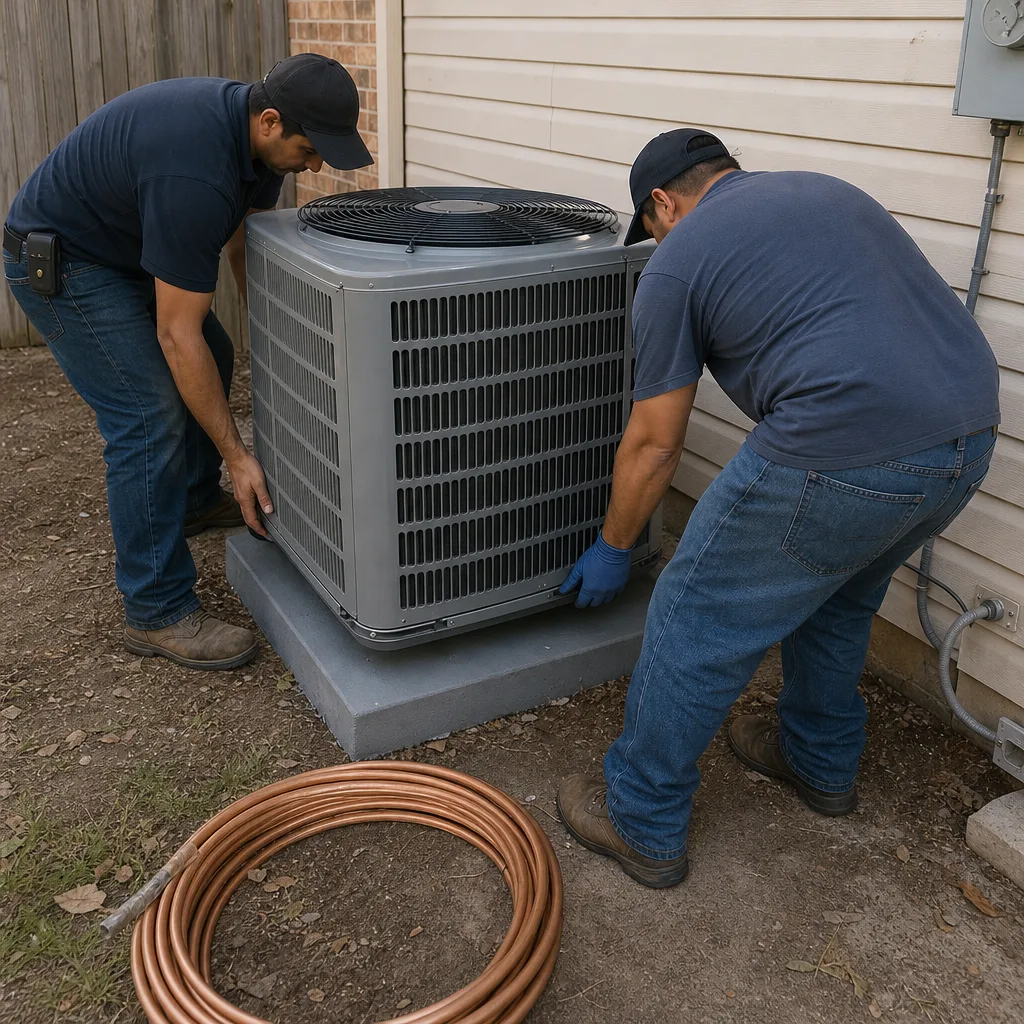
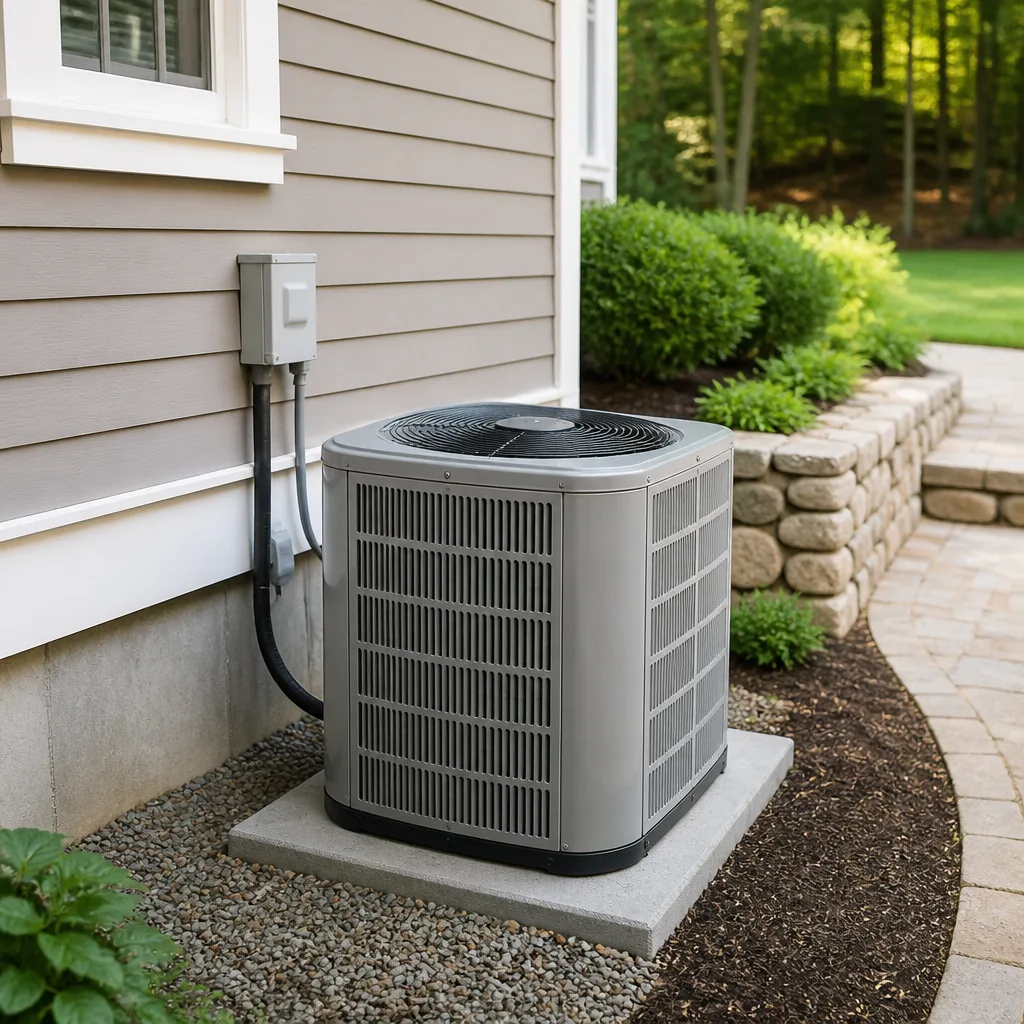
- Pad elevation. The equipment pad should sit above grade and clear of ponding. In flood-prone yards, low pads are a real problem – equipment sitting in standing water after a heavy rain isn’t hypothetical in this part of the state.
- Attic and duct connections. Check that duct connections are sealed, not just taped and hoped over.
- Thermostat placement and programming. Confirm the thermostat reads correctly and isn’t sitting in direct sun or above a heat source.
Ask questions as the work happens. A good technician expects it and answers plainly. You want to understand what you’re looking at, not just accept the handshake at the end. No surprises on the invoice comes from understanding the scope before the work starts.
Choosing Among Brands Without Dealer Bias
Walk into a single-brand dealer and you’ll hear that one brand is the answer. Walk into a shop that isn’t tied to any manufacturer’s supply agreement and you’ll hear something more useful: the right equipment depends on your budget, your home’s size and layout, and your efficiency goals.
That’s our position. We work on equipment from nine major manufacturers, and we install across several of them – Carrier, Trane, Lennox, Goodman, Rheem, York, Daikin, Bryant, and American Standard among the brands we cover. That breadth means the recommendation we give you is driven by your load calculation and your household, not by a dealer agreement that pays us to push one logo.
What to compare when you’re looking at brands:
- Warranty terms for the specific model, not the brand as a whole.
- Whether your preferred contractor can service that brand competently later.
- Parts availability and how long a repair takes if something fails.
- Actual efficiency for your matched system, not the headline number on marketing.
Brand matters less than fit and installation. A well-sized Goodman installed meticulously outperforms a rebadged premium unit installed carelessly. When you’re evaluating bids, you want confirmation your contractor can diagnose and service whatever equipment you have – not just the one line they sell.
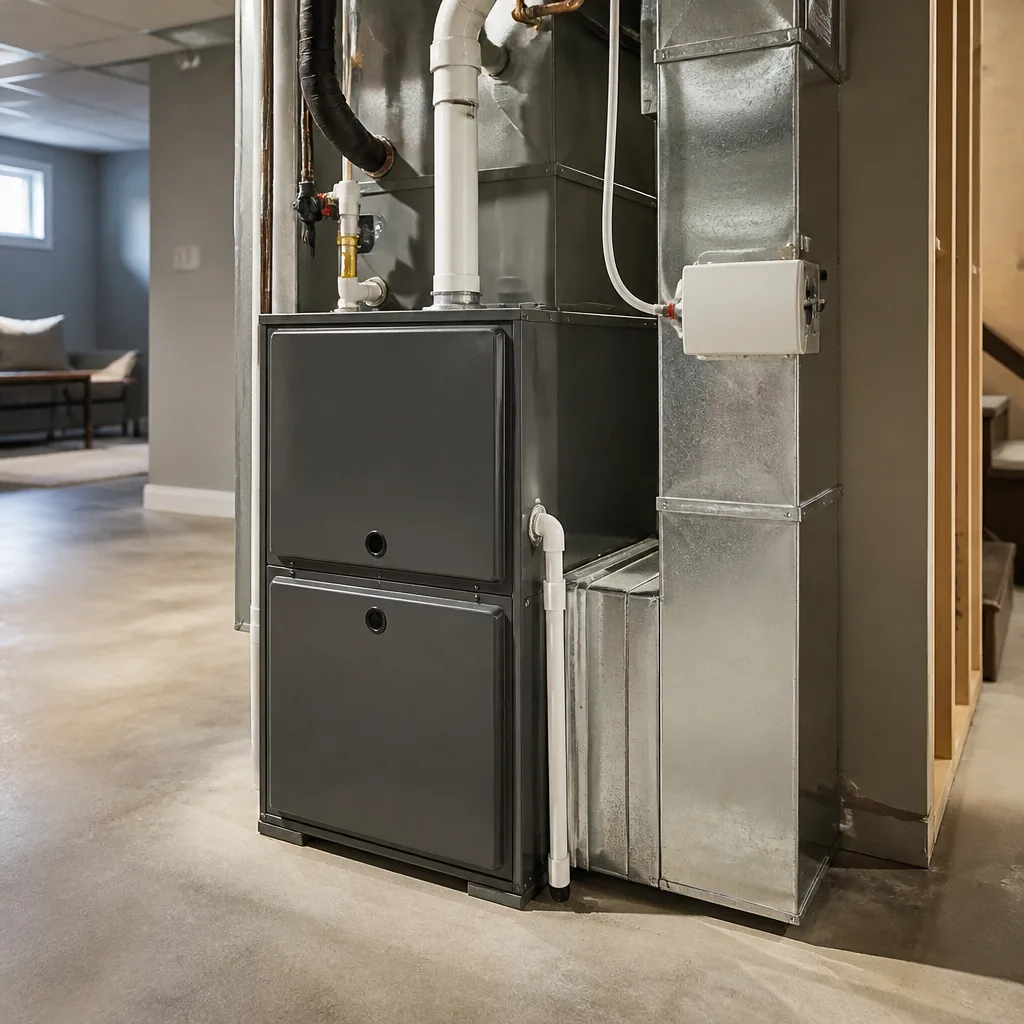
If you have a furnace question while we’re out evaluating cooling, that’s covered too. We handle furnace repair as well as installation, so heating and cooling are one call rather than two contractors.
The 30-Day Post-Installation Checklist
The first month after installation tells you whether the job was done right. What you’re looking for is a break-in period that settles into steady, consistent performance – not a list of complaints that keeps growing.
Here’s what to check over that first month:
- Static pressure readings. Ask for the static pressure measurement taken at the air handler. Excessively high static pressure means airflow is restricted – undersized ducts, a clogged filter, or a design problem that will strain the blower.
- Thermostat calibration. Check the thermostat reading against a separate thermometer in the same room. A difference of a couple of degrees is normal; a persistent gap needs attention.
- Temperature split. The supply air should be noticeably cooler than the return air. Ask what the technician measured on startup and whether it’s in the expected range.
- Drain performance. Check for any water near the indoor unit or in the drain pan. After heavy summer rain, look at the outdoor pad area too.
- Consistency across rooms. Walk the house during the hottest part of the afternoon. Every room should hold temperature within a small window of the others.
- Noise and vibration. A slight new-equipment noise that fades is normal. Rattles, grinding, or a compressor that sounds labored is a red flag.
- Filter condition. Replace the filter on the recommended schedule from day one. A clogged filter in a fresh system can mimic a much bigger problem.
A normal first month ends with the house holding temperature comfortably, humidity feeling right, and no water or odd noises to chase. A month that ends with callbacks, uneven rooms, or a system that never feels quite cool is the opposite. That’s when you want the installing contractor back out – and it’s worth knowing that our technicians have up to 15 years of experience diagnosing exactly these issues.
Common Mistakes to Avoid
- Accepting a quote with no load calculation. A rule-of-thumb estimate (“about a ton per 500 square feet”) ignores your window orientation and attic, which matters a lot in Sugar Land. Insist on the room-by-room math.
- Buying bigger than needed. Oversizing is the most common install error, and it produces short cycling, higher humidity, and faster wear. Size to the calculation, not to the sales pitch.
- Skipping the permit. Unpermitted work can surface during a home sale or an insurance claim and create a mess. Have the permit pulled and the inspection passed.
- Ignoring the drain line and pad. These are the unglamorous parts that cause water damage and headaches. Flat drain lines and low pads in flood-prone yards cost real money later.
- Chasing the highest SEER2 tier. Efficiency pays off here because of long cooling seasons, but past the mid-tier the math gets thin. Spend where the savings show up.
- Not asking for static pressure and temperature split readings. These numbers tell you if the system is breathing correctly. If the installer can’t produce them, that’s telling too.
- Letting a brand talk you out of a second bid. A contractor locked to one manufacturer has one answer. Get an estimate from someone who can show you real options across brands.
See the difference
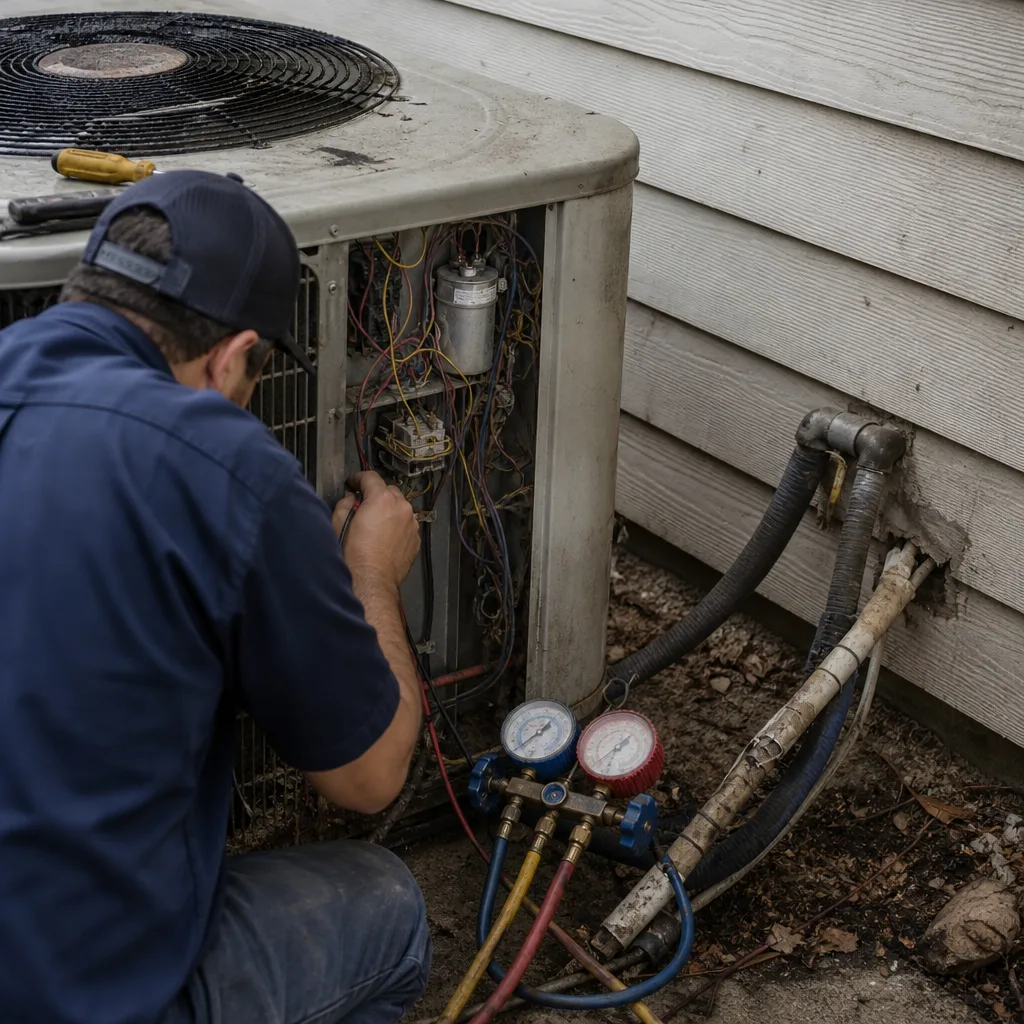 Before
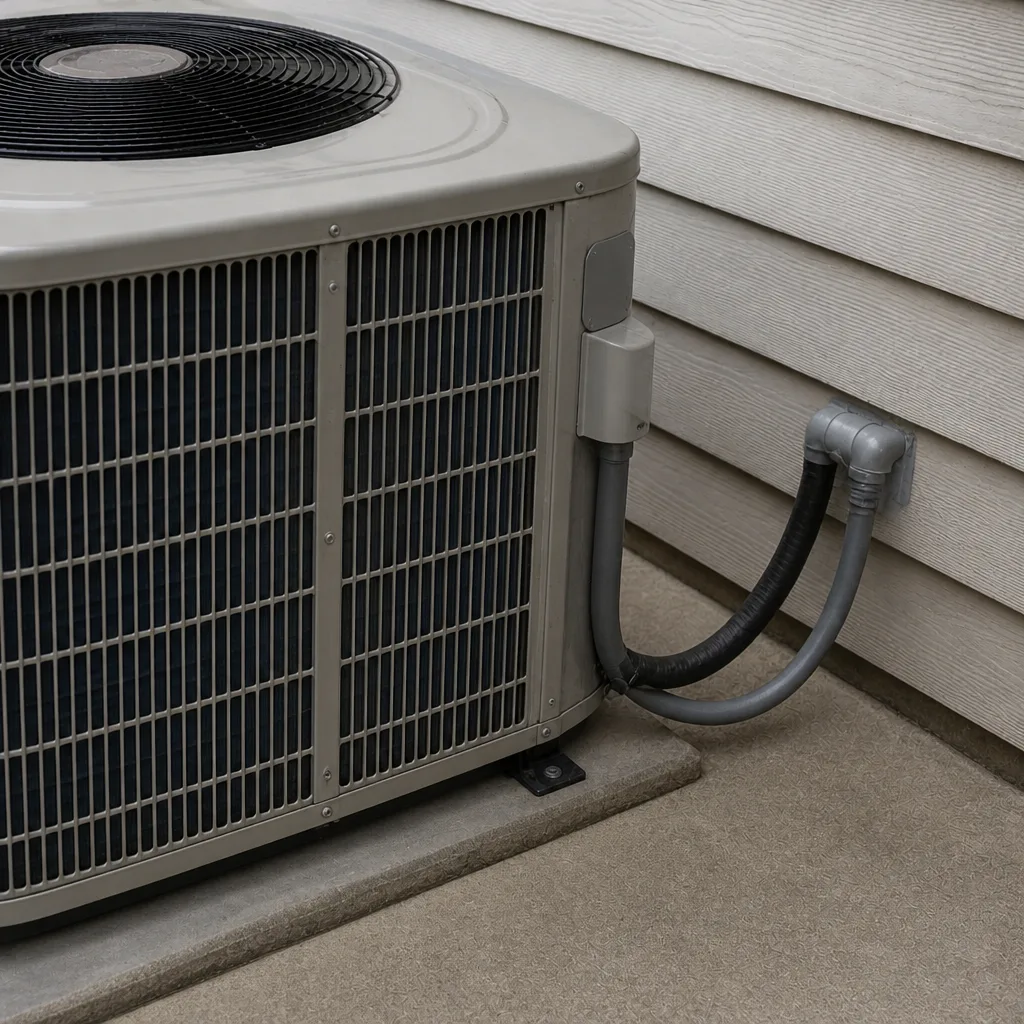 After
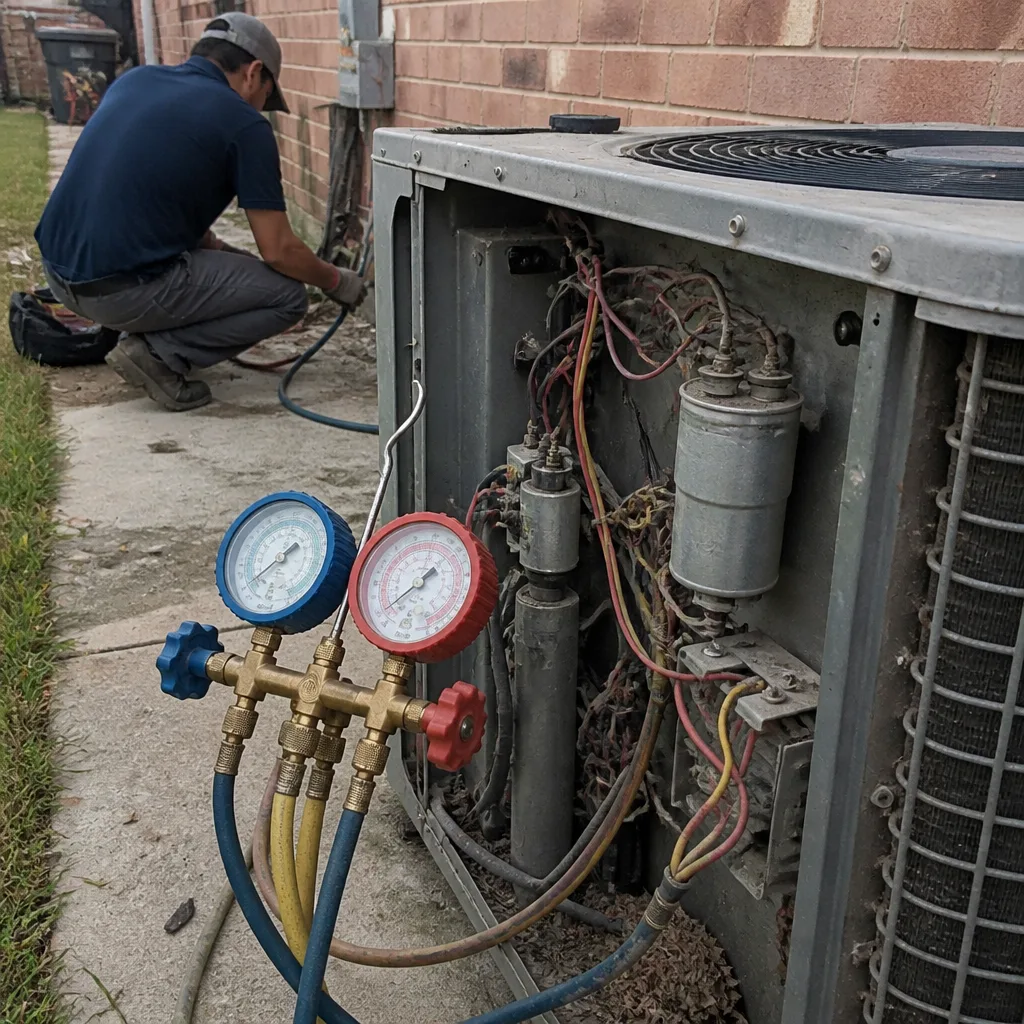 Before
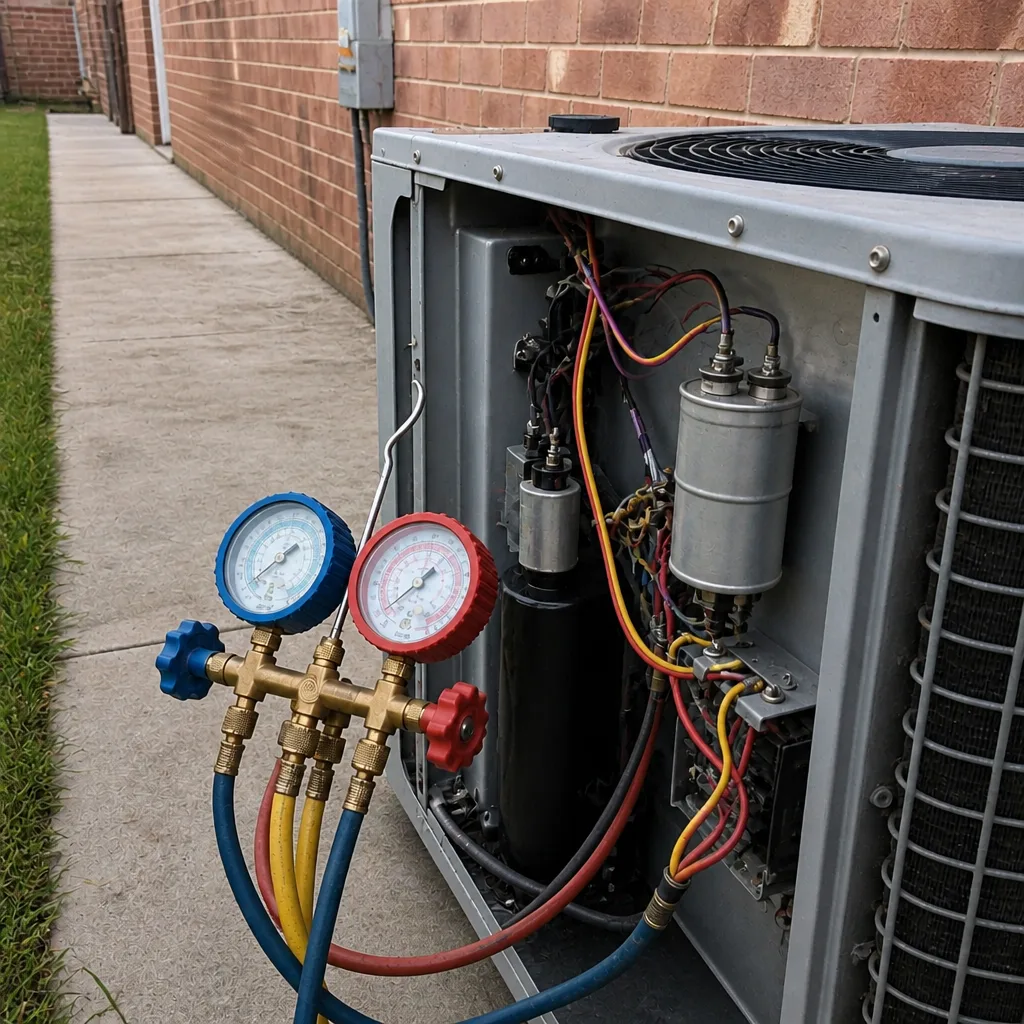 After
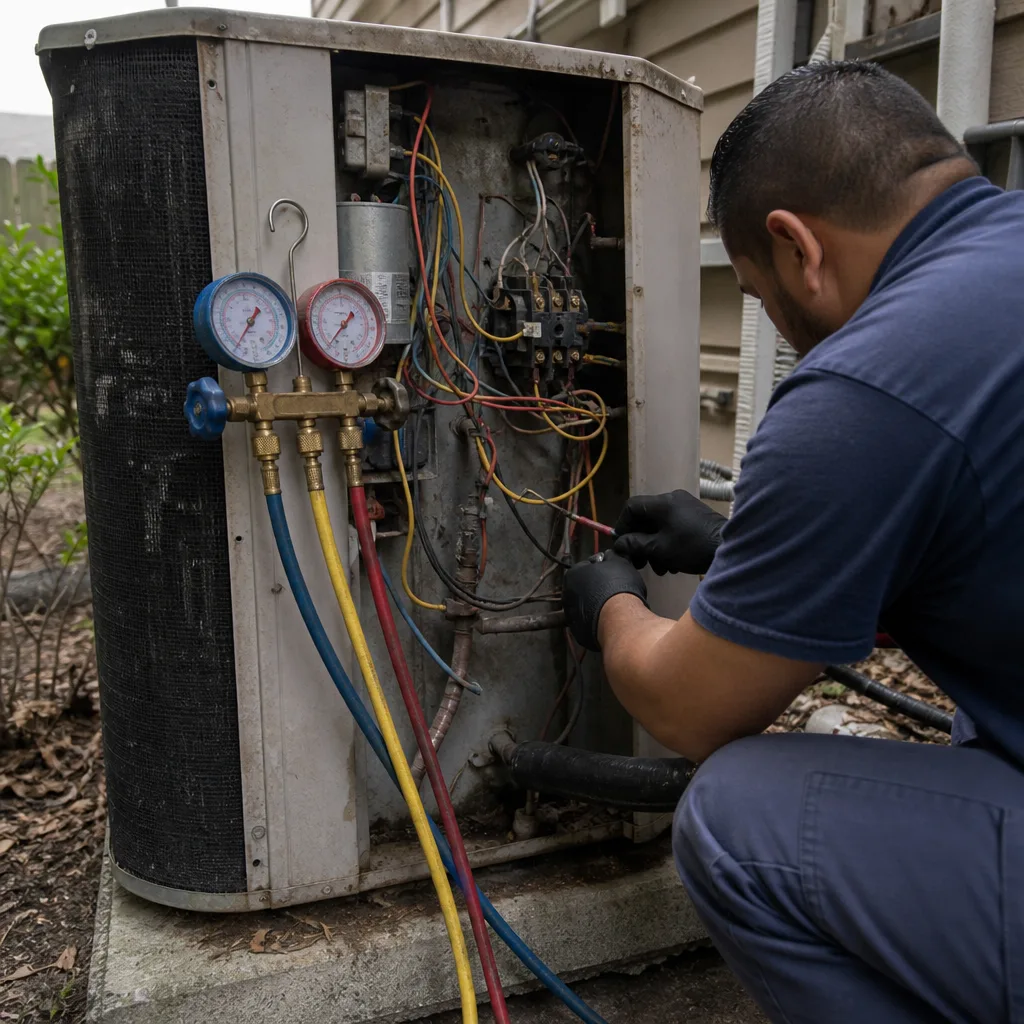 Before
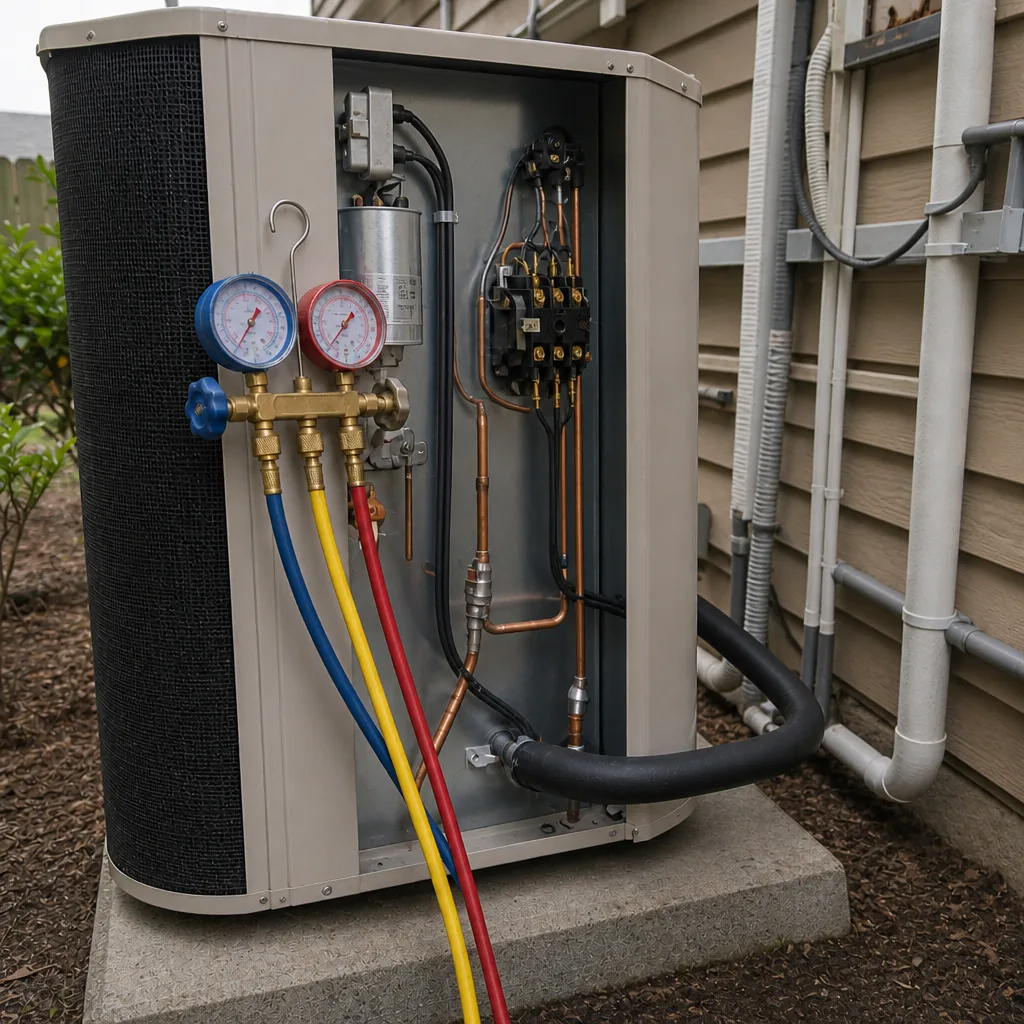 After
When to Call a Professional
Some jobs in the HVAC world aren’t do-it-yourself territory, and we’re direct about that. If your system is failing, if the thermostat reads but the air never cools, if you’re hearing grinding from the outdoor unit, or if you’re seeing water pooling near the indoor air handler, those are calls for a trained technician, not a weekend project. Refrigerant work, electrical connections, and compressor diagnosis involve real safety and regulatory stakes, and a wrong move there can cost far more than a professional visit.
Installation itself is the same. A load calculation, refrigerant charging, and permit work are skilled labor. In our experience, the homes that end up frustrated are the ones where someone tried to shortcut those steps. Delmar AC Repair offers free estimates in Sugar Land – call (833) 968-5064. We answer 24/7. Fast dispatch from 7am to 7pm, Sunday through Friday.
If you already have a system that’s just starting to struggle, it’s also worth reading our Sugar Land service overview to understand what a repair visit covers versus a replacement conversation.
Frequently Asked Questions
Your price is set per job by the written estimate, and a proper estimate follows the load calculation and equipment selection – not a number pulled before anyone sees your home. The written estimate is what sets the final price. Call (833) 968-5064 for an exact quote – estimates are free.
A typical residential changeout takes most of a day, and a more complex job with duct modifications or electrical updates may run longer. Replacement work is load-calculated, ordered, and scheduled with a set install date, so talk with your contractor about the timeline before the work begins.
Most Texas jurisdictions, including those in and around Fort Bend County, require a permit for a central system replacement, so confirm with your city’s building department before work starts. A permitted job gets an inspection that protects you. Ask your contractor who pulls the permit and whether the inspection is closed out at the end.
Your correct size comes from a room-by-room Manual J load calculation, not square footage alone. Window orientation, attic insulation, and your home’s layout all shift the number. If a contractor won’t do the calculation, get another bid.
It depends on the equipment’s age, the repair cost, and how often it’s been failing. A repair is often worth it when the system is newer and the fix is straightforward; replacement makes more sense when repairs pile up or efficiency has slipped badly. Call (833) 968-5064 for a fair assessment – we’ll tell you plainly which path makes sense for your home.
Yes. We work on nine major manufacturers – Carrier, Trane, Lennox, Goodman, Rheem, York, Daikin, Bryant, and American Standard – so we diagnose and repair the equipment you already have. You don’t have to buy a new brand to get competent service. Call (833) 968-5064 if you’re not sure whether your system is covered.
The Bottom Line
A good AC installation in Sugar Land starts with the load calculation and ends with a 30-day check that confirms it all works the way it should. The biggest risks are oversizing, skipping the permit, and ignoring the small install-day details – drain slope, pad elevation, line sizing, and static pressure. The brand on the box matters less than the fit and the installation. Choose a contractor who can show you the math, service multiple brands, and stand behind the work. That’s the whole guide. If you’re ready to get a free estimate, call (833) 968-5064. We answer 24/7. Fast dispatch from 7am to 7pm, Sunday through Friday.
For the full picture of who we are and what we cover, start at Delmar AC Repair.
Written by the team at Delmar AC Repair.