
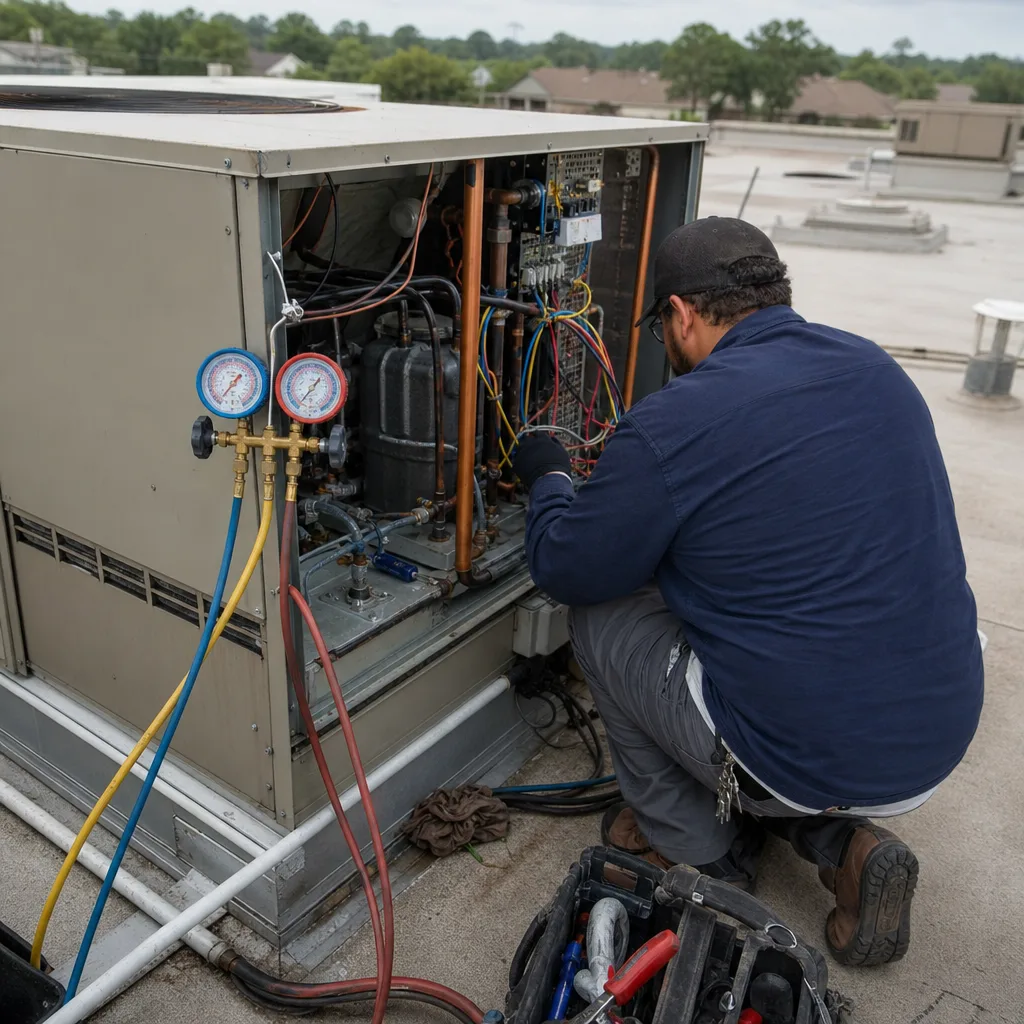
Last updated November 15, 2026
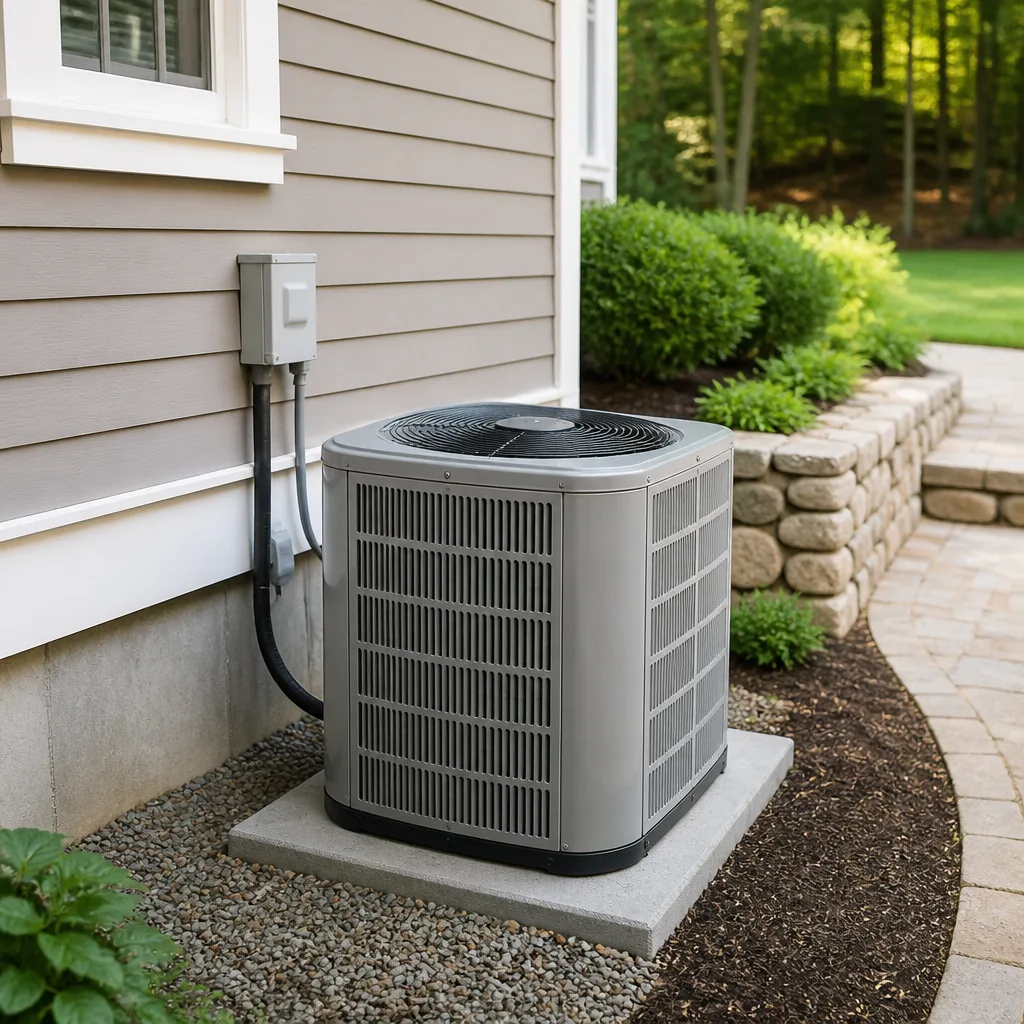 AC repair
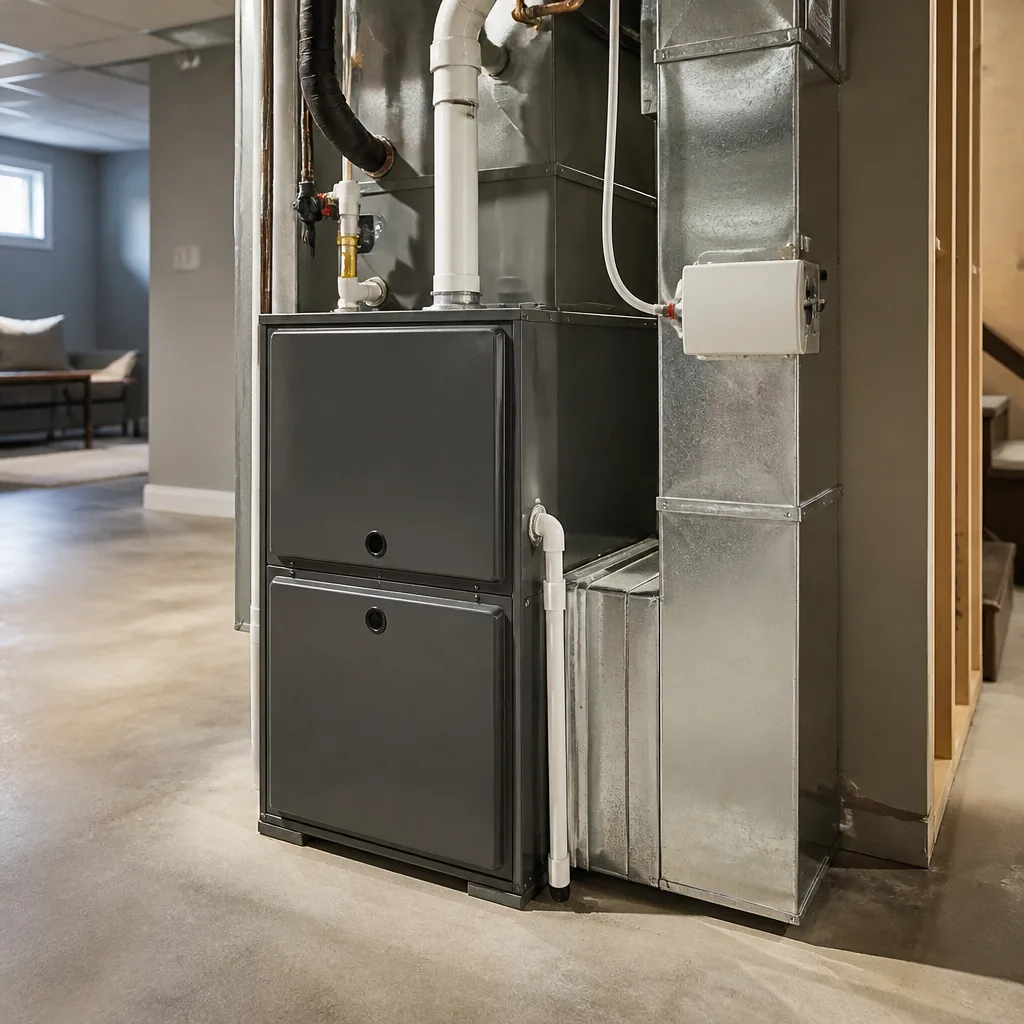 Furnace & heating
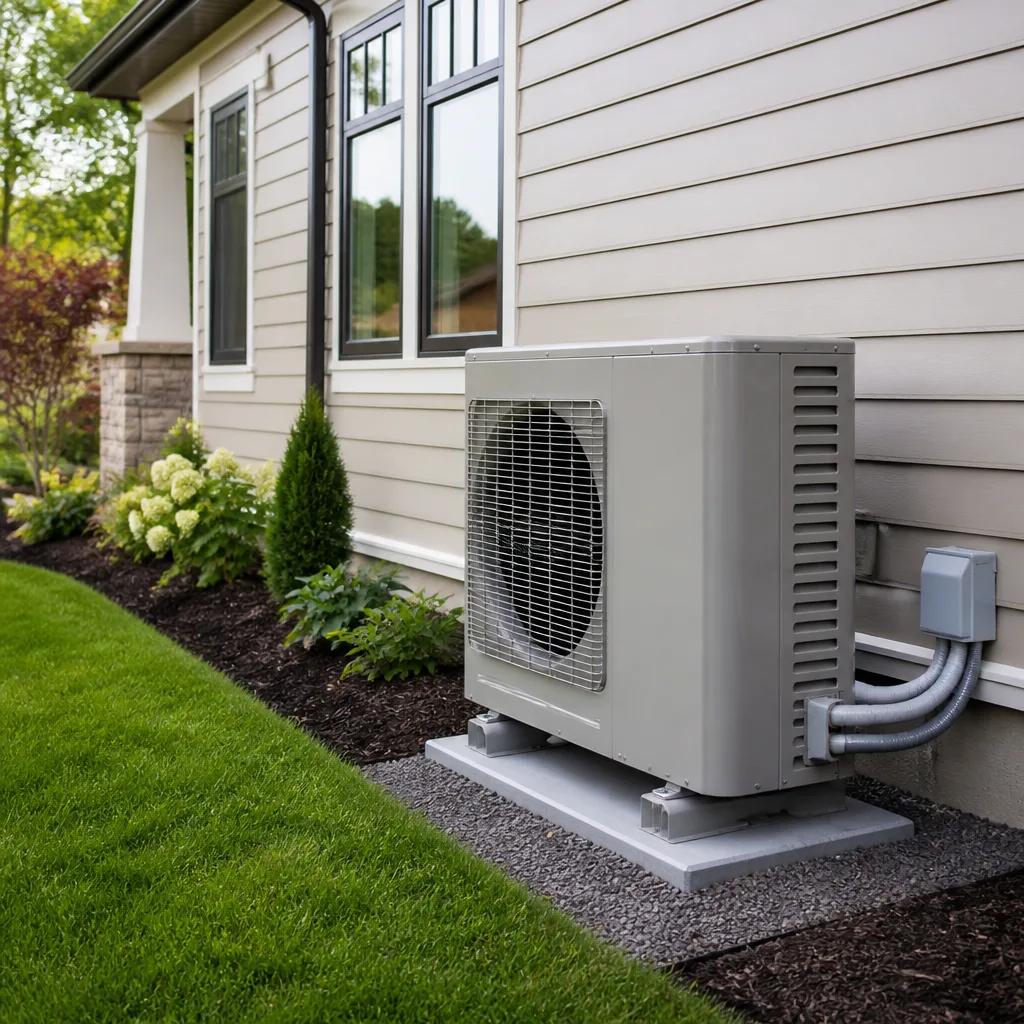 Heat pumps
 Ductless mini splits
 Carrier
 Trane
 Goodman
Seasonal tune-up and full diagnostic on your Carrier, Trane, or Goodman system - readings shown to you before any repair is proposed
Diagnosis first, numbers second - you approve the repair price before a single part goes in.
Get your free estimateHow to Hire an HVAC Contractor in Sugar Land: A Step-by-Step Guide
Most Sugar Land homeowners hire an HVAC contractor the same way they’d hire a handyman: they take the first referral, ask for a price, and pick the friendlier number. That approach works fine for a leaky faucet. For a system that sets your home’s comfort, air quality, and electricity bill for the next 15 years, it quietly costs people thousands. The real question is not “who’s cheapest” but “who can explain their sizing method, their refrigerant handling, and how they test duct leakage before they touch a thing.” This guide hands you those three technical questions, plus the licensing, proposal, and red-flag checks that separate a competent Sugar Land HVAC contractor from a salesperson with a truck.
Quick Answer
To hire an HVAC contractor in Sugar Land, verify their TDLR license and insurance first, then interview them on three technical points: how they calculate system load (they should name Manual J), what refrigerant handling certification the technician holds, and whether they perform duct leakage testing. Ask for a written, itemized proposal that lists equipment model numbers, SEER2 ratings, warranty terms, and who pulls the permit. A contractor who can answer all three clearly and puts it in writing is the one to hire. A contractor who pivots to a discount instead is not.
Styles & brands we work with
- AC repair
- Furnace & heating
- Heat pumps
- Ductless mini splits
- Carrier
- Trane
- Goodman
Table of Contents
- Why HVAC Hiring Is Different From Other Home Services
- Step 1: Verify the Texas License Before Anyone Shows Up
- Step 2: Ask the Three Technical Interview Questions
- Step 3: Spot Dealer Agreement Bias in Equipment Recommendations
- Step 4: Read the Written Proposal, Not the Verbal Quote
- Step 5: Watch for Post-Storm Surge Red Flags in Sugar Land
- When to Start the Search (and When to Repair Instead)
Why HVAC Hiring Is Different From Other Home Services
A general contractor’s mistake shows up as a crooked wall you can see. An HVAC contractor’s mistake shows up as an electricity bill that climbs 18 months later, a bedroom that never cools, or a compressor that fails a year past warranty. HVAC is the one home trade where the visible work (the condenser outside, the air handler in the attic) tells you almost nothing about whether the job was done right. The parts that matter – load calculation, refrigerant charge, duct integrity – are all invisible once the panels go back on.
That asymmetry is why the hiring process matters more here than almost anywhere else. You’re not buying equipment; you’re buying a diagnosis and an installation method. The equipment carries a manufacturer warranty regardless of who installs it. What the contractor actually controls is whether the system is sized to your house, whether the refrigerant circuit holds and performs to spec, and whether your ducts leak the cooled air into the attic. Those three variables decide how the system performs in Sugar Land’s long, hot, humid summers, when the AC runs nearly every day from spring through fall and your ductwork sits in an attic that gets considerably hotter than the living space.
In our experience, the homeowner’s job during hiring is not to become an HVAC technician. It’s to ask three specific questions and read two specific documents. Everything in this guide builds toward that. Heating and cooling covered by the same company also removes the awkward handoff when winter furnace problems arrive and your summer AC company says that’s not their equipment. Our Delmar AC Repair approach is built exactly around that: we work on your brand, whether that’s a Daikin, a Bryant, or anything else in the home.
Step 1: Verify the Texas License Before Anyone Shows Up
Texas licenses HVAC work through the Texas Department of Licensing and Regulation, and every legitimate contractor holds a license you can look up on the TDLR database in about two minutes. This is not a formality. The license tells you whether the contractor is legally allowed to do the work, whether they carry the insurance a contractor should, and whether the company is even the entity it claims to be on the truck. Do this before the estimate, not after.
Here’s what to look for on the TDLR site:
- TACLB or TACRA license number. Residential work typically falls under the air conditioning contractor license. Ask for the license number and the company name on it, and confirm both match the proposal you receive.
- Individual technician licensing. The company license and the person doing the work are two separate records. A legitimate company employs licensed technicians, not just a license holder who lets unlicensed help run service calls.
- Insurance on file. Confirm the business carries the insurance Texas requires for HVAC contractors. Skip any contractor who hedges on this question.
- Business entity match. Cross-check the business name against the proposal and the invoice. Mismatched names are a sign of a fly-by-night operation.
This step is especially important in Sugar Land, where the housing stock spans everything from newer subdivisions to established neighborhoods and the demand for qualified contractors is high enough that unlicensed operators can slip through referral gaps. Your Sugar Land building department can also tell you what permit requirements apply to a replacement in the city, and the contractor you hire should be able to explain the permit process without hesitation. Our technicians have up to 15 years of experience with the equipment brands in this market – but experience matters only after the license clears.
Step 2: Ask the Three Technical Interview Questions
These three questions separate a real HVAC contractor from a system seller. None require you to diagnose anything yourself. You’re listening for how quickly the contractor answers and whether they explain the answer in plain terms. A confident technician will. A salesperson will pivot to price.
Question 1: How do you calculate what size system my home needs?
The only correct answer is Manual J load calculation, or a very close equivalent that accounts for your home’s square footage, window orientation, insulation, ceiling height, and local climate. Anyone who sizes replacement equipment by looking at the existing unit’s label or by square footage alone is guessing. Improperly sized systems are a widespread problem in the trade, and the consequences are real: an oversized system short-cycles and struggles to pull humidity out of the air, while an undersized one runs all day and never quite catches up.
Green flag: “We measure the house and run a Manual J, then a Manual S to match equipment.” Red flag: “I’ll match what you have.” or “Our brand’s units don’t need load calc.” In Sugar Land’s humid summers, proper sizing matters more than most homeowners realize, because an undersized or oversized system both leave the house feeling clammy.
Question 2: What refrigerant handling certification does your technician carry?
Refrigerant work is regulated in the US, and the technician handling your system should carry current Section 608 certification. This is not a safety caveat you should skip; refrigerant handling is genuinely dangerous work involving pressures and chemicals that can cause serious injury if handled carelessly. Ask the contractor to confirm the technician is certified, and let them handle everything refrigerant-related. Never attempt to add, charge, or recover refrigerant yourself.
Green flag: “Our technicians are Section 608 certified, and we recover refrigerants properly.” Red flag: Uncertainty about certification, or vague answers about “top-up” refrigerant without explaining leak checking.
Question 3: Do you test duct leakage, and how do you report it?
Your ducts run through attic space in Sugar Land, and attic air in summer is considerably hotter than the air inside the home. Leaks in the duct system waste cooled air and pull in hot attic air, so a system that’s perfectly sized on paper can underperform because the ducts are leaking. A serious contractor measures duct leakage (a duct blaster test is the standard) and gives you the result in the proposal.
Green flag: “We test and report duct leakage, and if it’s high we’ll show you the repair options.” Red flag: “Ducts are usually fine.” or complete silence on the question. If your brand-agnostic contractor offers AC installation but never mentions duct testing, that’s worth a follow-up.
Step 3: Spot Dealer Agreement Bias in Equipment Recommendations
Most HVAC contractors in Sugar Land carry dealer agreements with one or two manufacturers. That’s not inherently bad, but it does shape their advice: an authorized dealer has financial incentives, training, and sometimes promotional obligations tied to a specific brand. When you ask “what system should I buy,” you’ll get their brand, whether or not it was the best fit for your house.
There is nothing wrong with a contractor recommending the brand they know best. The bias becomes a problem when the recommendation ignores your actual constraints: budget, home size, how long you plan to stay in the home, and the efficiency threshold that actually makes financial sense. Brand-agnostic contractors work across multiple manufacturers and explain tradeoffs. A brand-locked contractor explains one brand.
How to spot a de facto brand rep:
- Every recommendation is the same brand, regardless of your situation.
- They can’t compare two brands on total cost, efficiency, or expected lifespan.
- Your questions about competing equipment get answered with “you don’t want that brand.”
- The quote has one option, not two or three.
A genuine brand-agnostic contractor offers at least two viable systems at different price points and can explain why one might suit a Sugar Land home better than another. Some manufacturers carry reputations for different strengths; Trane and Carrier, for instance, are well known across the market, but so are American Standard and Bryant for homeowners with different budgets. The right answer depends on your house and your plan, not on which brand pays the contractor.
Step 4: Read the Written Proposal, Not the Verbal Quote
A verbal quote is not a proposal. A proposal is a document you can hold the contractor to. In Texas, a legitimate replacement proposal should include the equipment specification, the efficiency numbers, the warranty terms, and a clear statement of who pulls the permit. If any of those items are missing, ask for them in writing before you sign anything.
Here’s what to verify on the written proposal:
- Itemized equipment with model numbers. The exact model number of the condenser and the air handler. Not “a 3-ton system” – the actual model.
- SEER2 rating. The current efficiency standard is SEER2, not SEER. A proposal listing only SEER is out of date.
- Warranty terms split out. Manufacturer warranty on parts, plus the contractor’s own labor warranty. Both should be in writing, with durations.
- Permit responsibility. Who pulls the permit, and whether inspection is included in the price.
- Scope of work. What gets removed, what gets reused (line set, drain line, thermostat), and what gets replaced.
- Duct work and testing. Whether duct work is included and whether post-install testing is performed.
- Total price and payment schedule. A clear number, the deposit terms, and any conditional charges.
The proposal sets the final price. Everything else is a conversation. If a contractor can’t produce that document, you’re hiring a stranger with a pitch. Our brand-agnostic process produces a fixed written price with the model numbers in it, and the estimate is free.
Step 5: Watch for Post-Storm Surge Red Flags in Sugar Land
After any major storm in the Houston region, out-of-state crews show up, work fast, and disappear. Sugar Land is not immune to this pattern, and the pressure to hire quickly makes homeowners skip exactly the checks that protect them. The surge market has recognizable marks.
- Out-of-state license plates and no verifiable Texas license. Out-of-state contractors may not be licensed to do residential HVAC work in Texas at all. Check TDLR before you discuss price.
- Unusually fast timelines. A crew that promises to install the next day, before a load calculation or permit, is cutting corners. A legitimate HVAC contractor schedules installation around permits, equipment delivery, and load calculation.
- Pressure to skip the city permit and inspection. This is the biggest single red flag. The permit exists so that a city inspector verifies the work meets code. Any contractor suggesting you can go without it is protecting their schedule, not your home.
- Cash-only demands and no written contract. A written proposal is non-negotiable. Cash-only arrangements with no paper trail leave you without recourse.
- Verbal-only warranty promises. If the labor warranty isn’t in the proposal, it doesn’t exist.
If a storm has damaged your system, don’t panic-hire. Get the proposal, check the license, and call us if you’d like a second read on what you were told. We can work with your insurer on covered damage.
When to Start the Search (and When to Repair Instead)
Many homeowners start looking for an HVAC contractor only after the system has already failed. That’s the worst time to hire, because urgency compresses your judgment. Start the search when your system is still running but aging – typically when it’s around 10 to 15 years old, or when you notice it running constantly, struggling to cool in peak summer, or costing more to operate. That gives you room to get three proposals, compare them properly, and schedule without pressure.
If your system has failed outright, the choice between repair and replacement gets harder. Two rules of thumb:
- If the repair cost is a meaningful fraction of replacement cost and the unit is already old, replacement usually makes more financial sense long term.
- If the unit is young and the repair is straightforward, repair first, especially for furnace repair during winter, where a working system is worth preserving.
In Sugar Land’s heat, a failed cooling system is a genuine health risk, not just a comfort issue, so same-day service is worth asking about. We answer 24/7. Fast dispatch from 7am to 7pm, Sunday through Friday, so a call in the middle of a hot stretch gets booked into the next opening rather than a voicemail.
Common Mistakes to Avoid
- Comparing prices without comparing scope. Two quotes that look similar on the total are often very different in what they include – new line set, duct work, permit, testing. Compare line by line, not just the bottom number. This mistake costs Sugar Land homeowners more than any other in this guide.
- Skipping the TDLR check. It takes two minutes and unmasks most of the bad actors. Always check for the TACLB license, confirm the company name, and verify insurance before the technician comes out.
- Accepting a quote without a load calculation. A proposal without a Manual J is a proposal with a guess in it. Oversizing causes humidity problems, undersizing causes discomfort, and both shorten equipment life.
- Letting a brand-dealer loyalty decide for you. If your only options are “their brand” and “their brand,” you’re not choosing a system – you’re choosing a supply agreement. Ask for two options and compare SEER2, warranty length, and suitability to your home.
- Believing verbal warranties. Every warranty must be in the written proposal, both manufacturer and labor. If it isn’t written down, you can’t enforce it.
- Letting a single brand drive the whole job. Some systems are better matched to certain home sizes and budgets. Ask why this system, not just what system.
- Calling after the failure instead of before it. When the system is dead, homeowners make faster, worse decisions. If your system is aging, plan the replacement before it fails so you can hire deliberately.
See the difference
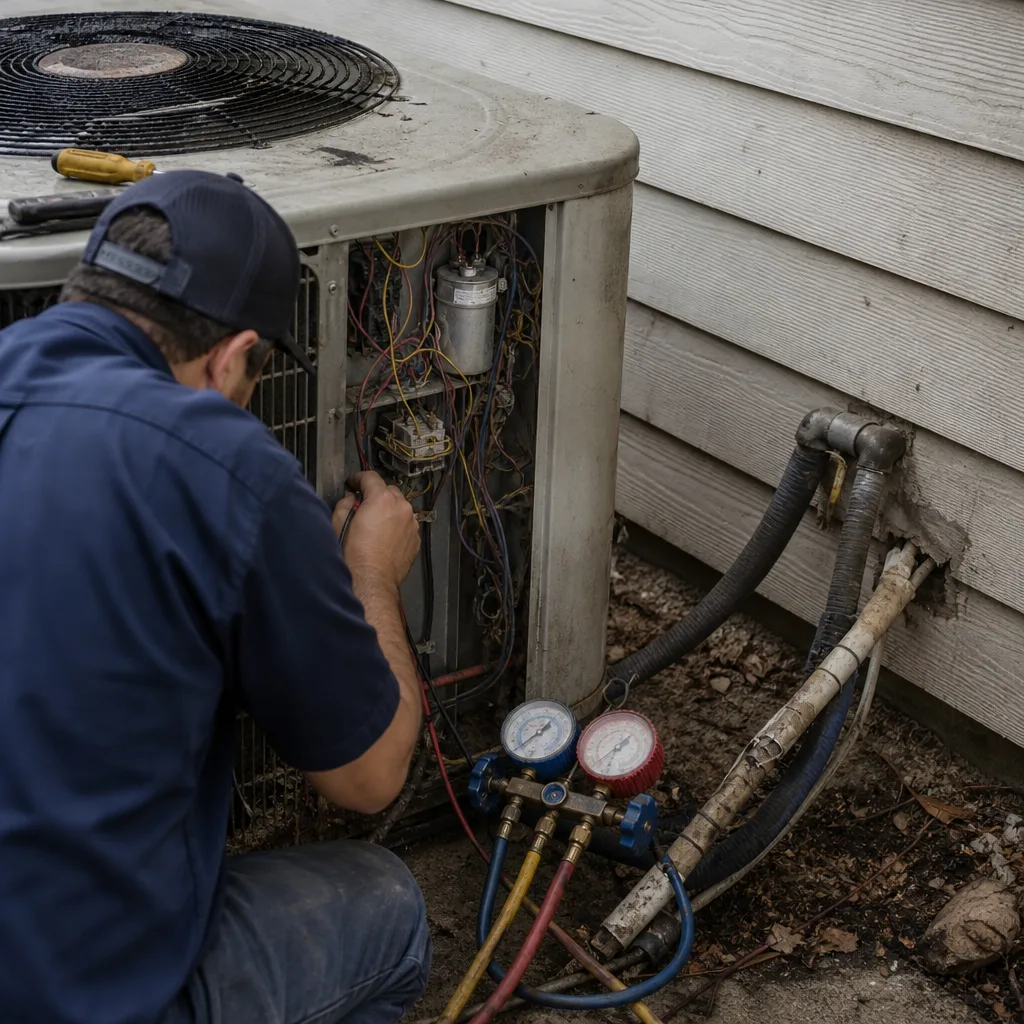 Before
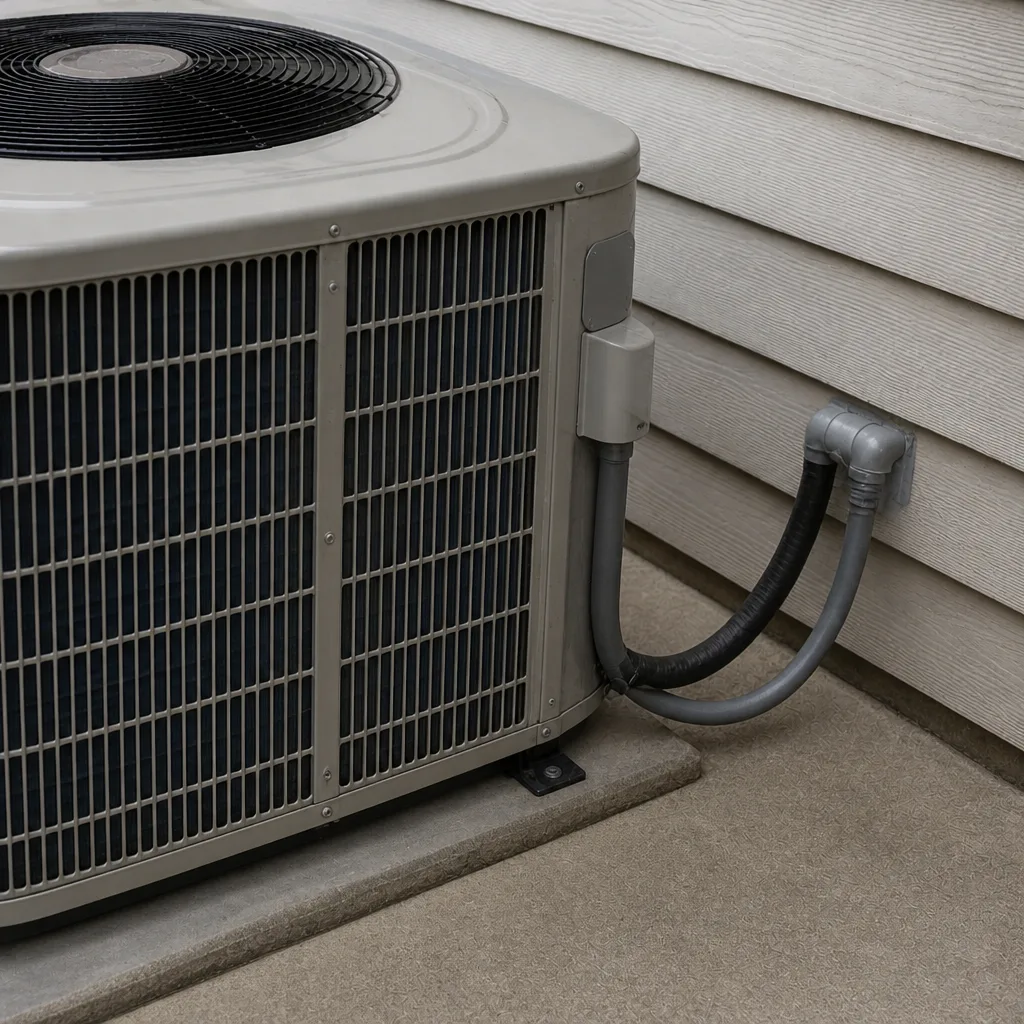 After
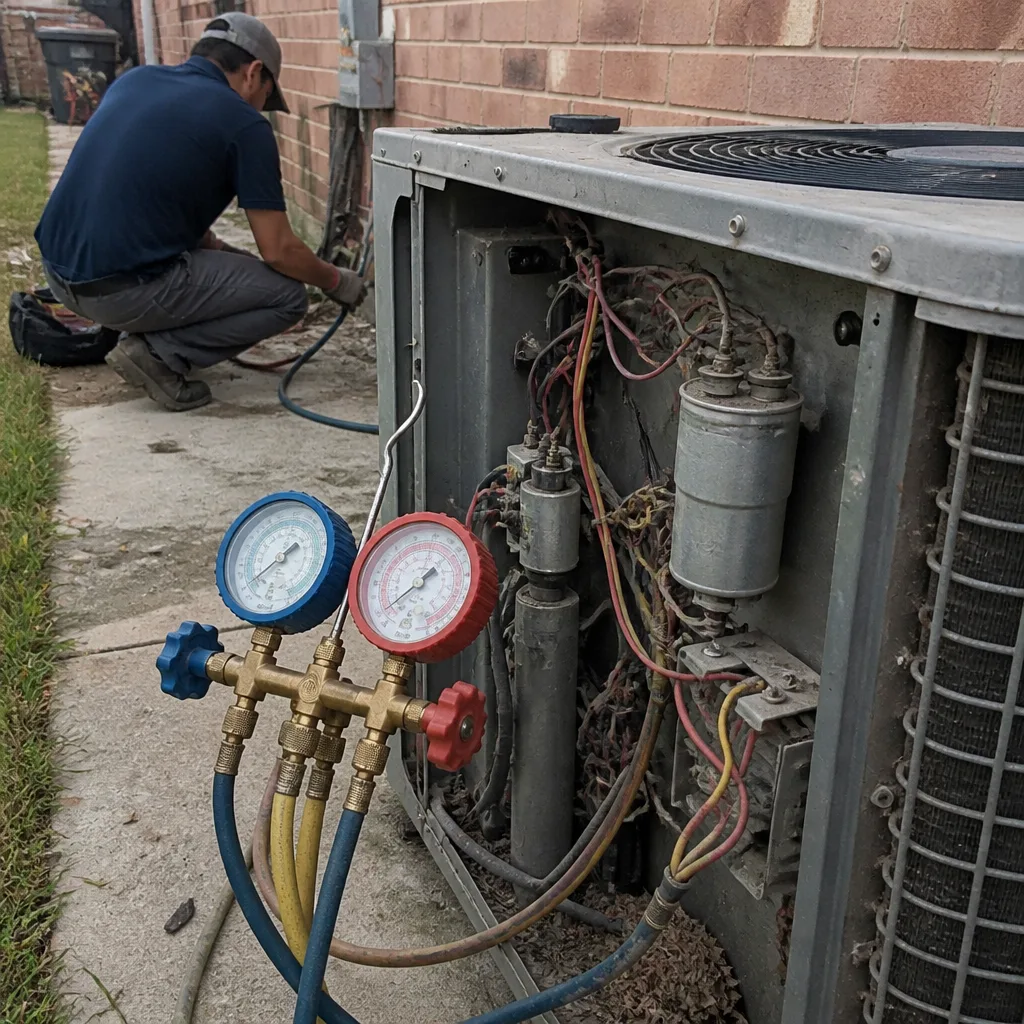 Before
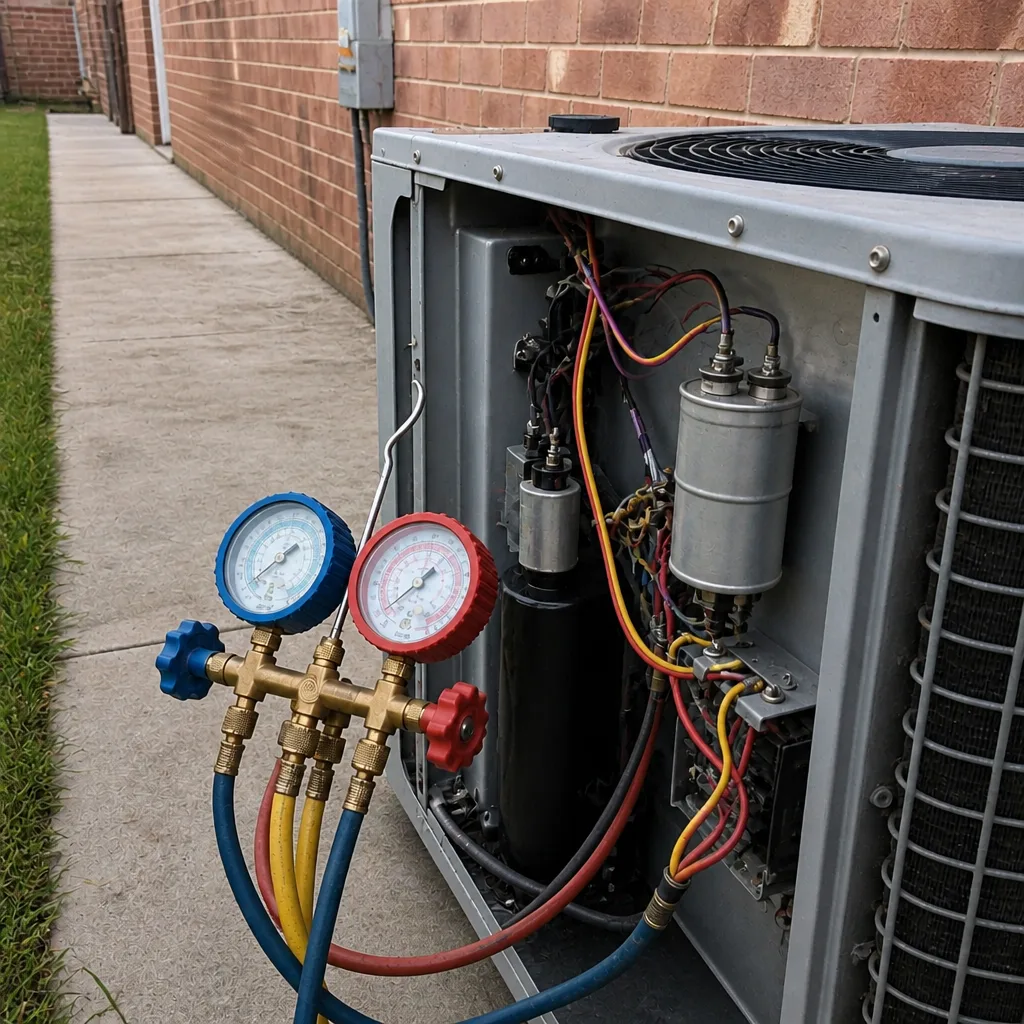 After
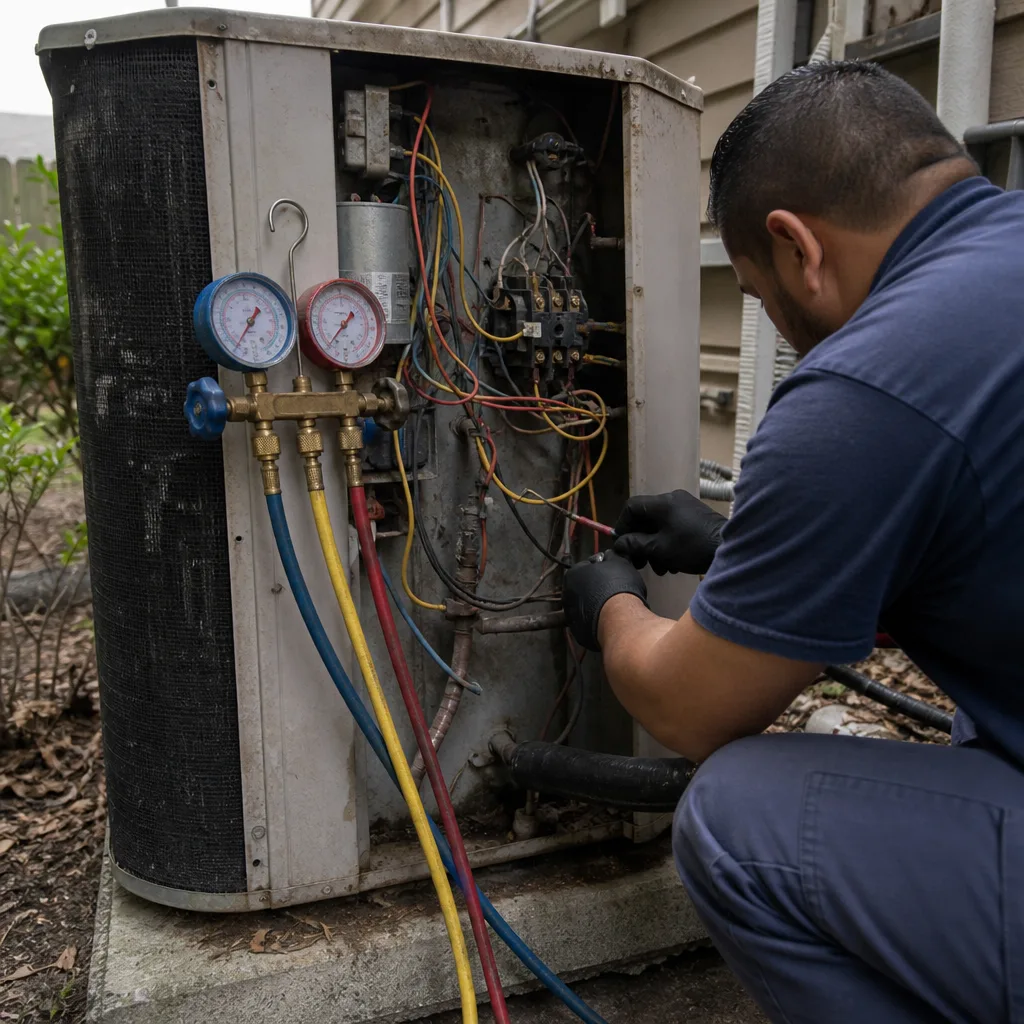 Before
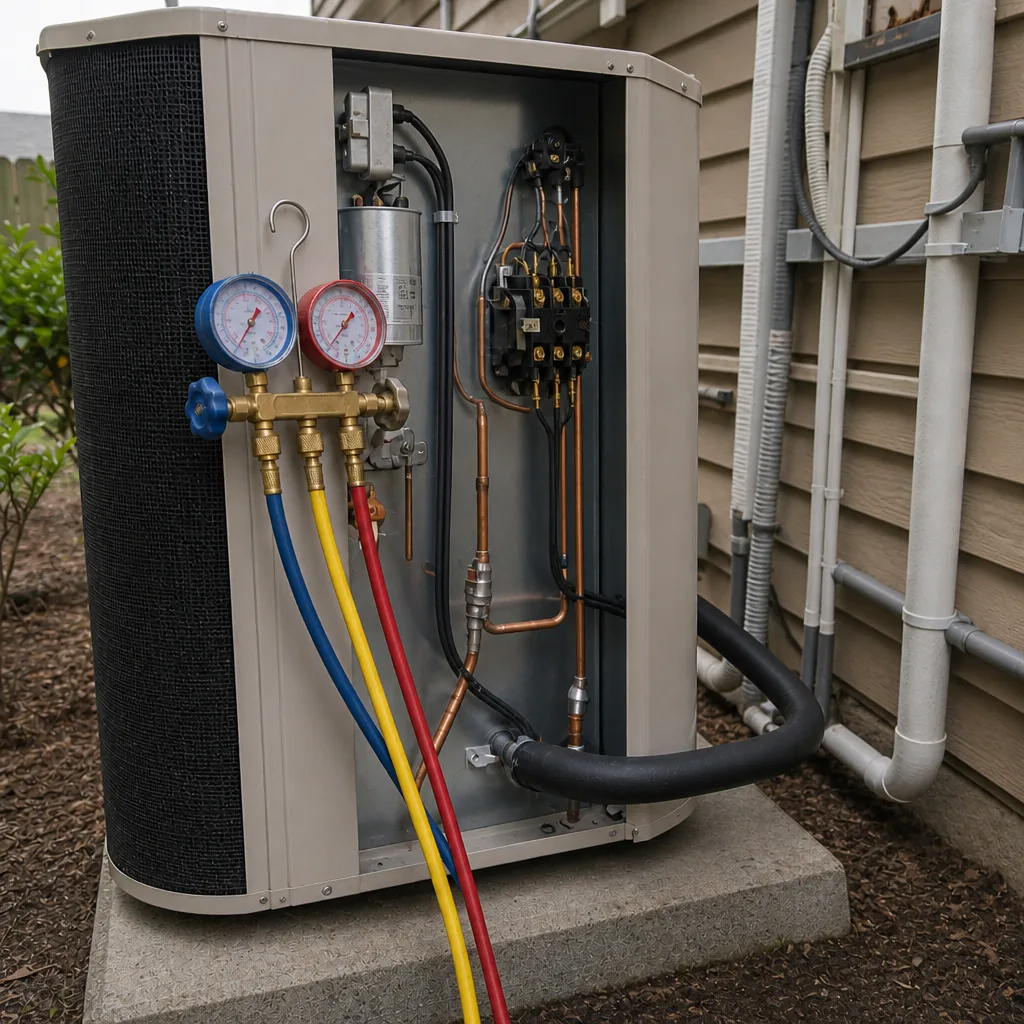 After
When to Call a Professional
Some HVAC situations need a technician, not a homeowner. Call a professional for refrigerant work, any electrical panel or wiring changes, gas line work on a furnace, and anything involving an energized system you’re unsure about. Never open an electrical panel yourself; it’s genuinely dangerous and requires a trained technician. If your system has failed and the house is getting uncomfortably hot, get a call in early. If your unit is tripping the breaker, the problem may be in the electrical side, which is the wrong place to experiment. Delmar AC Repair offers free estimates in Sugar Land – call (833) 968-5064 to start the process. We work across nine major manufacturers, so we can diagnose what you have rather than pitch what we carry.
Frequently Asked Questions
Look up the contractor’s license number on the Texas Department of Licensing and Regulation (TDLR) database, and confirm the business name matches the proposal and invoice. The license lists the company; individual technicians are separately licensed. Confirm liability insurance and licensing before the first estimate.
Pricing depends heavily on system size, SEER2 rating, duct condition, and equipment brand, so it varies too widely for a single number to be meaningful. The reliable way to know your cost is a written, itemized proposal with model numbers and efficiency ratings. That’s what we provide, and the estimate is free. Call (833) 968-5064 for yours.
Manual J is the industry-standard load calculation that determines how much heating and cooling a home actually needs, based on square footage, insulation, windows, ceiling height, and local climate. Anyone who sizes your system without it is guessing. In Sugar Land’s humidity, sizing correctly is what keeps your home comfortable and your system running efficiently.
Ask exactly three: how they calculate system size (they should name Manual J), what refrigerant certification their technicians hold (Section 608 is the standard), and whether they test duct leakage. Then read their written proposal. A contractor who answers these clearly in writing is the one to hire.
If the unit is over 10 years old and the repair is significant relative to replacement, replacement usually makes more sense financially. If the unit is young and the repair is simple, repair first. If your system is failing in Sugar Land’s heat, though, call sooner: (833) 968-5064 to talk it through with our team.
No, and you shouldn’t accept a contractor who promises it. Installation requires a load calculation, permit pull, equipment sourcing, and scheduling. What you should get is a written fixed price and a set install date. Repairs, on the other hand, can often be done same day. We answer 24/7, with fast dispatch from 7am to 7pm, Sunday through Friday.
The Bottom Line
Hiring an HVAC contractor is not a price comparison; it’s a technical interview. Verify the Texas license on TDLR, ask the three questions about load calculation, refrigerant certification, and duct leakage, and demand a written proposal with equipment model numbers, SEER2 ratings, warranty details, and clear permit responsibility. In Sugar Land, where the cooling season is long, the humidity is real, and post-storm crews show up looking for fast work, this process protects your home. Delmar AC Repair works across nine major HVAC brands, so you get an honest recommendation based on your home, not a dealer agreement. Call (833) 968-5064 for a free estimate.
Written by the team at Delmar AC Repair.