
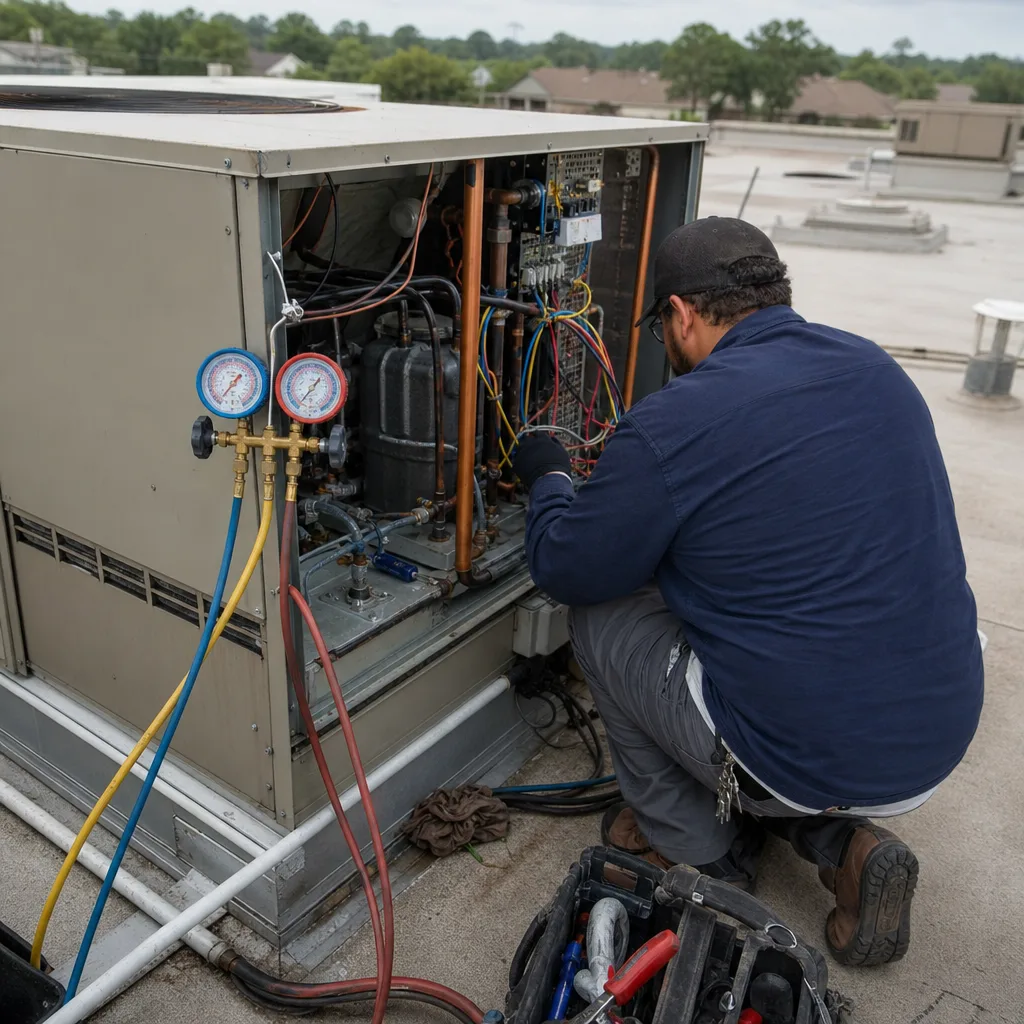
Last updated November 15, 2026
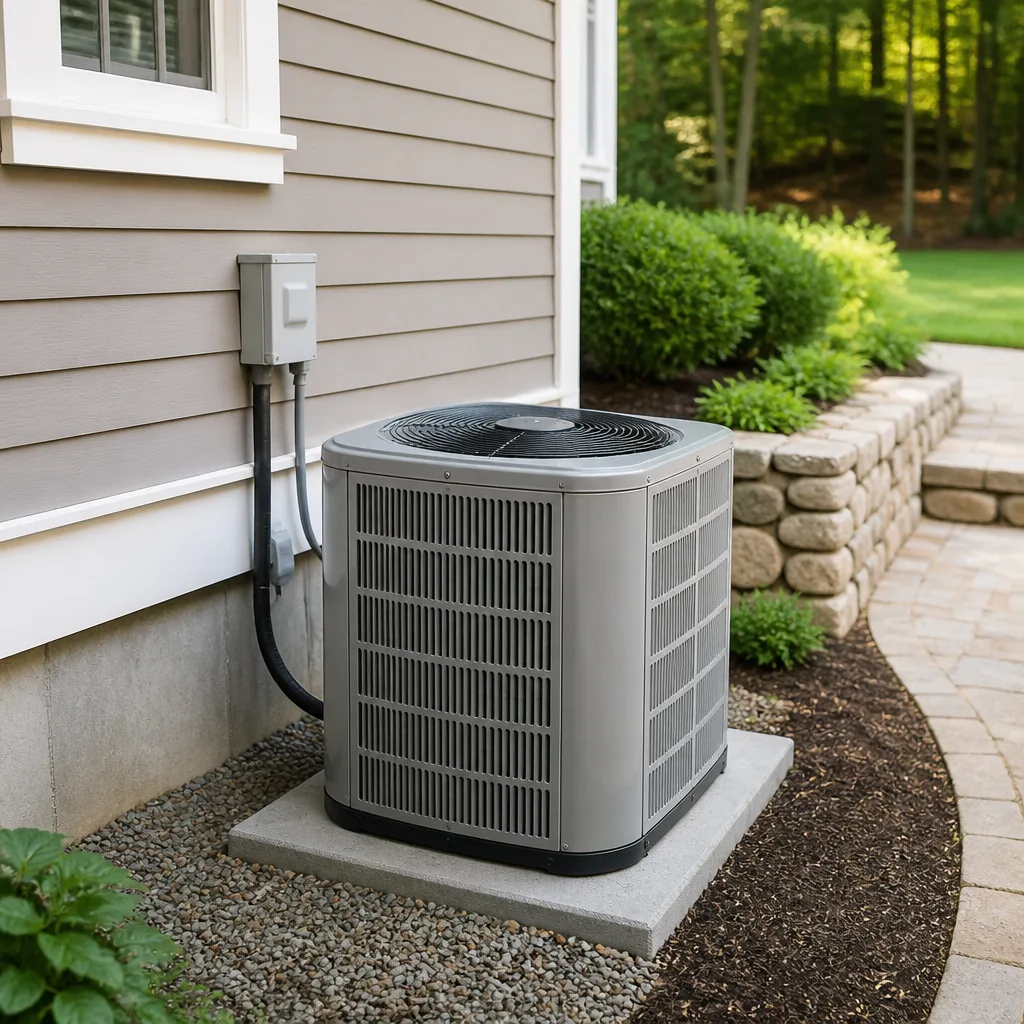 AC repair
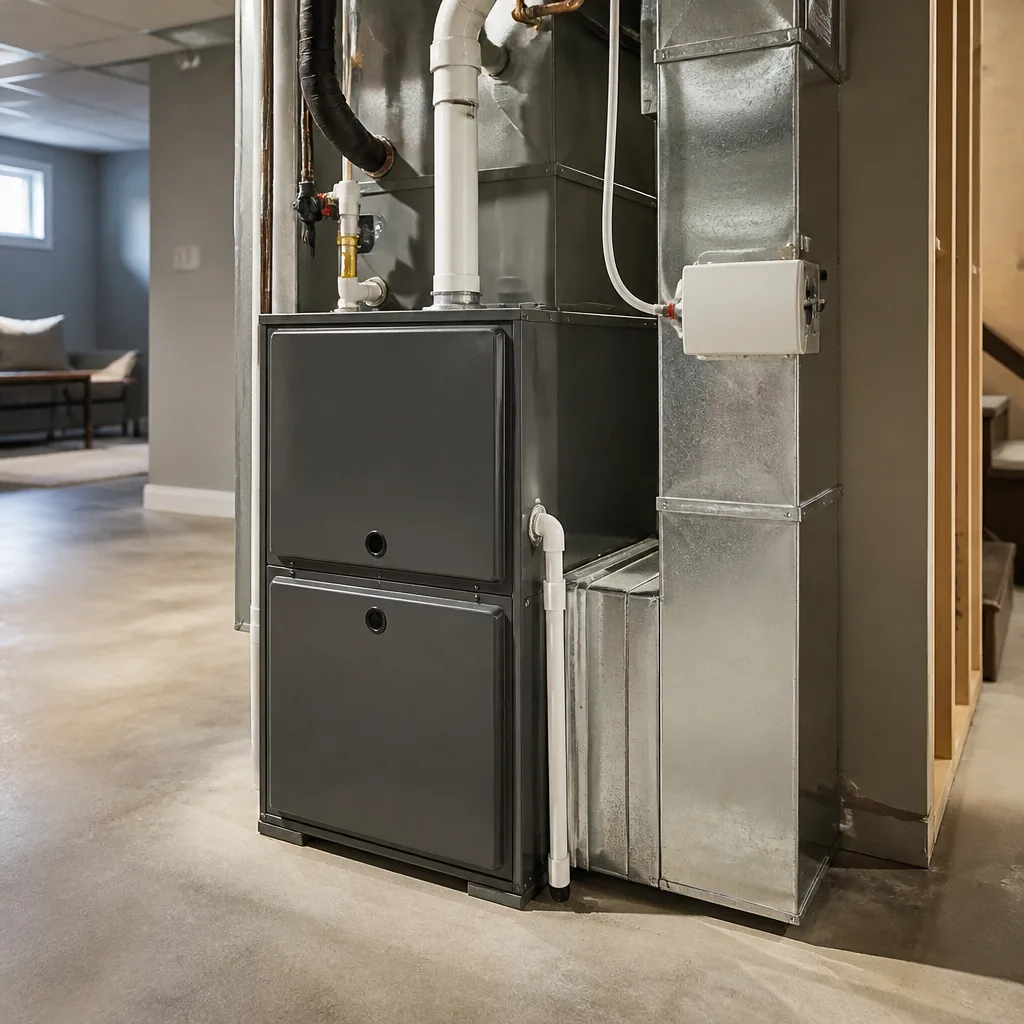 Furnace & heating
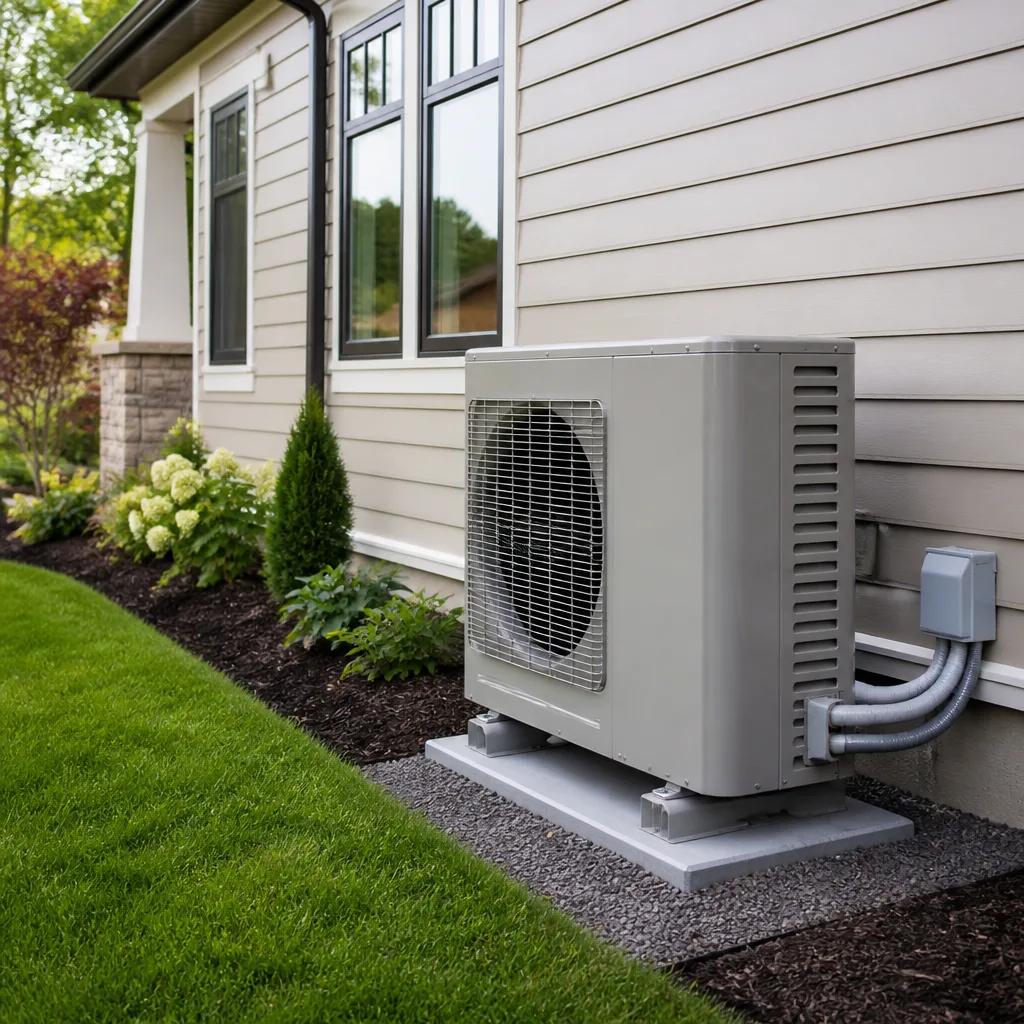 Heat pumps
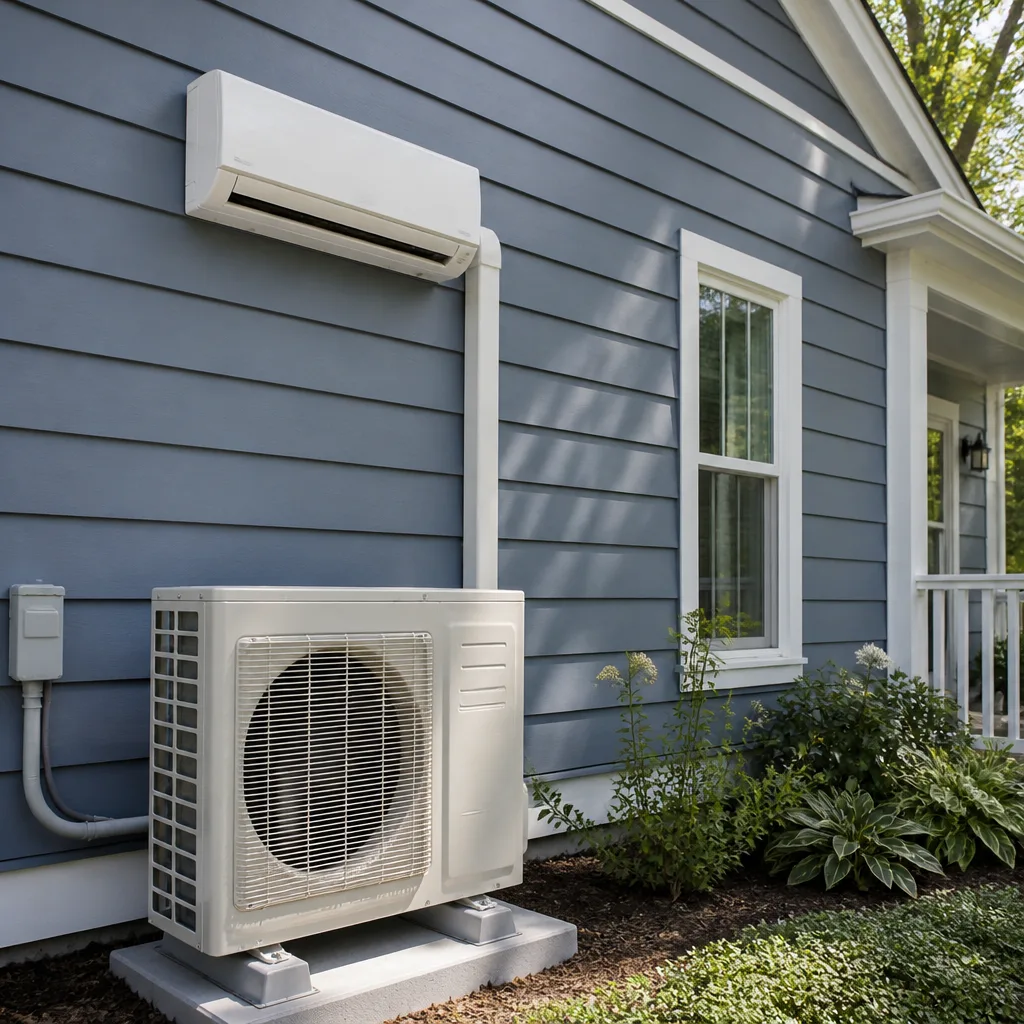 Ductless mini splits
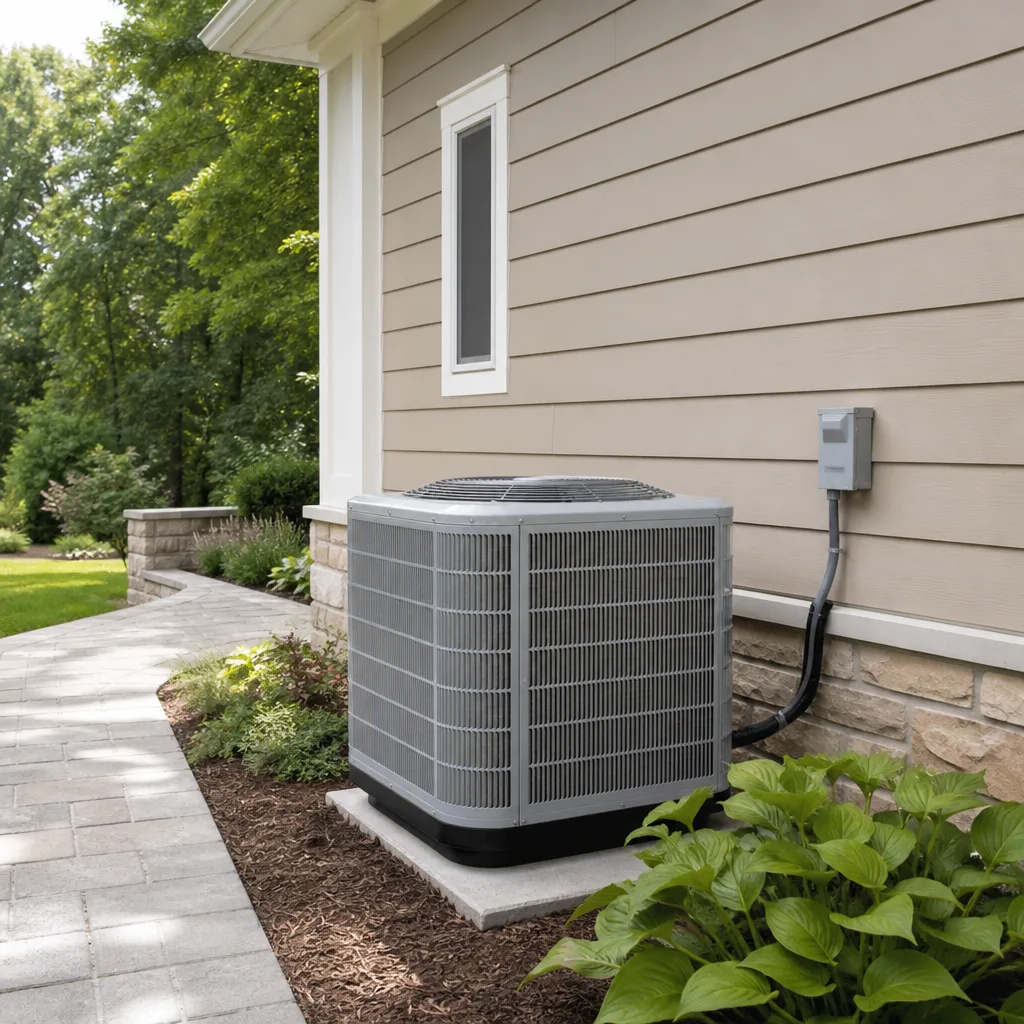 Carrier
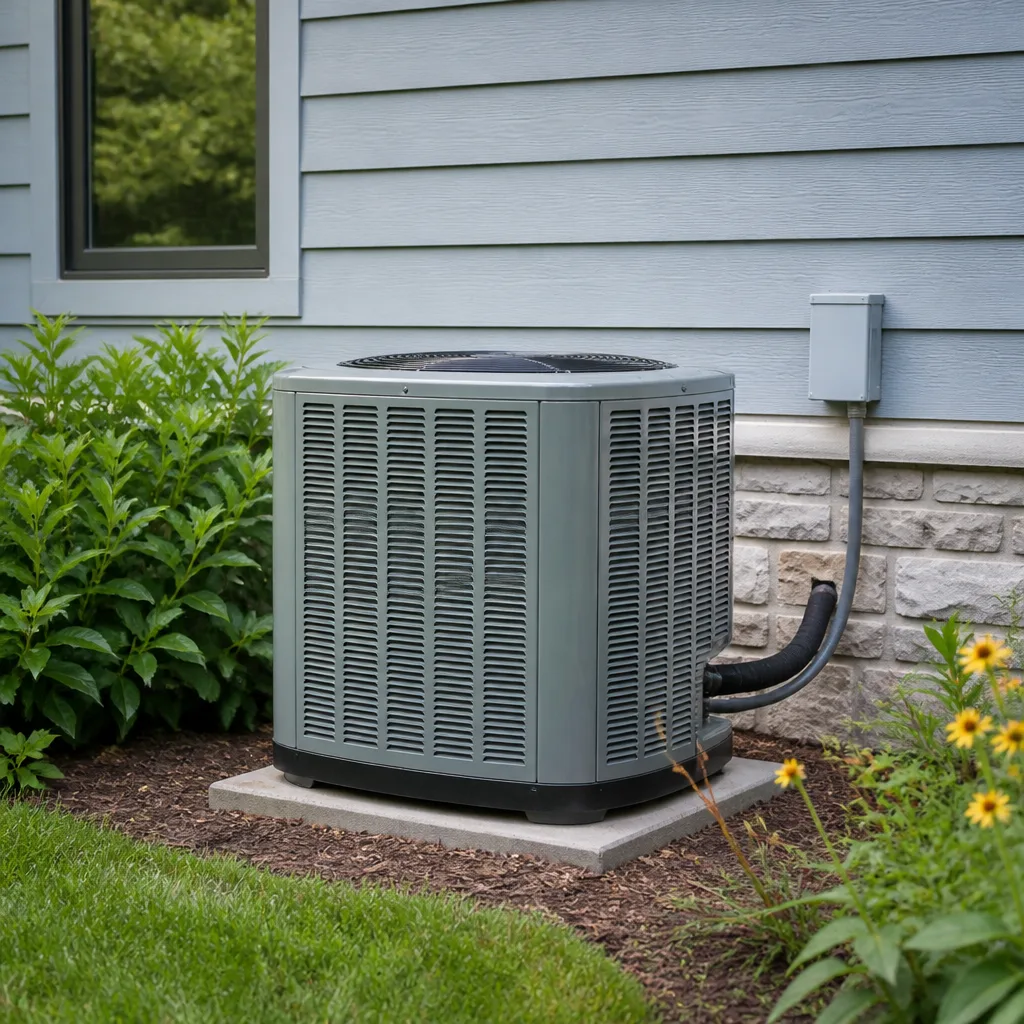 Trane
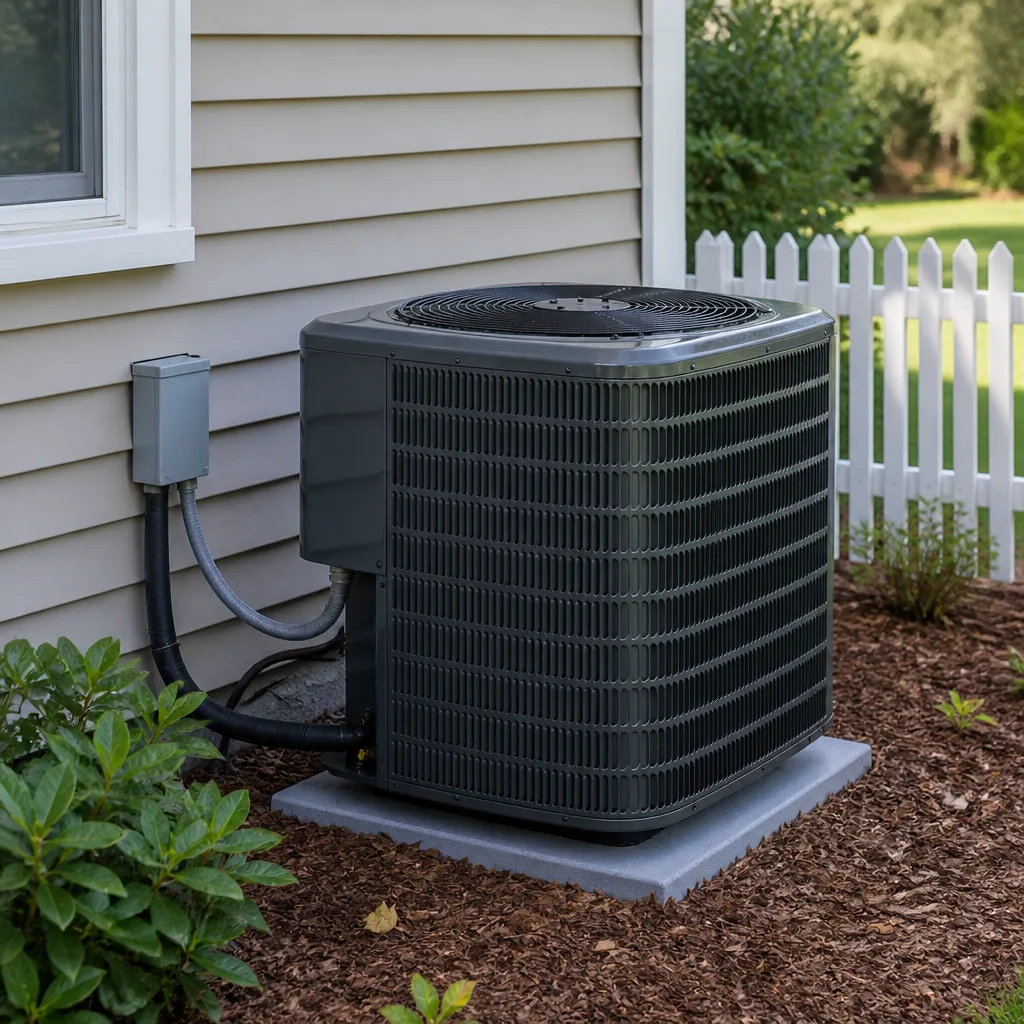 Goodman
Seasonal tune-up and full diagnostic on your Carrier, Trane, or Goodman system - readings shown to you before any repair is proposed
Diagnosis first, numbers second - you approve the repair price before a single part goes in.
Get your free estimateHVAC Cost Breakdown: The Sugar Land Homeowner’s Reference for 2026
The national average for a central AC replacement cited by most cost guides is $5,000-$7,000. In Sugar Land in 2026, with the system sizes required for local heat loads and current refrigerant transition costs, the realistic range starts at $7,500 for a straightforward job. That gap isn’t a scare tactic. It’s arithmetic: most national averages were built on cooler markets, smaller systems, and pre-transition refrigerant pricing that no longer exists. This guide rebuilds the numbers from the ground up for Sugar Land homeowners, line by line, so you can read a contractor’s quote and know exactly which figures are real.
Quick Answer
A full AC replacement in Sugar Land typically runs $7,500-$14,500 in 2026, with most single-family homes landing between $9,000 and $12,000 depending on system size, SEER2 tier, and refrigerant type. The biggest drivers of that range are tonnage (Sugar Land homes often need 3-5 tons), the R-410A to R-454B refrigerant transition, and whether ductwork or electrical work is included. Repair instead of replacement usually makes sense below $2,500 on systems under 10 years old; above that, the math leans toward replacement.
Styles & brands we work with
- AC repair
- Furnace & heating
- Heat pumps
- Ductless mini splits
- Carrier
- Trane
- Goodman
Table of Contents
- Why National Averages Undersell Sugar Land
- Line-Item Breakdown of a Typical AC Replacement
- Tonnage: Why Your Home Needs More Than the Calculator Says
- The Real Math on SEER2 Upgrades
- Repair vs. Replace: The Dollar Thresholds
- Reading Contractor Quotes: What’s Legitimate vs. Padding
- Heating Side Costs: Furnace Repair and Replacement
- Common Mistakes to Avoid
Why National Averages Undersell Sugar Land
Most cost guides pull from national data. In Sugar Land, three specific forces push every HVAC line item higher than the national average. Understanding them is the first step to reading quotes with the right set of eyes.
First, cooling load. Sugar Land runs among the hotter, more humid stretches of Fort Bend County, and cooling systems here work harder and longer than in most of the country. Sizing that reflects the real cooling load means larger tonnage, and larger tonnage costs more up front.
Second, refrigerant. The industry is mid-transition from R-410A to R-454B, a lower-GWP refrigerant required under federal rules that took effect in 2025. R-454B equipment costs more to manufacture, and some units ship with a sensor and mitigation hardware the older refrigerant didn’t need. That adds real dollars to equipment cost, not imagined ones.
Third, Texas labor and permit costs in a growing metro. Fort Bend County has seen steady construction demand, and HVAC labor rates reflect it. Permit fees vary by jurisdiction, but most Sugar Land-area jurisdictions require a permit for a system replacement, and the contractor carries that cost into the quote.
When we pull a quote together for a Sugar Land homeowner, we’re not comparing against a national average. We’re comparing against what the equipment, refrigerant, labor, and permit actually cost this week in this market. That’s what Sugar Land homeowners deserve to see on paper.
Line-Item Breakdown of a Typical AC Replacement
Here’s what a straightforward 3-ton AC and coil replacement in Sugar Land looks like broken into its parts. These are typical 2026 estimated ranges, not exact prices. The written estimate sets the final number.
- Condenser (outdoor unit), 15-16 SEER2, R-410A or R-454B: $2,200-$3,800
- Evaporator coil and air handler: $1,200-$2,400
- Line set (if replacement required): $400-$900
- Refrigerant charge, R-410A: $300-$700
- Refrigerant charge, R-454B (with sensor): $500-$1,100
- Labor for removal and installation: $1,400-$2,400
- Electrical disconnect and whip: $200-$500
- Permit and inspection: $150-$450
- Equipment disposal and refrigerant recovery: $100-$250
- Thermostat (basic to smart): $100-$500
Add all of that up for a mid-tier R-454B system and you land in the $7,500-$11,000 range for equipment and standard install. Add ductwork modifications, a new plenum, or a second story that needs a longer line set, and you approach or cross $12,000. Those aren’t upsells – they’re the cost of doing it right.
If you want a system quoted against your home’s actual load rather than a rule of thumb, we handle AC installation on the nine major brands we service, so the quote can reflect what fits your home, not what a single-manufacturer dealer is contractually allowed to sell you.
Tonnage: Why Your Home Needs More Than the Calculator Says
The most common mistake we see in Sugar Land HVAC quotes isn’t the wrong brand or the wrong SEER2 level. It’s the wrong tonnage. Online size calculators typically use a national rule of 1 ton per 500-600 square feet. In Sugar Land, our cooling loads push that closer to 1 ton per 400-500 square feet, and sometimes tighter on west- and south-facing homes with limited shading.
The difference matters. A 2,000-square-foot Sugar Land home that an online calculator sizes at 3.5 tons might genuinely need 4 tons here to hold temperature on a 100°F afternoon without running constantly. Under-sized systems run longer, fail sooner, and never quite hit the setpoint. Over-sized systems cycle too short, don’t dehumidify well, and waste energy.
The only way to size correctly is a Manual J load calculation – a room-by-room assessment of square footage, windows, insulation, orientation, and local design conditions. We run one on every replacement quote. Ask for the same from any contractor you’re considering.
What that means for cost: a 4-ton system typically runs $800-$1,500 more than a 3-ton of the same tier. That’s not padding. It’s a larger coil, larger air handler, and larger outdoor unit, all with real cost attached. Getting the tonnage right the first time is cheaper than replacing a wrong-sized system three years in.
The Real Math on SEER2 Upgrades
Upselling efficiency is where a lot of HVAC quotes get fuzzy. A contractor saying “the 18 SEER2 will pay for itself” is stating a real possibility, but the math has to pencil out against actual Sugar Land electricity rates, not a national average. Let’s run the numbers plainly.
Start with the baseline. A 3-ton system running roughly 1,800 cooling hours per year (typical for our climate) uses about 4,500 kWh at 15 SEER2. At a Sugar Land-area electricity rate of roughly 14-16 cents per kWh, that’s $630-$720 per year in cooling energy.
Now step up to 18 SEER2. That same system uses about 3,750 kWh – roughly 750 fewer kWh annually. At the same rate, you save $105-$120 per year. That’s real, but it isn’t dramatic. The equipment premium for stepping from 15 SEER2 to 18 SEER2 typically runs $1,200-$2,500 on a 3-ton system. Divided by the annual savings, that’s a realistic payback window of 10 to 20 years – longer than most homeowners keep a single system.
Where the upgrade starts to make more sense:
- You plan to stay in the home 10+ years and want lower monthly bills through that stretch.
- Your electricity rate is at the higher end of the local range.
- You’re adding zoning or a variable-speed compressor for comfort and humidity control, which often bundles with a higher SEER2 tier.
- Utility rebates at the time of purchase close the gap between tiers (ask your utility directly; programs shift).
The honest answer: 15-16 SEER2 is often the smart financial call in Sugar Land. 18 SEER2 makes sense when comfort, quiet operation, and long-term bill stability matter more than the shortest payback. We’ll walk you through both, and we won’t push one over the other to hit a margin target. The right system is the one for your home, not for our margins.
Repair vs. Replace: The Dollar Thresholds
We get this question at every age of system. The clean way to decide: compare the repair cost against the age, efficiency, and remaining life of the unit. Here are the thresholds we use when advising Sugar Land homeowners.
- Under 8 years old, repair under $600: Repair. The system has most of its life ahead of it, and a single failed part isn’t a signal to replace.
- Under 8 years old, repair $600-$1,500: Usually repair, unless the repair involves the compressor or the evaporator coil, which tips it toward replacement.
- 8-12 years old, repair under $1,200: Repair is often still the right call, but weigh it against efficiency losses. An aging 10 SEER unit is expensive to run compared with a modern 15 SEER2.
- 8-12 years old, repair $1,200-$2,500: The threshold zone. If the repair also brings a compressor or coil replacement, replacement becomes the better math, especially when you factor in new-system warranty years.
- 12+ years old, any repair over $1,000: Replacement is usually the right move. You’re into the tail of the unit’s service life, and every dollar on repair has to compete against a new system with a fresh warranty.
- Any age, repair over $2,500: Replacement math almost always wins at this point. Very few repairs above that number pay back before the next major failure.
Two more things matter in Fort Bend County specifically. First, refrigerant. Older R-22 systems are expensive to repair because R-22 is no longer produced – a recharge alone can run $500-$1,500, and it’s not a repair. Second, efficiency. If your system is pre-2006 (10 SEER or lower), the operating-cost savings of a modern replacement alone can justify moving on sooner than the age threshold suggests.
If your system has failed and you need it back this week, we handle furnace repair on the heating side and full AC repair on the cooling side, on the nine major brands we service.
Reading Contractor Quotes: What’s Legitimate vs. Padding
Three contractors can quote the same job at $8,500, $10,200, and $13,000, and each number has a story behind it. Here’s how to tell the difference between a legitimately higher price and one that’s mostly margin.
Legitimate cost differences:
- Equipment tier: A name-brand unit like a Trane, Carrier, Lennox, or American Standard sits above a value tier like Goodman or Rheem in base cost, service network, and usually parts warranty length. Both can be good choices, but they’re not priced the same.
- Warranty terms: A 10-year parts and labor warranty costs the contractor real money to offer. A 5-year parts-only warranty doesn’t. Ask what’s actually covered and for how long.
- Scope inclusions: New line set, thermostat, plenum, pad, and electrical disconnect should each appear as a line item. If they’re absent, the low quote likely isn’t the same job.
- Load calculation and permit: A quote that includes a Manual J and a pulled permit cost more to produce than one that skips both. That’s a difference in quality, not just price.
Potential padding:
- Vague “installation support” or “materials” bundles that don’t break out what’s actually being provided.
- Efficiency tier upgrades without an actual calculation. If a contractor can’t show you the annual kWh savings, the upgrade is an upsell.
- “Free” add-ons that quietly reappear in another line item. The written estimate should total up cleanly.
- Pressure to sign same-day to lock a price. A legitimate quote holds for at least a few days, and a contractor confident in the number doesn’t need a deadline.
Compare quotes line by line. The right question isn’t “which total is lowest” but “which total covers the same work with the same equipment tier and warranty.” No surprises on the invoice starts with no surprises on the estimate.
Heating Side Costs: Furnace Repair and Replacement
Sugar Land winters are mild, but they’re not absent – January and February regularly bring the kind of cold snap that finds every weak furnace in Fort Bend County at once. Heating costs here are smaller than cooling costs, but they still deserve a real number on the budget.
Furnace repair, typical 2026 Sugar Land ranges:
- Ignitor replacement: $200-$450
- Flame sensor cleaning or replacement: $150-$350
- Inducer motor: $500-$900
- Control board: $550-$1,100
- Gas valve: $600-$1,200
- Blower motor: $450-$900
Furnace replacement, typical 2026 Sugar Land ranges:
- 80% AFUE single-stage, 80,000 BTU: $4,200-$6,800
- 80% AFUE two-stage: $5,200-$8,000
- 96% AFUE modulating: $6,500-$10,000
In our climate, the jump to 96% AFUE rarely pays back on fuel savings alone – the mild winters mean the heating season is short. The two-stage 80% units are usually the sensible middle ground for Sugar Land homes. Repair vs. replace on the heating side follows the same dollar thresholds as cooling; the difference is that furnace failures often come without warning on the first cold night.
Because we handle both sides of the system, furnace repair and AC replacement can be quoted together when a full-system evaluation makes sense. You don’t need a separate contractor for winter and summer.
Common Mistakes to Avoid
- Buying from a national average. National cost guides understate what Sugar Land homeowners actually pay. Use local ranges, ask for local quotes, and treat any national number as a starting point, not a budget.
- Choosing size by square footage alone. A 500-square-foot rule doesn’t work in our climate. Insist on a Manual J load calculation before signing any replacement contract.
- Paying for high-SEER2 without the math. The 18-20 SEER2 equipment costs real money and pays back slowly here. Ask to see the annual kWh estimate in writing before committing to the upgrade tier.
- Skipping the permit. Most Sugar Land-area jurisdictions require a permit for a system replacement. Unpermitted work can cause problems at resale and leaves you without inspection coverage.
- Comparing quotes on price alone. A $8,500 quote for a 15 SEER2 with a 5-year parts-only warranty is not the same job as a $10,200 quote for 16 SEER2 with a 10-year parts-and-labor warranty. Compare scope, not totals.
- Repairing past the threshold. $2,500+ on a 12-year-old system is usually money you won’t recoup. Run the thresholds before authorizing the repair.
- Ignoring refrigerant type. If a contractor is still quoting R-410A without telling you that R-454B is the new standard for new equipment, ask why. You deserve to know what you’re buying and what refrigerant it uses.
See the difference
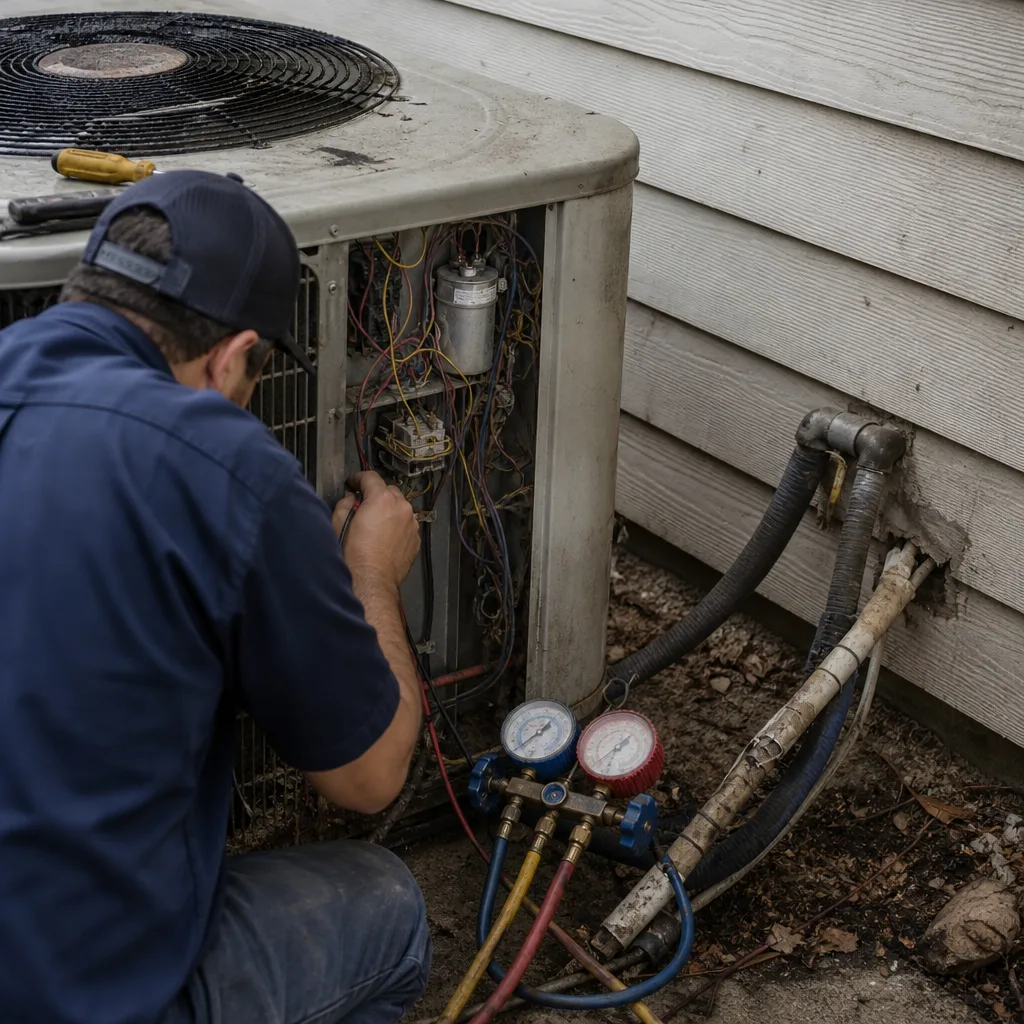 Before
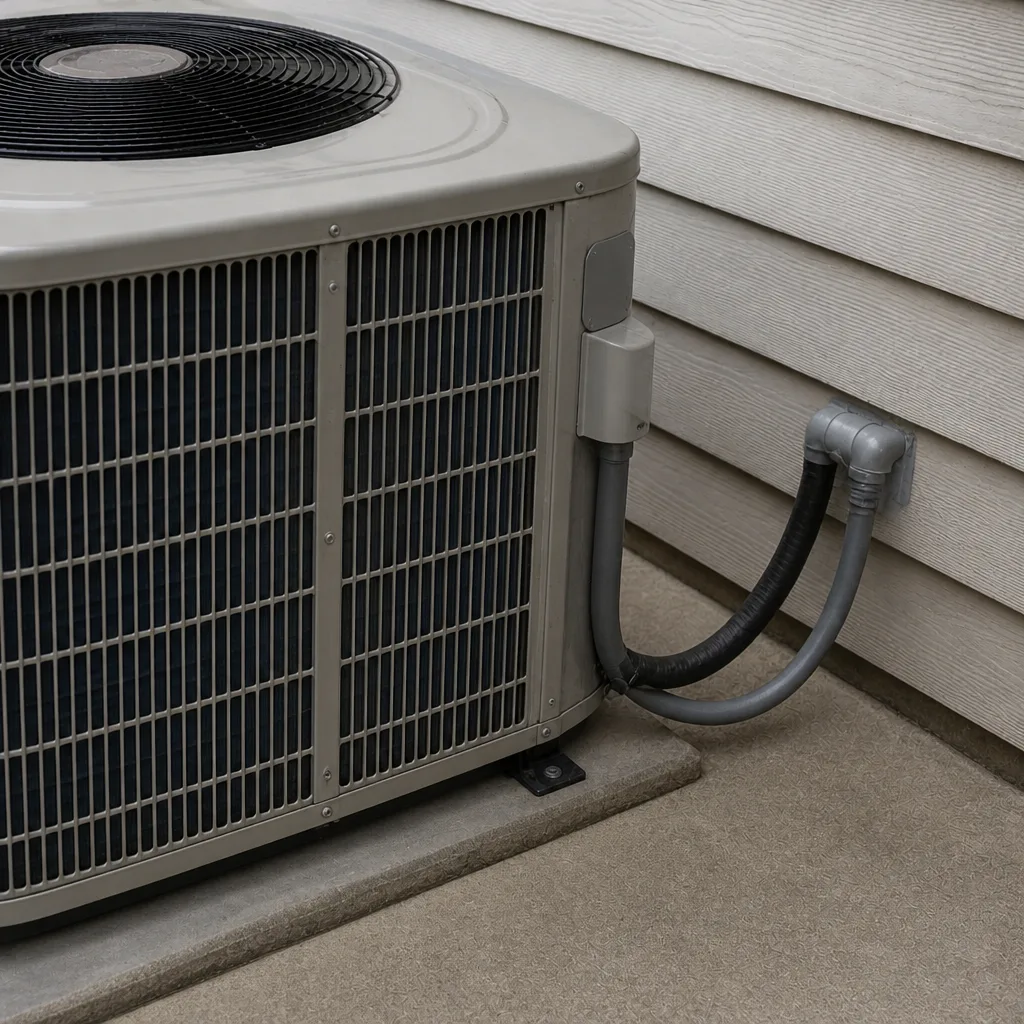 After
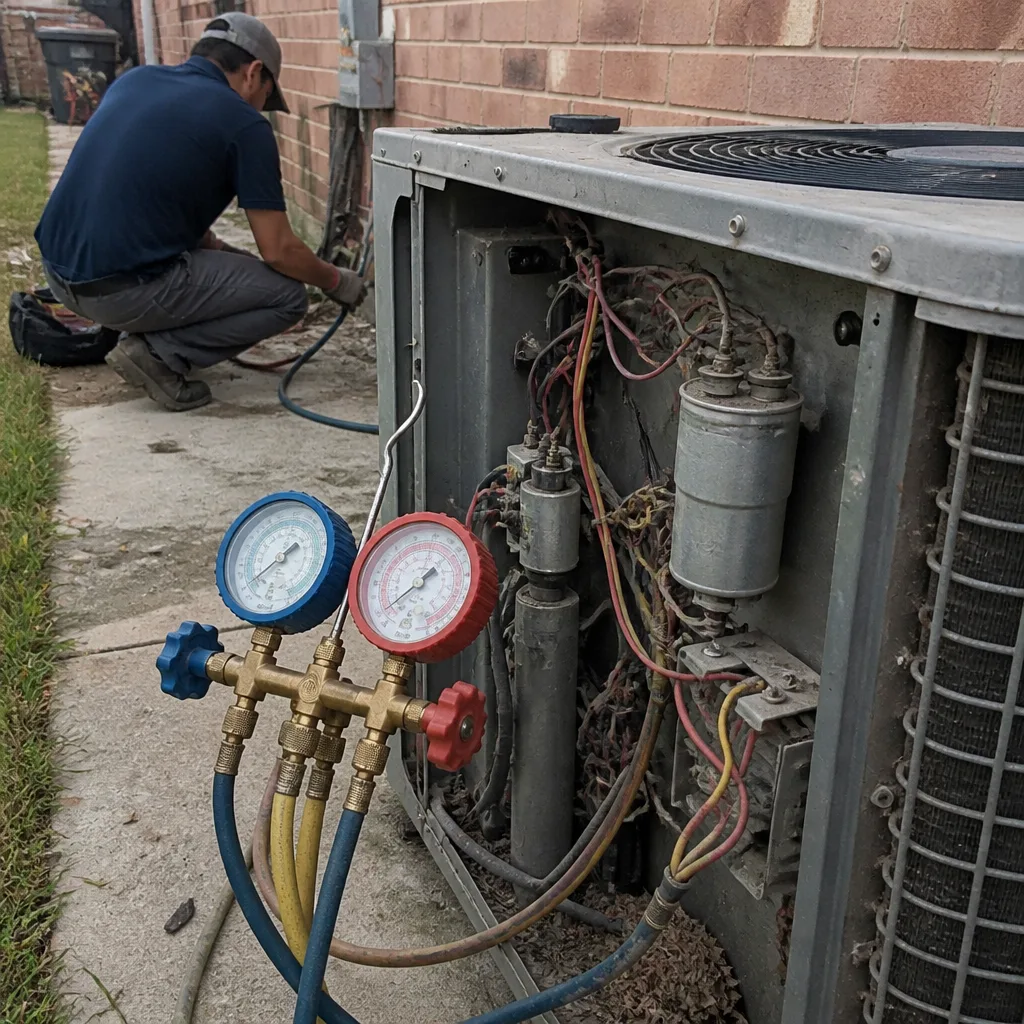 Before
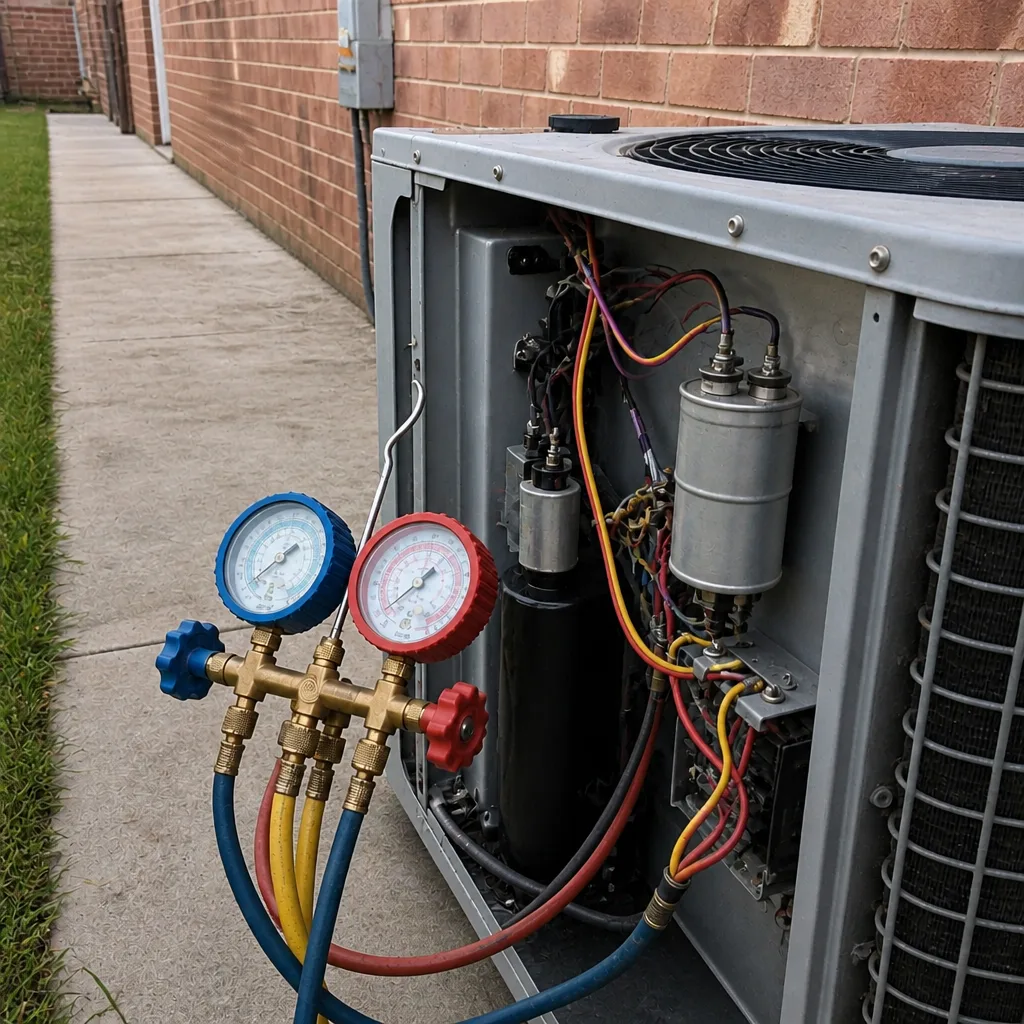 After
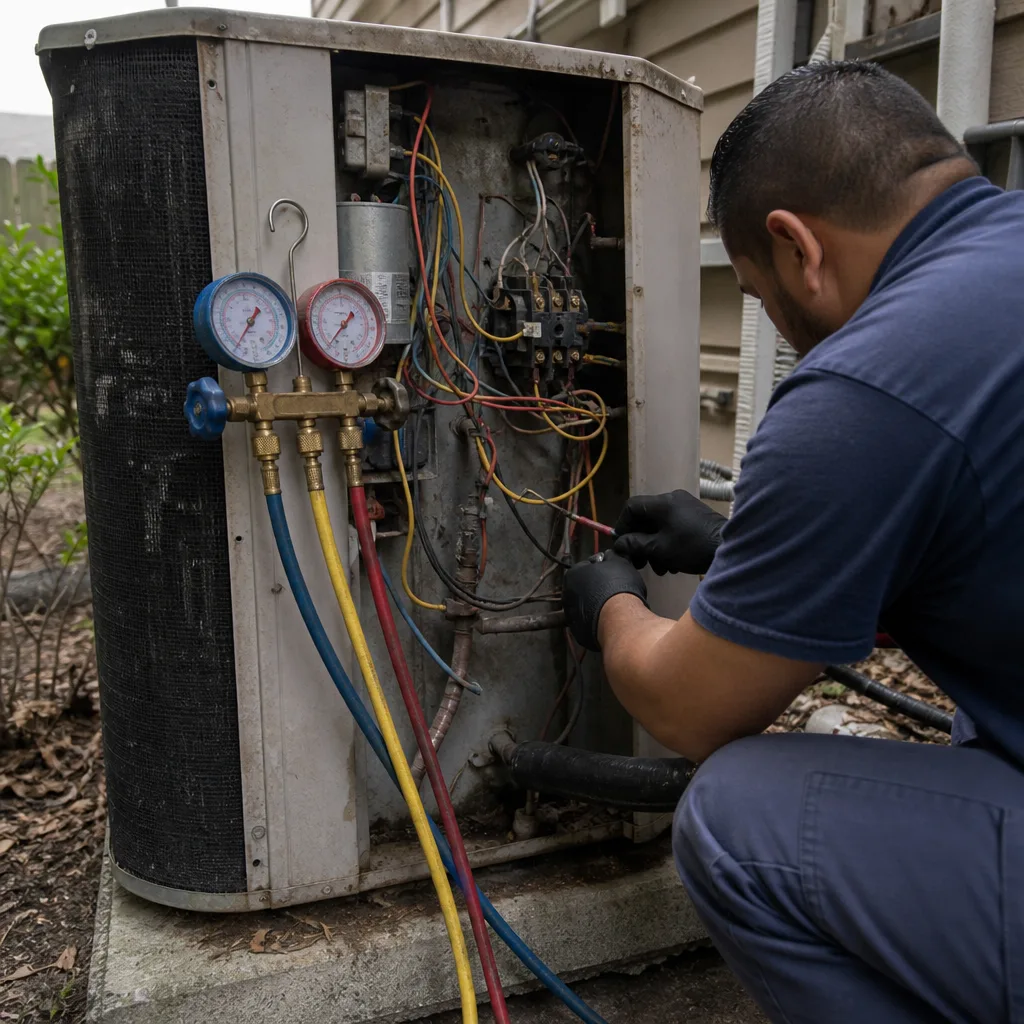 Before
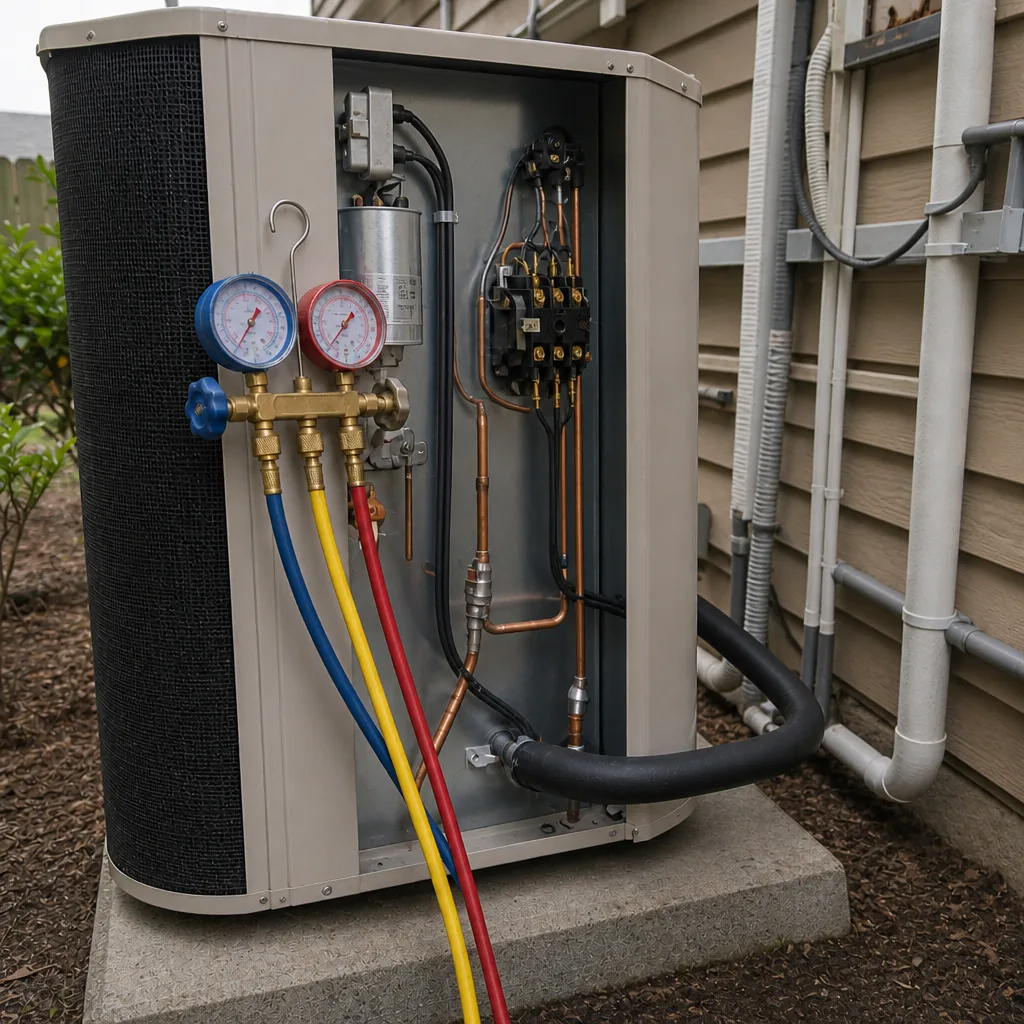 After
When to Call a Professional
Call a professional when the system is short-cycling, when the thermostat won’t hold temperature on the hottest afternoon of the year, when you hear grinding or squealing from the outdoor unit, when the breaker trips after a few minutes of run time, or when a gas furnace won’t light. Those symptoms each require hands-on diagnosis, and refrigerant work is legally restricted to licensed technicians. Also call before you authorize any repair over $500, because a professional assessment is what tells you whether the repair is the right call or whether you’re throwing money at a system that’s past its service life. Delmar AC Repair offers free estimates in Sugar Land – call (833) 968-5064. We answer 24/7. Fast dispatch from 7am to 7pm, Sunday through Friday.
Frequently Asked Questions
A typical full AC replacement in Sugar Land runs $7,500-$14,500 in 2026, with most homes landing in the $9,000-$12,000 range. The main drivers are system size (Sugar Land homes often need 3-5 tons), SEER2 tier, refrigerant type, and whether ductwork or electrical work is included. Call (833) 968-5064 for an exact quote – estimates are free.
Repair usually wins on systems under 8 years old when the repair cost is under $1,500. Replacement becomes the better math once the system passes 12 years old or the repair exceeds $2,500. Refrigerant type matters too: older R-22 systems are expensive to repair because the refrigerant is no longer produced. Call (833) 968-5064 for a free assessment.
Because of three real local forces: higher cooling loads (larger tonnage), the R-410A to R-454B refrigerant transition (higher equipment cost), and Fort Bend County labor and permit rates. The national average of $5,000-$7,000 was built on smaller systems in cooler climates. In Sugar Land, $7,500 is the floor for a straightforward replacement. Call (833) 968-5064 to see what your specific job costs.
Most Sugar Land homes need about 1 ton per 400-500 square feet of conditioned space, tighter than the 500-600 square foot national rule. A 2,000-square-foot home often needs 4 tons here rather than 3.5. The only reliable answer is a Manual J load calculation – ask any contractor you’re considering to run one. Call (833) 968-5064 to have us run yours.
Ballpark, $105-$120 per year for a 3-ton system in Sugar Land at typical local electricity rates. That’s real money, but against a $1,200-$2,500 equipment premium, the payback runs 10-20 years – longer than most homeowners keep a system. Consider 18 SEER2 when comfort, quiet operation, and long-term bill stability matter more than payback speed. Call (833) 968-5064 to walk through the numbers for your home.
Yes. We service nine major HVAC brands, including Carrier, Trane, Lennox, Goodman, Rheem, York, Daikin, Bryant, and American Standard. That means we diagnose and repair what’s already in your home without pushing you toward a proprietary brand. Call (833) 968-5064 for a free estimate.
R-454B is the lower-GWP refrigerant that replaced R-410A for new equipment starting in 2025. It costs more per pound and often requires additional sensor hardware, which adds roughly $200-$400 to a typical replacement quote. That’s a real cost, not padding – and it’s built into every 2026 replacement estimate you’ll see in Sugar Land. Call (833) 968-5064 with questions about your specific system.
The Bottom Line
National HVAC cost averages don’t reflect what Sugar Land homeowners actually pay. Build your budget from local numbers: $7,500-$14,500 for AC replacement, $4,200-$10,000 for furnace replacement, and repair-vs-replace at the $1,500 (under 8 years) and $2,500 (any age) thresholds. Get the tonnage right with a Manual J, treat SEER2 upgrades as a comfort decision rather than a savings play, and compare quotes on scope and warranty rather than totals. Read through the numbers, ask questions, and don’t sign until the estimate makes sense line by line. When you’re ready to see your home’s actual costs quoted properly, Delmar AC Repair is here to help.
Call (833) 968-5064 for a free estimate. We answer 24/7. Fast dispatch from 7am to 7pm, Sunday through Friday.
Written by the team at Delmar AC Repair.