
Last updated November 15, 2026
 AC repair
 Furnace & heating
 Heat pumps
 Ductless mini splits
 Carrier
 Trane
 Goodman
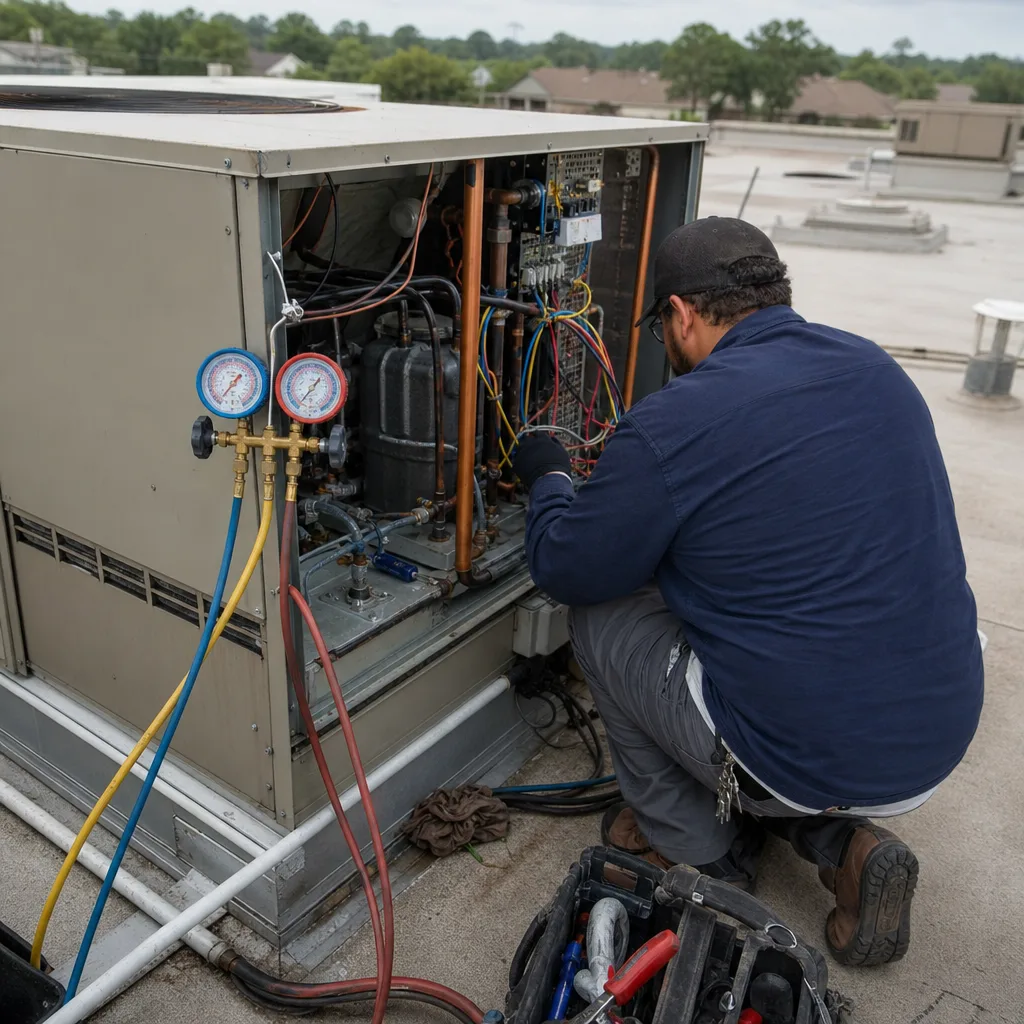
Seasonal tune-up and full diagnostic on your Carrier, Trane, or Goodman system - readings shown to you before any repair is proposed
Diagnosis first, numbers second - you approve the repair price before a single part goes in.
Get your free estimateChoosing the Right HVAC Brand: A Buyer’s Guide for Sugar Land
Every major HVAC brand sells both excellent and mediocre equipment, sometimes under the same logo. A Carrier unit installed by a skilled technician, sized correctly and configured for the house it’s in, will outperform a Trane unit installed carelessly every single time. The nameplate is a smaller factor than most homeowners in Sugar Land assume. What actually decides whether you spend the next fifteen summers comfortable or frustrated comes down to three things: how the system was sized and set up, who installed it, and whether the parts to fix it are sitting on a shelf twenty minutes away or on a truck from out of state. This guide walks through what the brand data actually shows for Fort Bend County conditions, and gives you a framework for comparing equipment that goes past the brochure.
Quick Answer
The “best” HVAC brand in Sugar Land depends less on the logo and more on three factors: local parts availability, the tier of equipment you buy within that brand, and the quality of the installer. For most Sugar Land homes, a mid-tier unit from Carrier, Trane, Bryant, or American Standard installed by a careful, load-calculating contractor will outperform a premium unit from any brand installed without proper sizing or commissioning. Brand matters, but it’s third on the list behind installation quality and service support.
Styles & brands we work with
- AC repair
- Furnace & heating
- Heat pumps
- Ductless mini splits
- Carrier
- Trane
- Goodman
Table of Contents
- How much does the HVAC brand actually matter?
- Why local parts availability in the Houston metro beats brand reputation
- How to read an HVAC warranty that actually applies in Texas
- Which equipment specs matter most in Sugar Land’s climate
- Tier 1 vs. Tier 3 equipment: why the tier beats the brand
- How factory dealer agreements shape what you’re shown
- A brand-agnostic framework for comparing bids
- What to do when your existing brand needs repair
How much does the HVAC brand actually matter?
The brand accounts for a modest slice of the outcome. Ask any technician who’s pulled a failed compressor out of a premium-brand condenser installed by a rushed crew, then serviced a ten-year-old mid-grade unit humming along in a house across the street. The equipment is one input. The installation is the other, and it’s the bigger one.
What installation quality means in practice:
- Correct sizing. A system that’s oversized cools the house quickly, then shuts off before it removes humidity. In Sugar Land’s long humid summers, that short-cycling leaves rooms feeling clammy. Undersized systems run constantly and burn out early. The only correct way to size a unit is a room-by-room load calculation, not a rule of thumb based on square footage.
- Proper airflow. Ductwork that’s too small for the equipment chokes it. Static pressure needs to be measured, not guessed. A perfect condenser behind an undersized return duct performs like a bargain unit.
- Refrigerant charge. Too much or too little refrigerant shortens compressor life. A technician who weighs in the charge and verifies superheat and subcooling is doing the job correctly. One who “tops it off” until the gauge looks right is not.
- Commissioning. Temperature rise and drop, static pressure, and airflow should all be recorded on the invoice. If a bid doesn’t mention commissioning, that’s a signal.
When you call Delmar AC Repair, the assessment starts with what you already have installed. We work on equipment from nine major manufacturers, including Carrier, Trane, Bryant, and American Standard, so diagnosing the system in your home doesn’t depend on us having a dealer relationship with one brand. Our technicians have up to 15 years of experience across install bases that run the spectrum from builder-grade Goodman packages to premium variable-speed Trane systems. That range is what makes a brand-agnostic recommendation useful in a Sugar Land home: we’ve seen how each brand’s equipment holds up here, and we’ve seen how much of a difference a proper install makes on all of them.
Why local parts availability in the Houston metro beats brand reputation
When an air conditioner fails in July, the question isn’t which brand has the best reputation. It’s which brand has the compressor, the control board, or the blower motor sitting on a shelf at a Houston-area distributor that day. A premium brand with a four-day parts pipeline is a worse brand for a Sugar Land homeowner in a heat wave than a mid-market brand with same-day stock.
In our experience servicing Sugar Land homes, this is where brand choice starts to have real teeth. Some manufacturers maintain deep inventory in the Houston metro through their wholesale distributors. Others route parts through regional warehouses and can take days longer to fill an order during peak season, when every contractor in Fort Bend County is chasing the same part at the same time.
A few practical things to ask when you’re comparing brands (not the installer’s opinion of the brand, but the parts reality):
- Ask how fast a replacement condenser fan motor or control board would arrive for that specific model. A tech can usually tell you whether it’s a “shelf item” in the Houston market or a two-day order.
- Ask whether the brand has a dedicated distribution center in the Houston metro. Carrier, Trane, Rheem, Goodman, and Daikin all have significant local distributor presence. That matters more than any review score.
- Ask whether the brand’s dealer network in your area is broad or thin. If the closest authorized dealer is 40 minutes away, warranty service during peak season gets harder, not easier.
- Ask for a worst-case estimate of how long a system could be down waiting for parts. For most Sugar Land homes, a top brand with heavy local inventory will be back up in a day or two. A brand with a thin local footprint can stretch longer.
Goodman and Rheem tend to be strong on day-one parts availability in this market, partly because they’re heavily stocked at wholesale distributors around Houston. Carrier and Trane have deep local supply too, and their components tend to be plentiful because of the sheer number of units installed in the metro. Bryant (Carrier’s sister brand) shares much of that supply chain. American Standard shares the Trane platform. None of this makes any one brand “best” – it means the practical service experience for a Sugar Land homeowner is more aligned across brands than their price tags suggest.
How to read an HVAC warranty that actually applies in Texas
Manufacturer warranties look similar on the surface and differ enormously in the fine print. Here’s what actually matters for a Sugar Land homeowner, in plain terms:
- Registration window. Most manufacturers offer a longer “limited” warranty only if the equipment is registered within a set number of days of installation, typically 60 to 90 days depending on the brand. Miss that window and you fall back to a base warranty that may cover five years instead of ten on the compressor. The installer should register the equipment for you and hand you the registration confirmation. Ask for it.
- Parts vs. labor. Nearly every manufacturer warranty covers the part, not the labor to replace it. Labor coverage, if it exists at all, comes from the installing contractor or a third-party extended warranty. When a bid says “10-year warranty,” ask specifically whether that’s parts-only or includes labor, and if labor is covered, for how long.
- Compressor vs. everything else. The compressor often has its own longer warranty (10 years on many brands). Coils, control boards, motors, and valves typically carry shorter terms. Ask for the coverage on each component, not just the overall number.
- Transferability. Some brands let the warranty transfer to a new owner if the home is sold. This matters if you might sell your Sugar Land home inside the warranty period. American Standard and Trane, for example, offer transferable terms on some equipment tiers; Bryant and Carrier terms vary by model line.
- Online-purchase exclusions. Many manufacturers won’t honor full warranty coverage if the equipment was bought online and installed by an unlicensed party. Buy through a licensed contractor, and keep the invoice.
The correct move when you’re comparing bids is to ask each contractor to write the warranty terms on the estimate: which components, how many years each, whether labor is included, whether the equipment will be registered, and how long that registration lasts. A contractor who can’t produce this in writing is not a contractor to use.
Which equipment specs matter most in Sugar Land’s climate
Sugar Land sits in a humid subtropical climate. Summers run long and muggy, winters are mild, and the shoulder seasons drift between cool and humid within a week. That climate rewards some equipment specs and makes others less relevant than the marketing suggests.
Humidity control. This is the one spec that separates comfortable homes from sticky ones, and the one most bid comparison sheets ignore. The spec to look for is the sensible heat ratio (SHR) and the latent capacity of the unit. A system with a strong latent capacity pulls more moisture out of the air per hour of operation. Two-stage and variable-speed compressors run at lower speeds for longer stretches, which is exactly what you want in Sugar Land: the system wrings moisture out of the house without dropping the temperature too fast, and you can set the thermostat where you actually want it.
Two-stage vs. variable-speed. A single-stage compressor runs full-on or off. A two-stage runs at a low setting most of the time and a high setting when the heat load demands it. A variable-speed (or inverter) compressor ramps continuously between speeds. For Sugar Land’s combination of high humidity and mild shoulder seasons, two-stage does most of the practical work of variable-speed at a lower price. Variable-speed is worth the premium if you want the quietest operation, the tightest temperature control, and the best humidity performance – and you plan to stay in the home long enough to offset the added cost.
Communicating capability. Communicating systems let the indoor and outdoor units share data and adjust together, which helps with precise humidity control and diagnostics. It also tends to lock you into the same brand’s thermostat and controls. If you want flexibility in thermostat choice, that’s a reason to favor a non-communicating two-stage system.
SEER2 ratings. The federal minimum SEER2 for a new system in this part of Texas is a floor most builders hit exactly. Ratings above the minimum buy efficiency but not automatically comfort. A 16 SEER2 two-stage system correctly sized and commissioned will feel better and cost less to run in a Sugar Land home than an 18 SEER2 single-stage system that’s oversized. Don’t confuse the rating on the box with comfort in the room.
Mild winters. Sugar Land’s winter loads are light. A standard single-stage gas furnace or a heat pump with a heat strip handles most of what the region delivers. This is where the brand choice for heating equipment matters less than in colder climates; a furnace from any of the major brands, correctly sized, will run a Sugar Land winter comfortably. The furnace repair call is what proves the point: the equipment is usually simple, and the diagnosis is what makes or breaks the repair.
Tier 1 vs. Tier 3 equipment: why the tier beats the brand
Every major manufacturer sells multiple tiers under one logo. Carrier has its entry-level Comfort line, its mid-tier Performance line, and its premium Infinity line. Trane splits between XR, XB, and XV lines. Bryant and American Standard follow a similar structure. The tiers differ in compressor type, sound insulation, control capability, and warranty length, not just in price.
This is the single most important insight in this guide: a mid-tier Carrier unit will usually outperform an entry-level Trane unit, and vice versa, on every measurement that matters in a Sugar Land home. The brand label is a smaller influence than the tier within the brand.
Use this comparison frame when you’re evaluating a bid:
- Identify the tier. Ask the contractor to name the specific model and its position in the manufacturer’s lineup. Entry, mid, or premium. If they can’t or won’t, that’s a signal.
- Check the compressor type. Single-stage, two-stage, or variable-speed. In Sugar Land, a two-stage mid-tier unit outperforms a single-stage premium unit for humidity and comfort.
- Check the warranty length on the specific tier. Tier matters here too. Premium lines often carry longer parts warranties than entry lines within the same brand.
- Check the sound rating. Premium tiers are quieter. If the unit sits outside a bedroom window in a Sugar Land home, that’s worth real money.
- Compare the installed price, not the equipment price. A mid-tier unit properly installed can cost less overall than a premium unit slapped in.
When we walk a Sugar Land homeowner through equipment options, “the right system for your home, not for our margins” is the framing we work from. We install multiple competing brands, so the recommendation is based on the home’s load profile, your budget, your humidity sensitivity, and how long you plan to stay. If a mid-tier Carrier fits your situation, we’ll show you that. If a premium Trane makes sense for the house, we’ll show you that too. The equipment tier almost always matters more than which brand name is on the box.
How factory dealer agreements shape what you’re shown
When a contractor is a “factory authorized dealer” for one brand, that contractor has made a business commitment to sell that brand’s equipment. The commitment isn’t a scam. It often comes with training, priority parts access, and warranty support that benefits the homeowner. But it also means the contractor’s financial relationship with the manufacturer influences what shows up on your bid.
There’s nothing wrong with using a brand-loyal dealer. What matters is knowing what you’re looking at. When every bid from a contractor features the same brand, ask why. When a brand-agnostic contractor shows a mix of Carrier, Trane, Bryant, and American Standard, that’s a sign they’re evaluating your home’s load profile and budget rather than their supply agreement.
How to verify you’re getting an unbiased assessment:
- Ask for the equipment recommendation in writing, with a reason. “This Trane XV is the best fit because your load calculation came out at X tons, your family runs the AC nine months a year, and you told us humidity in the master bedroom is a problem.” That’s an unbiased recommendation. “This is the brand we carry” is not.
- Ask if the contractor can quote an alternative from a different brand. A brand-agnostic contractor can. A single-brand dealer usually can’t, because they don’t have the supply relationship.
- Look for load calculations on the bid. A brand-loyal dealer who does a proper Manual J load calculation and shows it to you is doing better work than a brand-agnostic contractor who guesses at tonnage. The calculation is the tell.
- Ask about the local distributor relationship for service. Even a brand-loyal dealer needs same-day parts. The question to ask is which local distributor they buy from and how fast the part arrives when a compressor fails in July.
Delmar AC Repair sells and installs multiple brands, which means the recommendation we put in front of a Sugar Land homeowner isn’t constrained by a supply agreement. We work on the nine major manufacturers – Carrier, Trane, Lennox, Goodman, Rheem, York, Daikin, Bryant, and American Standard – for both equipment and service. That range is what lets us tell a homeowner honestly that a mid-tier unit from one brand is the better buy for their home than a premium unit from another. When you see the ac installation recommendation, ask why. You should get a clear reason that starts with your house, not with the logo.
A brand-agnostic framework for comparing bids
Here’s the process we recommend to any Sugar Land homeowner comparing HVAC bids, in order. It works regardless of brand.
- Ask for the load calculation. A Manual J calculation based on window orientation, insulation, and square footage of the home – not a rule of thumb. Every bid should be based on one. If two bids show different tonnage for the same house, something’s wrong.
- Ask for the specific model numbers. Not “Carrier 3-ton system.” The full model number of the condenser, the air handler or furnace, and the coil. Then look up each model on the manufacturer’s website to see the SEER2 rating and tier.
- Ask about the thermostat and controls. Is the thermostat included in the bid? Is it the manufacturer’s communicating control, or a third-party smart thermostat? Communicating controls lock you into the brand’s ecosystem; third-party thermostats preserve flexibility.
- Ask for the commissioning plan. Static pressure, refrigerant charge verification, temperature rise and drop, and airflow measurements. Written on the invoice after the install. If the bid doesn’t mention commissioning, the contractor is not planning to do it.
- Ask about warranty registration and timeline. Who registers the equipment with the manufacturer, in what window, and what documentation you receive.
- Ask about labor warranty separately. Manufacturer parts warranty and contractor labor warranty are different. Get both in writing.
- Ask what happens when the system needs service in year three. Same phone number? Same warranty process? Same parts availability for that specific model?
Run every bid through this list, and the brand name starts to sort itself out. The bid that answers all seven questions well is the bid you want, whether it features Carrier, Trane, Bryant, American Standard, or any of the others.
What to do when your existing brand needs repair
Most Sugar Land homeowners don’t need to choose a brand. They already own one. The house has a Carrier, a Trane, a Lennox, a Goodman – something with a label on it and a repair needed. The question then isn’t which brand to buy. It’s which technician can diagnose and fix what’s already installed.
This is where a brand-agnostic service company earns its place in the conversation. A technician who works across nine different manufacturers can diagnose a problem based on how the equipment behaves, not by what a proprietary error code from one brand’s app says. The diagnostic tools are universal: gauges, multimeters, manometers, thermometers. What varies between brands is where the failure points tend to appear and how the parts are stocked.
When your existing system needs service, the practical questions are:
- Can the technician diagnose my brand quickly, or do they need to order a proprietary tool?
- Is the failed part in stock locally, or is it a days-long order?
- If the diagnosis leads to replacement rather than repair, can the same contractor handle the replacement without a second bidder?
For a Sugar Land home with a failing furnace in a mild winter or a failing AC in July, one call to a company that covers both is one fewer contractor to coordinate. Furnace repair and AC installation handled by the same team eliminates the gap where a homeowner has one contractor for winter and another for summer. Sugar Land homes tend to run the AC nine or ten months a year and the furnace for a stretch of weeks in January and February, which makes the combined service scope more useful here than it is in colder climates.
Common Mistakes to Avoid
- Choosing the brand before the installer. A premium Trane unit installed by a careless crew will disappoint you more than a mid-tier Carrier unit installed correctly. Pick the installer first, the brand second. In Sugar Land’s humid climate, install quality is what determines whether your house feels comfortable or clammy all summer.
- Skipping the load calculation. A contractor who sizes by square footage instead of running a room-by-room load calc will likely oversize the system. In a Sugar Land home, an oversized unit cools the air too fast and shuts off before it removes humidity, which is a daily frustration from June through September.
- Ignoring the warranty registration window. Many manufacturers reduce warranty coverage dramatically if the equipment isn’t registered within 60 to 90 days of install. Ask who registers it and get the confirmation. Missing this step can cost years of coverage.
- Believing SEER2 ratings tell the whole story. A high SEER2 single-stage system can feel worse in Sugar Land than a lower-SEER2 two-stage unit. The rating is an efficiency measure, not a comfort measure. Ask for the sensible heat ratio and the latent capacity if humidity is a concern.
- Assuming a “factory authorized dealer” is automatically the better choice. Authorized dealers have their place, but a brand-agnostic contractor can show you a wider set of options. Ask which brand name you’re being steered toward and why.
- Not asking about parts availability. During peak summer, the difference between a brand with strong local stock and one with a regional warehouse can mean days without AC. Ask how fast a compressor or control board would show up in Fort Bend County.
- Buying the entry level of a premium brand. An entry-line Carrier or a basic Bryant often undersells a mid-tier tier from a “less prestigious” brand in the same price range. The tier within the brand matters more than the brand itself.
See the difference
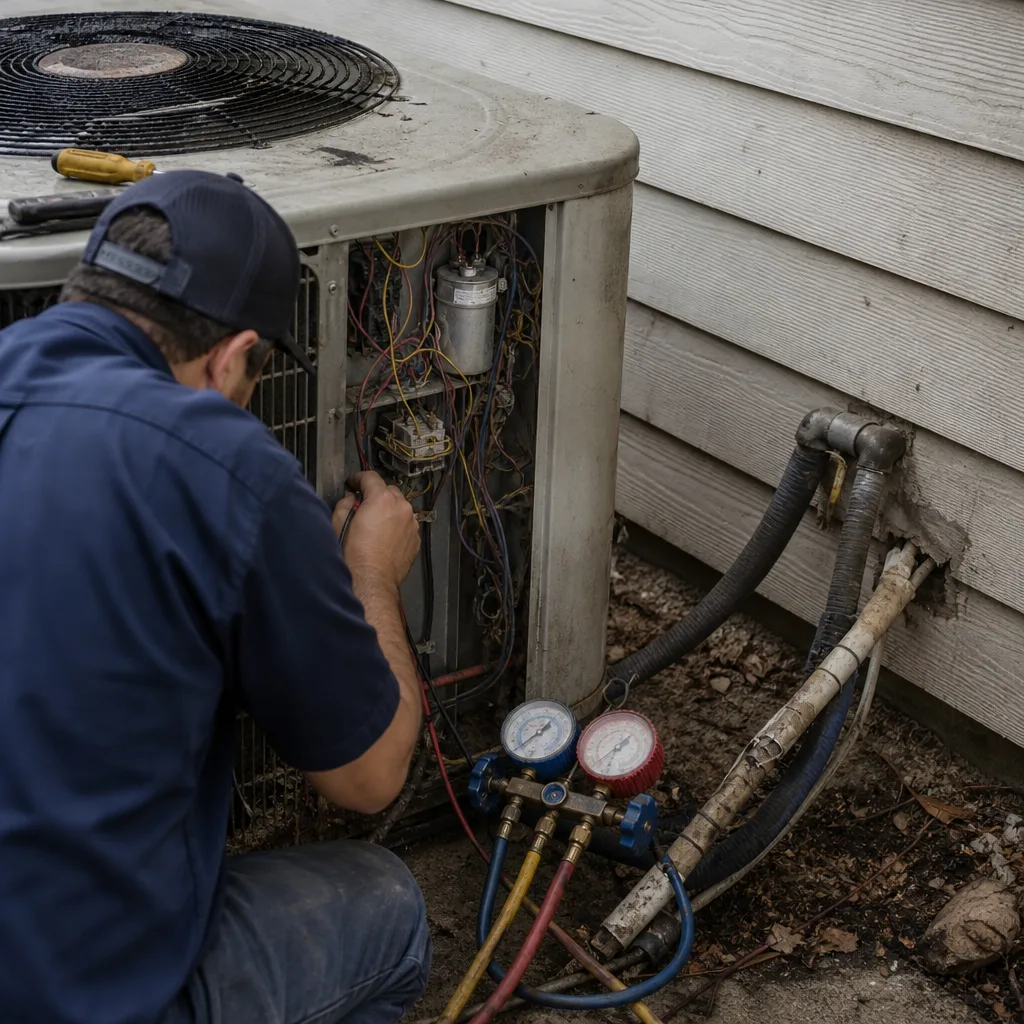 Before
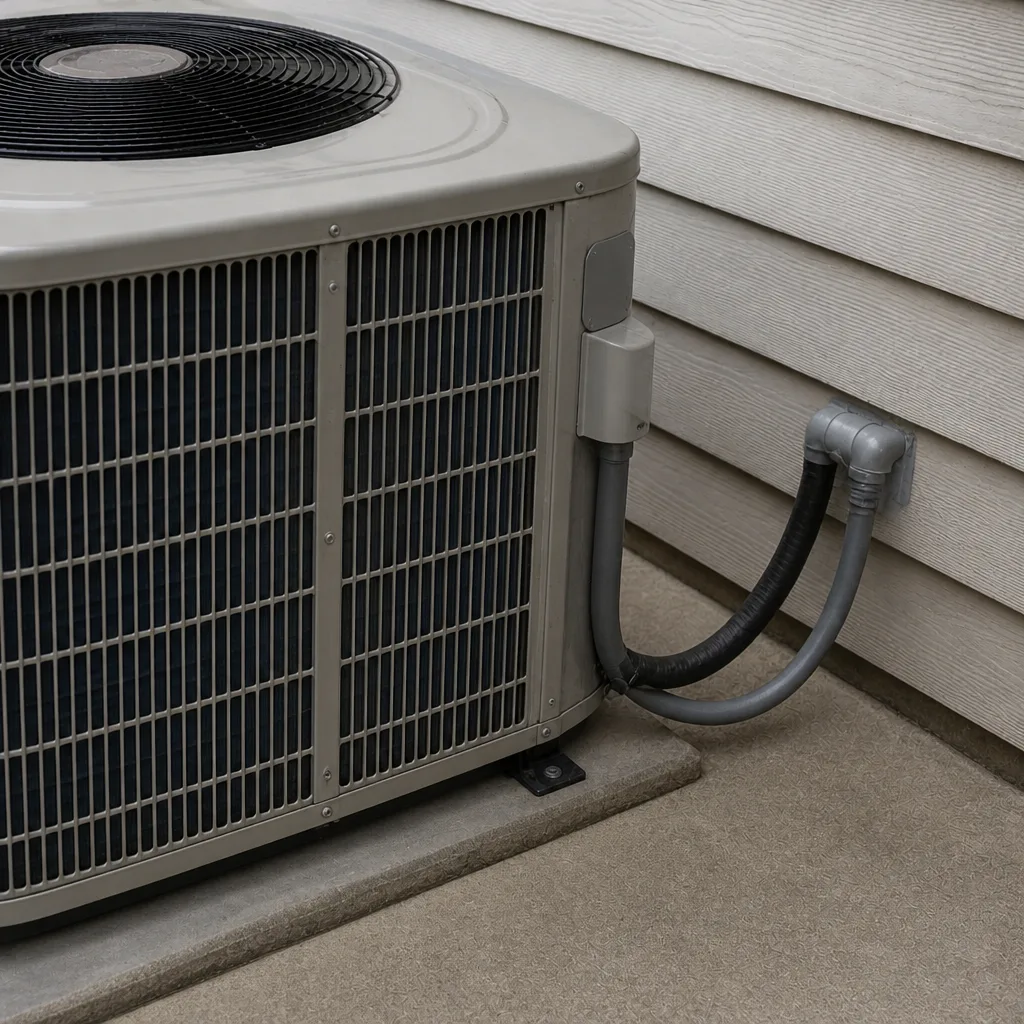 After
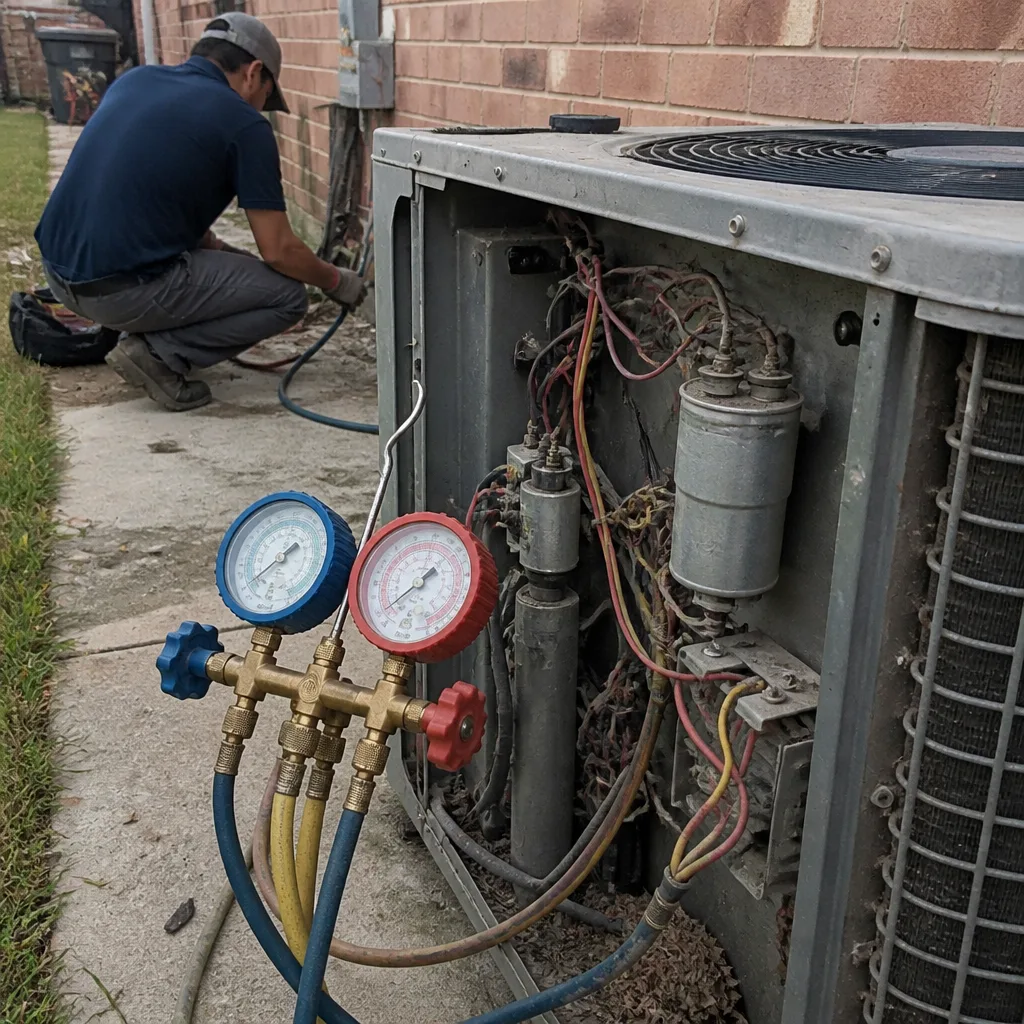 Before
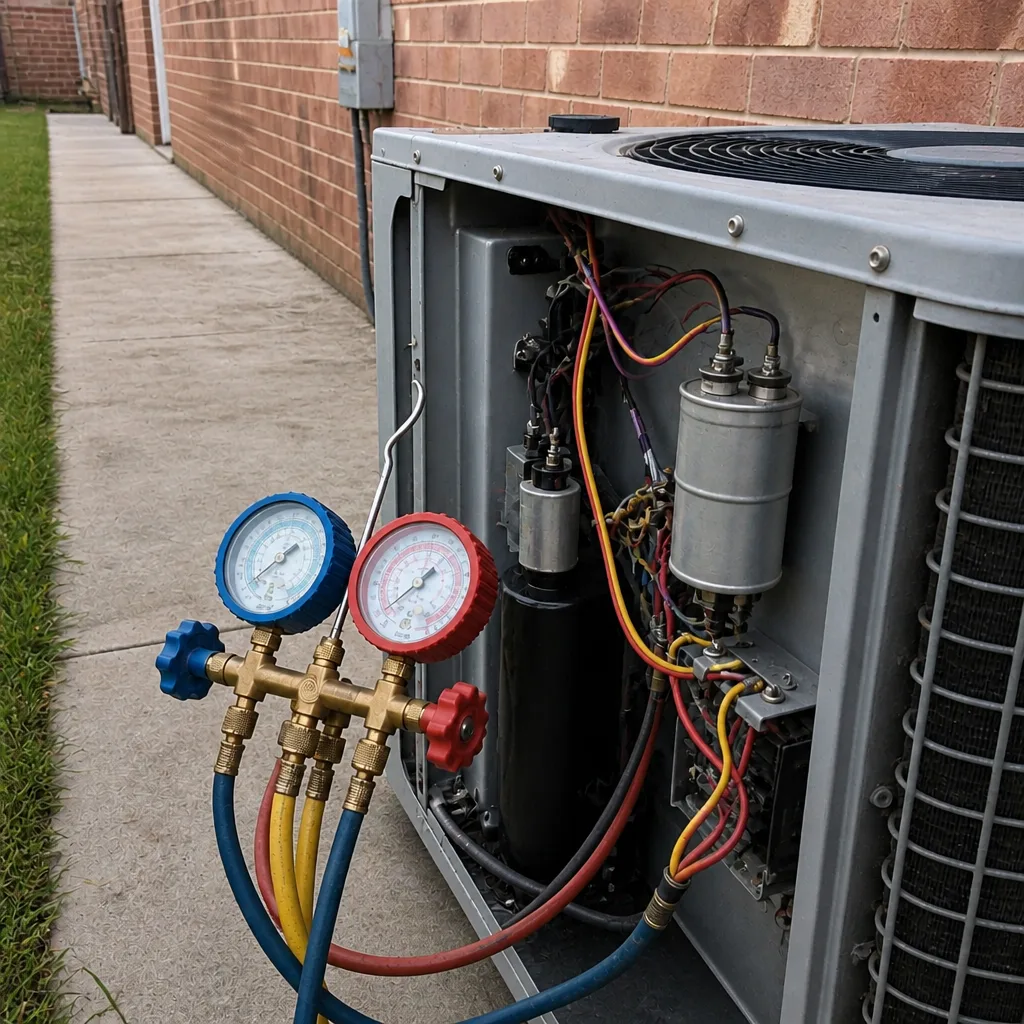 After
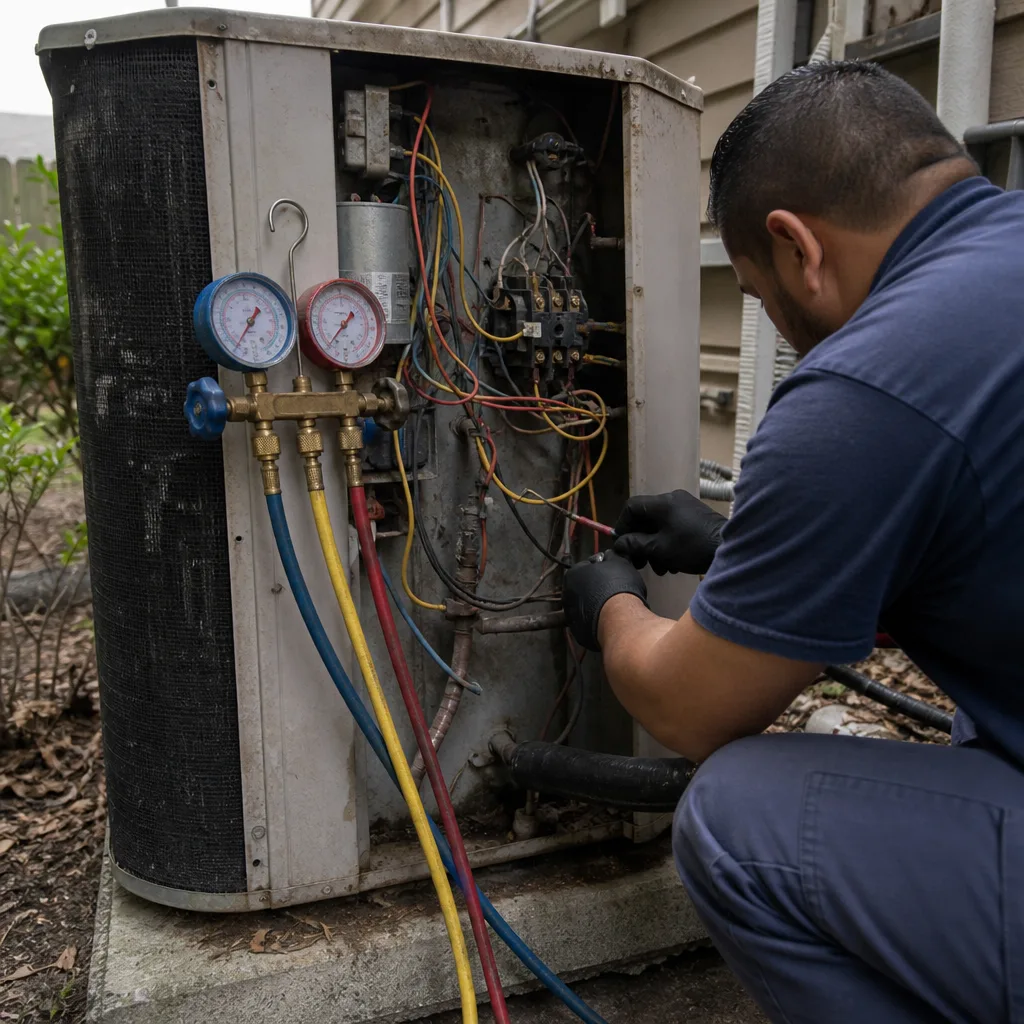 Before
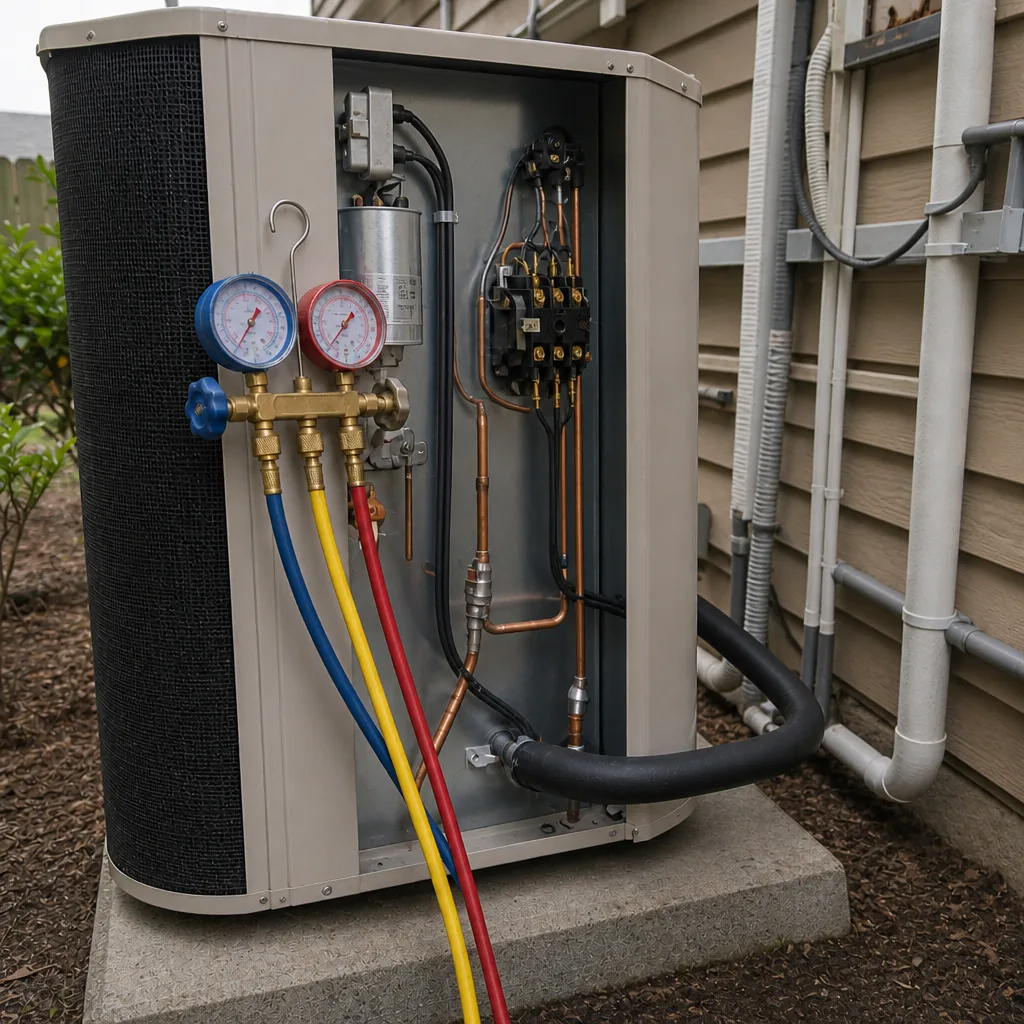 After
When to Call a Professional
Call a professional when the system is short-cycling, when the house won’t drop below a set temperature, when the bill creeps up month over month without a rate change, or when you smell anything odd near the furnace. Call when you’re comparing bids, before you sign, to have a contractor walk through the load calculation and the equipment tiers with you. Call when a technician’s diagnosis doesn’t match the symptoms you’re seeing at home. And call before a full replacement to get a second opinion if a contractor is recommending a premium brand without explaining why a mid-tier unit wouldn’t do the same job for less.
Delmar AC Repair offers free estimates in Sugar Land. Call (833) 968-5064. We answer 24/7. Fast dispatch from 7am to 7pm, Sunday through Friday. Our technicians have up to 15 years of experience across Carrier, Trane, Lennox, Goodman, Rheem, York, Daikin, Bryant, and American Standard equipment, and we’ll tell you honestly whether a repair, a mid-tier replacement, or a premium system is the right call for your home.
Frequently Asked Questions
There isn’t one best brand. For most Sugar Land homes, a mid-tier unit from Carrier, Trane, Bryant, or American Standard installed by a contractor who does a proper load calculation and commissions the system correctly will outperform a premium-tier unit installed carelessly from any brand. The brand accounts for maybe a third of the outcome. Installation quality and local parts availability account for the rest. Call (833) 968-5064 for a free estimate – we’ll walk you through what actually fits your home.
Neither brand is categorically better for humidity. What matters is the compressor type and the latent capacity rating of the specific model, not the brand on the door. A two-stage Carrier performs similarly to a two-stage Trane on humidity control in Sugar Land’s climate. The variable to weigh is the specific tier and model, plus whether your installer sizes and commissions the system correctly. Call (833) 968-5064 to compare specific models for your home.
Because when your AC fails in July, a distributor 20 minutes away with the part on a shelf beats a manufacturer with a great reputation but a four-day regional warehouse wait. In the Houston metro, brands with strong local distributor presence include Carrier, Trane, Rheem, Goodman, and Daikin. Bryant and American Standard share supply chains with Carrier and Trane respectively, so they tend to be well stocked too. Ask your contractor how fast a specific part would arrive for any model before you buy. For a free assessment of your existing system, call (833) 968-5064.
A factory authorized dealer is committed to selling one brand’s equipment and usually offers that brand preferentially. A brand-agnostic contractor sells and installs multiple brands and can recommend based on your home’s load profile, budget, and efficiency goals rather than a supply agreement. Neither is inherently better; the difference is what shows up on the bid. Ask any contractor why they recommended the brand they did, and expect an answer grounded in your house. Call (833) 968-5064 for a brand-agnostic estimate.
Two-stage is usually enough for Sugar Land’s combination of high humidity and mild shoulder seasons. A two-stage unit runs at a low setting most of the time, which handles latent load well without the premium of variable-speed. Variable-speed makes sense if you want quieter operation, tighter temperature control, and plan to stay in the home long enough to offset the added cost. Either way, the sizing and commissioning matter more than the variable-speed feature. Call (833) 968-5064 to talk through what fits your house.
Most manufacturer warranties cover parts only, not labor. If a contractor says “10-year warranty,” ask specifically whether labor is covered and for how long. Labor coverage typically comes from the installing contractor or a third-party extended warranty, not the manufacturer. Also ask who registers the equipment with the manufacturer within the 60- to 90-day window, and get the registration confirmation in writing. Call (833) 968-5064 for help reading a warranty before you sign.
The Bottom Line
The HVAC brand matters less than most Sugar Land homeowners assume, but it isn’t irrelevant. What actually decides whether your next system keeps you comfortable is the installation quality, the tier of equipment within the brand, and how quickly the parts to fix it will arrive when something fails in July. A mid-tier Carrier, Trane, Bryant, or American Standard system, correctly sized by a load calculation and commissioned properly, will outperform a premium unit installed without those steps. Use the seven-question framework in this guide to compare every bid. Ask about local parts availability, warranty registration, labor coverage, and the specific model number on every line. When you need a brand-agnostic assessment of what your Sugar Land home actually needs, we work on the nine major manufacturers and install multiple brands, so the recommendation reflects your home, not a supply agreement.
Call (833) 968-5064 for a free estimate. We answer 24/7. Fast dispatch from 7am to 7pm, Sunday through Friday. Delmar AC Repair covers AC installation, furnace repair, and furnace replacement under one team, so one phone call handles both your summer and winter comfort questions.
Written by the team at Delmar AC Repair.