
Last updated November 15, 2026
 AC repair
 Furnace & heating
 Heat pumps
 Ductless mini splits
 Carrier
 Trane
 Goodman
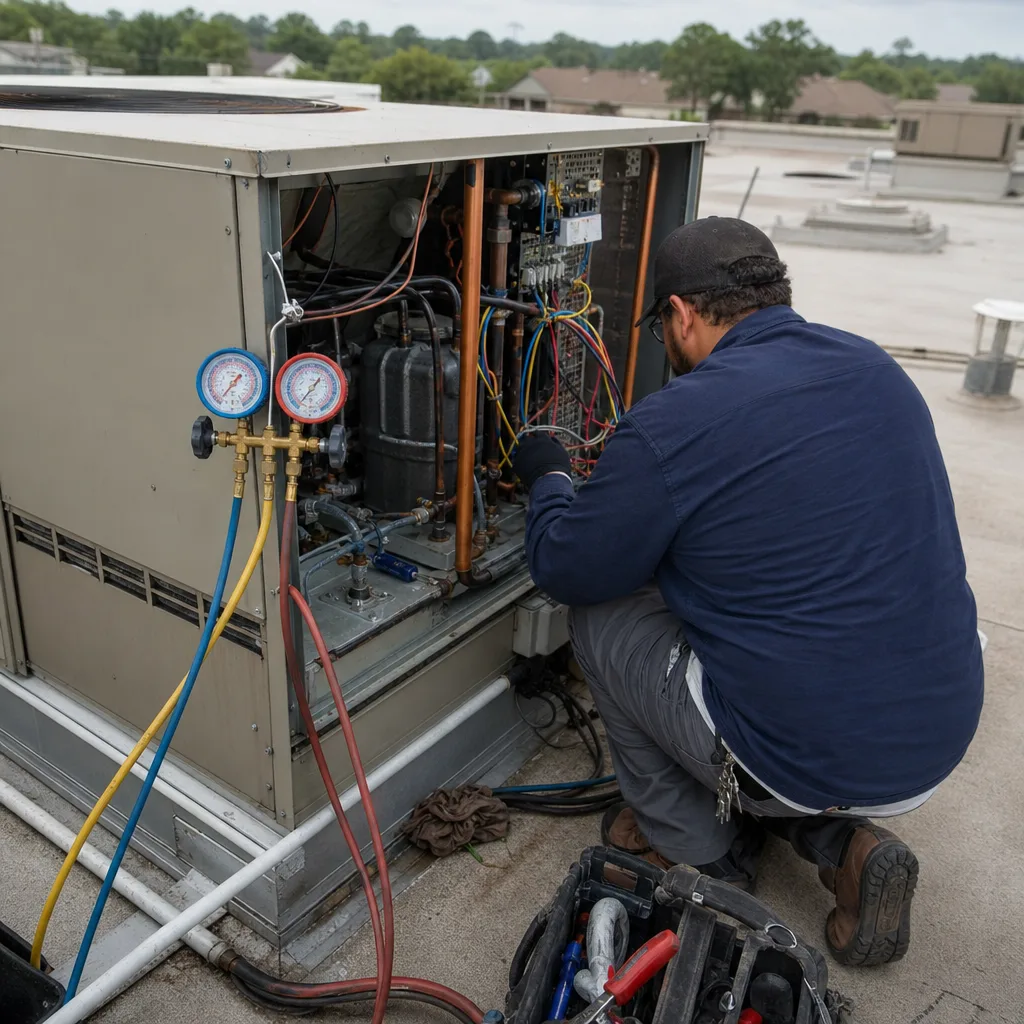
Seasonal tune-up and full diagnostic on your Carrier, Trane, or Goodman system - readings shown to you before any repair is proposed
Diagnosis first, numbers second - you approve the repair price before a single part goes in.
Get your free estimateAC Installation Maintenance Checklist for Sugar Land Homeowners
The single most common reason a new AC unit underperforms in its first Sugar Land summer isn’t a defective unit. It’s a refrigerant charge that was set during installation when the outdoor temperature was mild, then never re-verified once the mercury climbed past 95°F. A system charged at 70°F can read perfectly on the gauges that day and still run a low superheat or wrong subcooling all summer, quietly draining efficiency and stressing the compressor. Most checklists you’ll find online are built to protect the contractor’s warranty, not your investment. This guide is sequenced around Sugar Land’s real seasonal stress points, so you know what to verify, when, and why each item matters here.
Quick Answer
A proper AC installation maintenance checklist for Sugar Land has three phases: document the installation on day one (static pressure, drain slope, refrigerant charge re-verified at summer temperatures), run a 30-day humidity-focused checkup (float switch, condensate flow, evaporator delta-T), then follow a month-by-month calendar built around Gulf Coast seasons rather than generic spring and fall. Record baseline performance readings at each stage so you can spot decline before it becomes a repair bill.
Styles & brands we work with
- AC repair
- Furnace & heating
- Heat pumps
- Ductless mini splits
- Carrier
- Trane
- Goodman
Table of Contents
- What to Inspect and Document on Installation Day
- The 30-Day Post-Installation Checkup for Sugar Land Humidity
- Your Month-by-Month Maintenance Calendar for Sugar Land
- Filter, Coil, and Blower Wheel Intervals in Sugar Land’s Air
- How to Document Your System’s Baseline Performance
- Why Brand-Agnostic Maintenance Matters
- When Routine Maintenance Becomes a Service Call
- Frequently Asked Questions
What to Inspect and Document on Installation Day
The day your new system goes in is the only chance you get to capture its factory-fresh numbers. Once the crew packs up, every reading you failed to write down becomes a guess. Before anyone leaves, walk the install with the lead technician and confirm these items are recorded on the paperwork you keep.
Static pressure is the one most homeowners never hear about and the one that matters most for airflow. Your system is designed to move a specific volume of air, and static pressure measures how hard the blower is working to push it through the ductwork, filter, and coils. A reading that’s too high means restricted airflow, which shortens equipment life and makes the system work harder in Sugar Land’s long cooling season. Ask for the supply and return static pressure readings in writing.
Drain line slope verification is next. Condensate has to flow downhill to the drain, and a line with a flat spot or an uphill section will pool water, grow biological growth, and eventually clog. Confirm the drain line slopes continuously toward the exit point, and that a secondary drain pan with a float switch is in place if your installation calls for one.
- Refrigerant charge documentation. Ask for the superheat or subcooling reading recorded at installation. It’s the baseline you’ll compare against later.
- Static pressure readings. Supply and return, both recorded in inches of water column.
- Drain line slope. Confirm continuous downhill flow and note where the line exits the home.
- Filter size and MERV rating. Write it on a sticker inside the air handler door or in your maintenance log.
- Delta-T across the evaporator coil. Supply air temperature minus return air temperature. A healthy split is typically 16-22°F.
- Electrical and breaker sizing. Confirm the breaker matches the nameplate rating on the outdoor unit.
- Equipment model and serial numbers. Photograph the data plates on the indoor and outdoor units.
Whether your new equipment is a Carrier, a Trane, a Lennox, or a Goodman, these readings apply. If you’re still planning your replacement, our guide to AC installation covers what a proper install looks like from start to finish.
The 30-Day Post-Installation Checkup for Sugar Land Humidity
Sugar Land’s summer humidity is the variable that generic checklists miss. A system can cool a house to setpoint while leaving the indoor air clammy, because cooling and dehumidification are related but not identical jobs. The 30-day checkup is where you confirm the system is handling both.
Start with the drain pan float switch. This is a small safety device that shuts the system down if the pan fills with water, preventing an overflow that can damage ceilings and drywall. Test it by lifting the float (or following the manufacturer’s test procedure) and confirming the system cuts off. It takes a minute and it’s the cheapest insurance on the whole system.
Next, watch the condensate line flow rate. In high humidity, a properly running system can produce several gallons of condensate a day. If you see a trickle instead of a steady flow at the drain exit, the line may already be partially restricted. A slow drain in month one becomes a mid-summer clog if it isn’t cleared.
The evaporator coil delta-T is third. Measure the return air temperature at the filter grille and the supply air temperature at a nearby register, then subtract. If your delta-T is significantly below the 16-22°F range, the system isn’t removing enough heat or moisture, and it’s worth a professional look. If it’s well above, airflow may be restricted.
- Float switch test: Confirm the system shuts off when the float is raised, then resets properly.
- Condensate flow: Check for steady flow, not a trickle, at the drain exit.
- Delta-T: Record it and compare against the installation-day reading.
- Filter check: Inspect after 30 days. In Sugar Land’s dust and pollen load, an early change may already be due.
- Outdoor unit clearance: Clear vegetation and debris from around the condenser so it can reject heat.
This is also the right time to look at your home’s air sealing and insulation in the attic. A perfectly installed system working against leaky ducts and a hot attic will never hit its rated efficiency. Improving the envelope is often the highest-return step a Sugar Land homeowner can take alongside a new system.
Your Month-by-Month Maintenance Calendar for Sugar Land
Generic maintenance calendars say “spring and fall,” which doesn’t match a place where the cooling season runs most of the year and the heating season is a short, mild stretch. Here’s a calendar built around how Sugar Land actually experiences the year.
January through February: The Quiet Season
Cooling load is low, so this is the easiest time to check the things that are hard to reach in summer. Inspect the air handler cabinet for condensation, look for rust or water staining around the drain pan, and replace the filter. If you’ve been meaning to schedule a professional evaluation, this window gives you the most scheduling flexibility.
March through April: Pre-Season Prep
Pollen is heavy in these months. Change or clean the filter more often, and inspect the outdoor coil for accumulated debris. Run the system on a mild day to confirm it starts, cools, and drains properly before the first hot stretch. This is when you catch a failing capacitor or a weak contactor before it strands you in June.
May: The Critical Pre-June Check
This is the single most important month on the calendar. Before peak load, have the refrigerant charge verified against the installation baseline, confirm the condensate line flows freely, and check the delta-T. A system that’s slightly undercharged in May will be noticeably worse by August. Get ahead of it now rather than during the first heat wave.
June through September: Peak Load Monitoring
Change the filter monthly during these months. Watch for rising run times, unusual sounds, or a delta-T that’s drifting. Check the outdoor unit clearance and rinse the condenser coil gently with a garden hose when it’s visibly dusty. If you have a smart thermostat, compare this year’s run-time data to last year’s; a steady increase in runtime with no change in weather signals declining performance.
October through November: Post-Season Review
Have the system evaluated after the heavy cooling months. Coil cleaning, drain line flushing, and blower wheel inspection all make more sense now than at the start of summer. If your system has a heating function, this is also the time to confirm it operates correctly before you need it.
December: The Brief Heating Season
Colder nights are occasional, not sustained. Run the heat once on a cool morning to confirm it engages, and check the filter. If your home has a separate furnace, our furnace repair team handles that equipment too, so both systems stay on one service relationship.
Filter, Coil, and Blower Wheel Intervals in Sugar Land’s Air
Sugar Land’s airborne particulate load is heavier than the national average maintenance schedule assumes. Construction dust from ongoing development, seasonal pollen, and mold spores in the humid air all land on the same surfaces. Filters, coils, and blower wheels each have different cleaning intervals, and treating them the same way is one of the most common maintenance errors.
Filters need the most frequent attention. A 1-inch pleated filter in a Sugar Land home running through peak summer often needs replacement every 30 days. A thicker 4-inch or 5-inch media filter can stretch to 60-90 days under normal conditions, but check it monthly during heavy pollen and construction season. Your filter’s MERV rating matters too: going too high without verifying static pressure can strangle the airflow. Stay at or below the rating the installer documented unless a technician confirms the system has headroom.
Evaporator coils live in the indoor air handler and get wet constantly during cooling season. In humid climates, this makes them prone to biological growth and dust accumulation. Plan on an annual professional cleaning, and if you’re seeing musty odors or elevated delta-T readings, don’t wait. A dirty evaporator coil loses capacity and can freeze up.
Blower wheels are the ones most homeowners never think about. The wheel is a squirrel-cage design with blades that accumulate dust on their leading edges. Over time, that dust reduces airflow and unbalances the wheel. A professional blower wheel cleaning every few years, or sooner if you’ve had heavy construction near the home, keeps airflow at design levels.
- 1-inch filter: 30 days during cooling season, more often during pollen or construction.
- 4-5 inch media filter: 60-90 days, with monthly visual checks.
- Evaporator coil: Professional cleaning annually, or sooner with musty odors or low delta-T.
- Condenser coil: Rinse when visibly dusty, inspect annually.
- Blower wheel: Professional cleaning every few years, sooner with heavy dust exposure.
- Drain line: Flush at season transitions, check flow monthly during peak cooling.
Whether your equipment is Carrier, Trane, Lennox, or Goodman, these intervals depend on your home’s environment, not the brand badge on the cabinet. That’s why we recommend based on what your system actually needs.
How to Document Your System’s Baseline Performance
You can’t spot decline if you don’t know your starting point. A simple maintenance log turns vague “the system seems off” feelings into a clear signal. Here’s what to record and how to use it.
- Setpoint and thermostat temperature. Record what you set and what the thermostat reads when the system has run for at least 15 minutes.
- Delta-T. Return air temperature minus supply air temperature. Record it monthly during peak summer.
- Condensate flow observation. Note whether the drain has steady flow or a trickle.
- Filter change date and rating. Track it so you know if you’re actually sticking to your interval.
- Professional readings. Static pressure, refrigerant charge (superheat or subcooling), and any coil cleaning performed. Keep the technician’s paperwork with the log.
- Runtime and monthly energy use. A thermostat app or your utility bill works fine for trend tracking.
- Unusual observations. Sounds, smells, condensation, high humidity indoors.
What deviation signals a service call? A delta-T that drops appreciably below your recorded baseline, a filter interval that suddenly produces a visibly dirty filter in half the time, runtime climbing while the weather holds steady, rising energy use with no lifestyle change, or any new noise or ice formation. Any one of these is worth a call. Two or more together almost always means a real problem.
Recording these figures is also the single most useful thing you can hand to a technician when you do call. It turns a diagnostic visit into something faster and more accurate, and it keeps you in control of the conversation.
Why Brand-Agnostic Maintenance Matters
A new system’s maintenance needs are shaped by the equipment’s design, but the checklist is largely the same across manufacturers. Static pressure, refrigerant charge, drain flow, delta-T, filter and coil condition: these apply to any residential system. That’s why a maintenance plan tied to a single brand doesn’t fit most homes. And if your neighborhood has a mix of Carrier, Trane, Lennox, and Goodman installs, a service provider who works on all of them is the practical choice.
We work on Carrier, Trane, Lennox, Goodman, Rheem, York, Daikin, Bryant, and American Standard equipment for both cooling and heating needs. That means when it’s time for a service call, you’re not hunting for the dealer whose name matches your cabinet badge. It also means when a technician recommends a repair, the recommendation is about what your system actually needs, not what keeps a dealer agreement satisfied. The right system for your home, not for our margins.
This also matters across seasons. A failing blower motor in July and a failing furnace in January are usually handled by the same household, and one service relationship that covers both is simpler than two. If you’re in Sugar Land and something has failed, call (833) 968-5064. We answer 24/7. Fast dispatch from 7am to 7pm, Sunday through Friday.
When Routine Maintenance Becomes a Service Call
Some items on this checklist are homeowner tasks and some belong to a trained professional. Changing a filter, clearing debris from around the outdoor unit, testing a float switch, and measuring delta-T are all within reach. Refrigerant gauges, coil cleaning, blower wheel cleaning, and electrical diagnosis belong to a trained technician, and mixing those up is how a small issue becomes a big bill.
Call a professional if your delta-T has drifted, if you see ice on the refrigerant lines, if the drain line is clogged or the float switch keeps tripping, if the system short-cycles, or if your energy use is climbing for no obvious reason. Also call if you’ve had recent construction activity near the home or if it’s been more than a year since a professional looked at the coils and blower wheel. These are maintenance realities, not emergencies.
Our technicians have up to 15 years of experience, and we diagnose what’s actually wrong rather than guessing. Delmar AC Repair offers free estimates in Sugar Land. Call (833) 968-5064. We answer 24/7. Fast dispatch from 7am to 7pm, Sunday through Friday.
If you’re still in the brand-selection phase or your existing system is nearing replacement, our AC installation page walks through what a well-executed install looks like. For heating equipment and furnace upgrades, see furnace repair. And to learn more about what we cover in Sugar Land, the service pages have the details.
See the difference
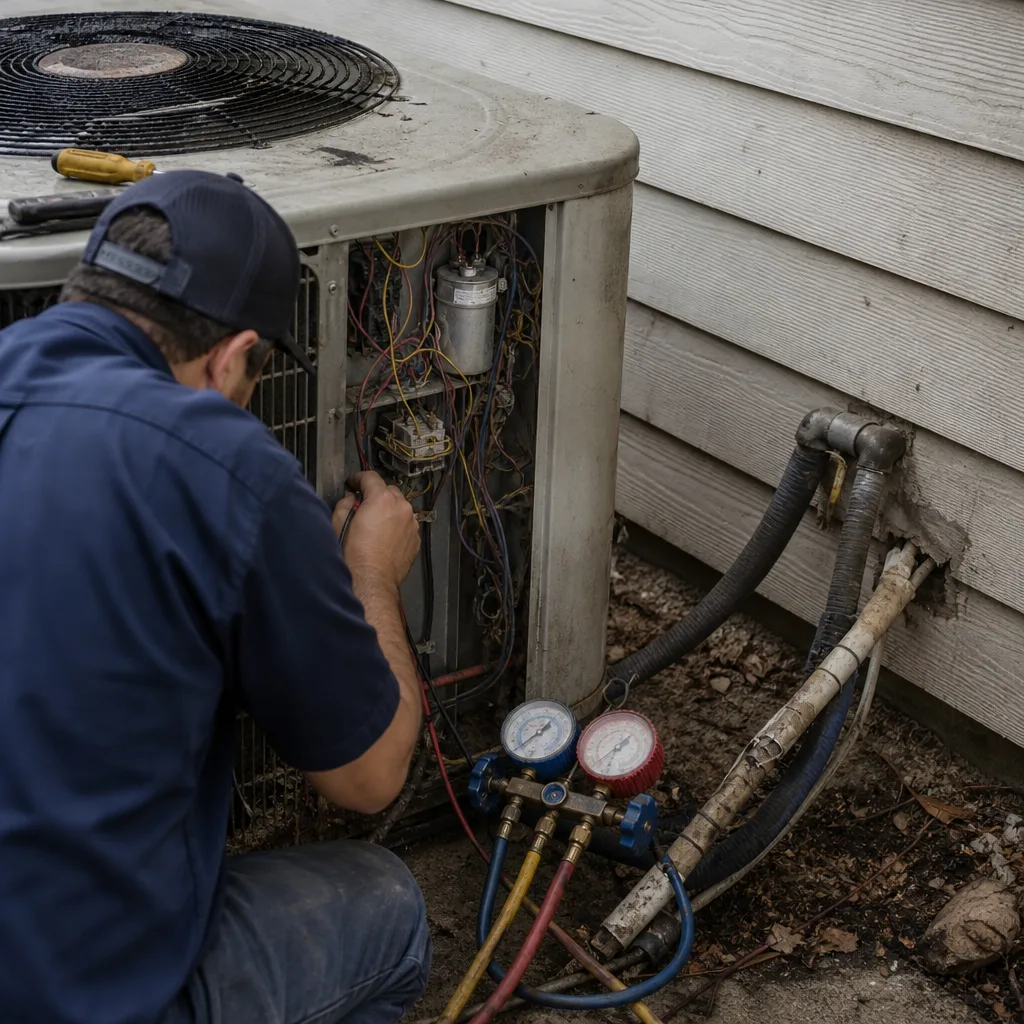 Before
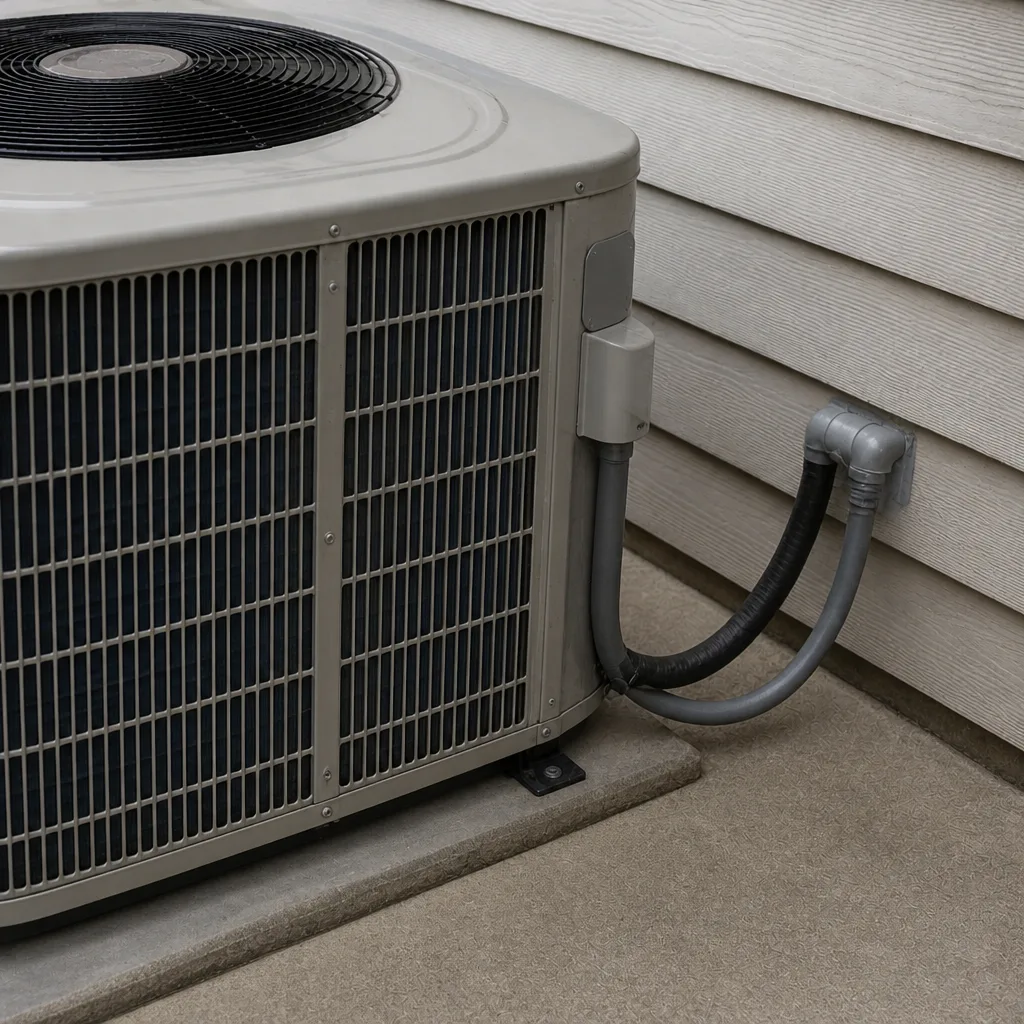 After
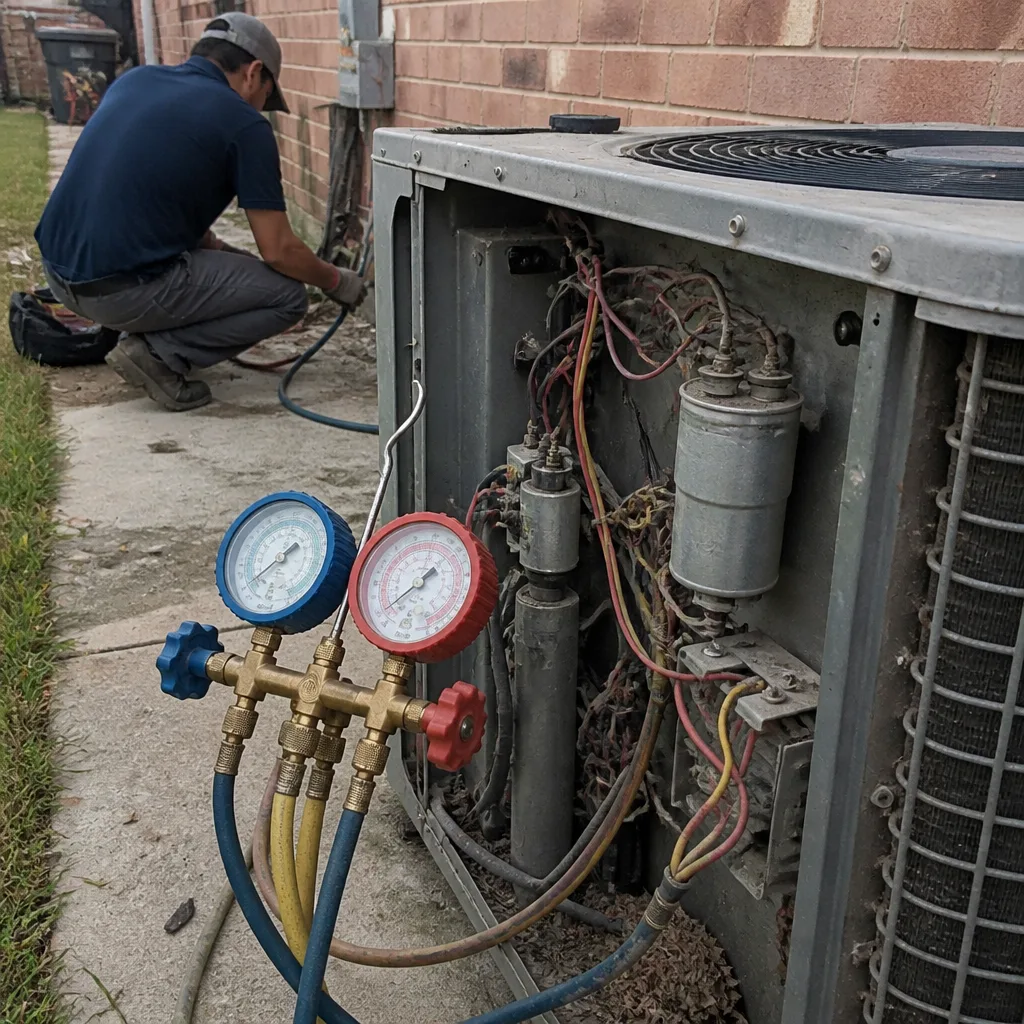 Before
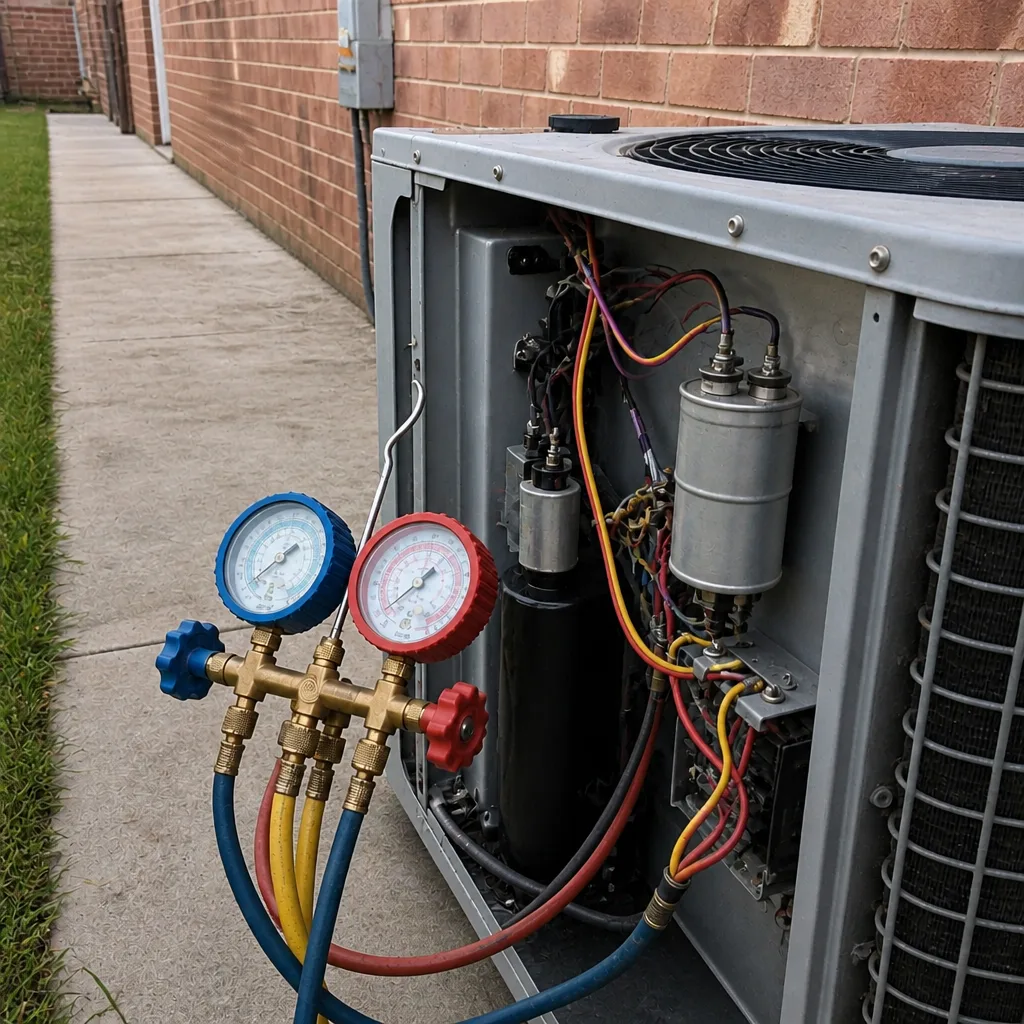 After
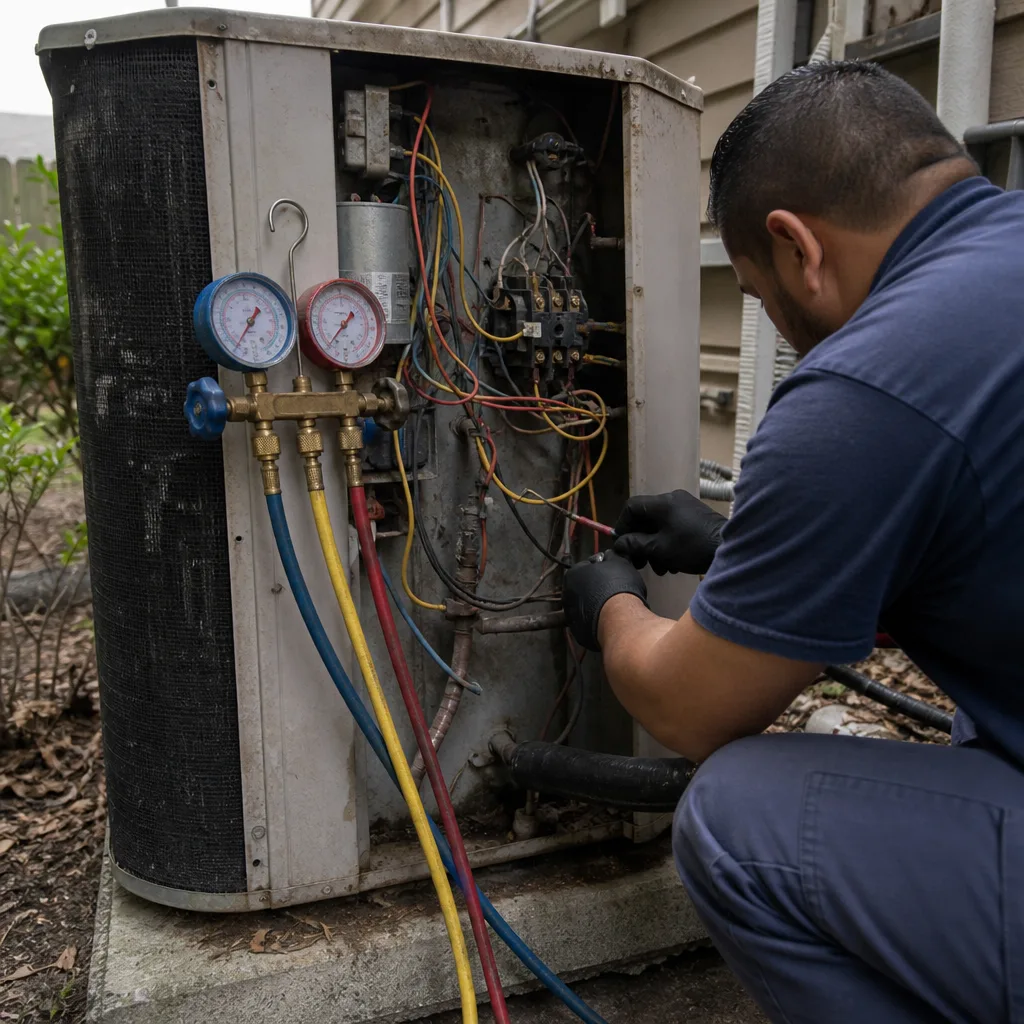 Before
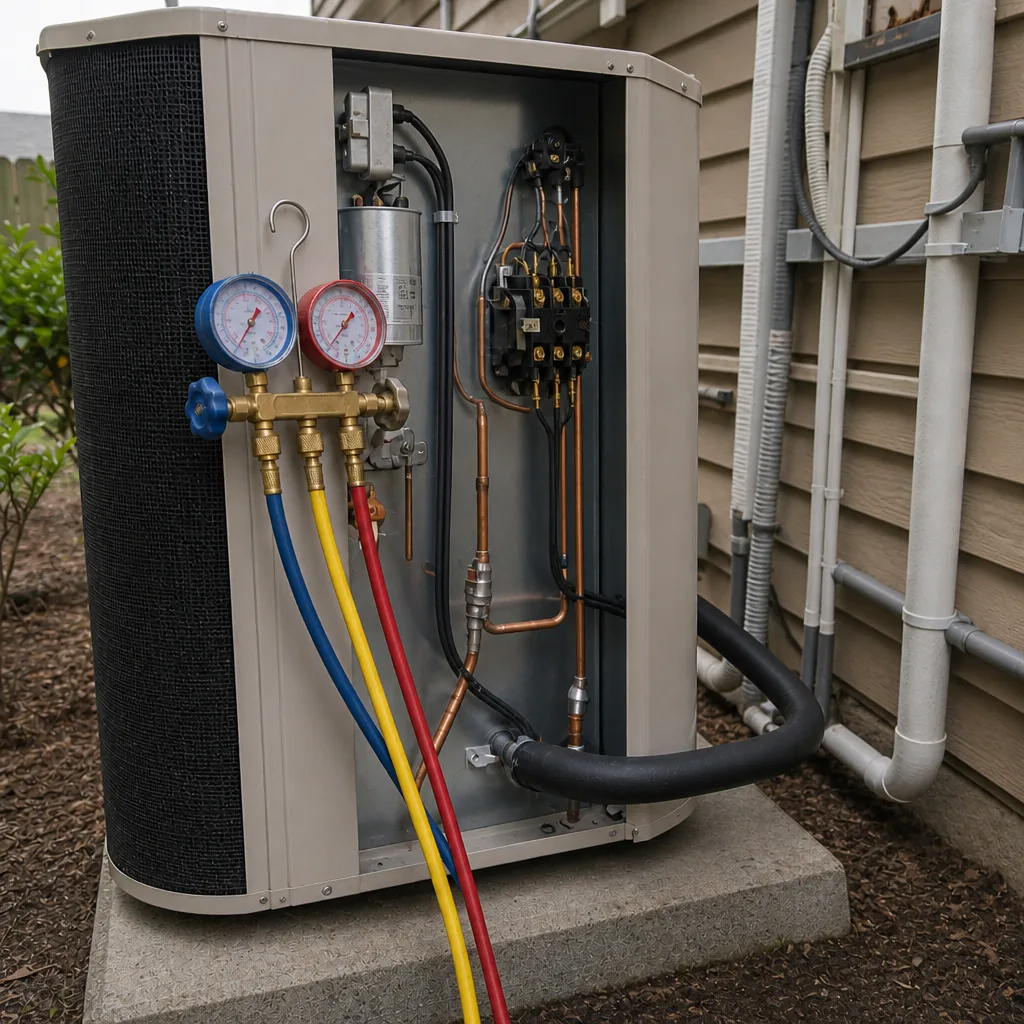 After
Common Mistakes to Avoid
- Skipping the summer charge verification. A charge set at installation is not a charge verified for summer. Confirm superheat or subcooling once outdoor temperatures hit real cooling-season levels, or your system can run its entire first year without ever being properly charged.
- Not testing the float switch in the first 30 days. In Sugar Land humidity, the drain pan works hard. A float switch that trips too early or doesn’t trip at all is a problem you want discovered now, not during a rainstorm when the pan overflows.
- Treating the filter like a set-and-forget item. One-inch filters need roughly monthly attention during cooling season here. A clogged filter forces the blower to work against high static pressure and degrades every reading downstream.
- Waiting until peak summer to schedule maintenance. The pre-June check window is the most valuable one on the calendar. Book it in May, not in July when the schedule is full and the system has already been stressed.
- Ignoring the blower wheel. Homeowners watch the filter religiously and never think about the wheel behind it. A dust-loaded wheel silently steals airflow and adds noise.
- Not writing anything down. A baseline you didn’t record is a baseline you can’t compare against. Keep a log, even if it’s a photo of the install paperwork and a monthly note.
- Letting a dealer badge dictate service. A single-brand service relationship pushes you toward that brand later. A brand-agnostic provider matches your home’s actual needs.
When to Call a Professional
Call when readings drift from your documented baseline, when you see ice on the line set, when the drain pan float switch keeps tripping, when the system short-cycles, or when a filter clogs faster than it used to. Call when you’ve had construction nearby and want the blower wheel and coils checked. Call before peak summer if you haven’t had a professional evaluation in a year. And call if you’re unsure; a free estimate is cheaper than a compressor you didn’t need to replace. Delmar AC Repair offers free estimates in Sugar Land. Call (833) 968-5064. We answer 24/7. Fast dispatch from 7am to 7pm, Sunday through Friday.
Frequently Asked Questions
Once a year at minimum, ideally scheduled in May before peak load. Because Sugar Land’s cooling season is long and humid, the system works harder and longer than in milder climates, so an annual evaluation that checks charge, coils, drain, and delta-T keeps it at install-day performance. If you have heavy pollen or construction dust nearby, an extra inspection at the end of the season is worth it.
Delta-T is the difference between your return air temperature and your supply air temperature, and it’s the simplest check of whether the system is actually removing heat. A typical healthy reading is 16-22°F. If it drops noticeably below your baseline, the system has lost capacity; if it’s far above, airflow is restricted. Either way, it’s a call-us signal.
Because the refrigerant charge may not have been re-verified at summer temperatures. A system that reads correctly during a mild install day can run the entire first cooling season at the wrong charge without ever tripping a fault. If the delta-T is low and the unit runs long, ask for a charge check based on the installation-day paperwork.
Roughly monthly for a 1-inch pleated filter during cooling season, and 60-90 days for a thicker 4-5 inch media filter, with monthly visual checks. Sugar Land’s pollen, construction dust, and humid air load filters faster than the national averages suggest. If a filter is visibly dirty in half the expected time, you have a signal worth investigating.
You can handle filter changes, float switch testing, outdoor unit clearance, and delta-T measurement. Refrigerant charge, coil cleaning, blower wheel cleaning, and electrical diagnostics are professional tasks. Attempting those without gauges and training risks injury and can void equipment warranties. Stay in your lane on safety, call a technician for the rest.
Yes. We service Carrier, Trane, Lennox, Goodman, Rheem, York, Daikin, Bryant, and American Standard equipment for both cooling and heating. Call (833) 968-5064. We answer 24/7. Fast dispatch from 7am to 7pm, Sunday through Friday.
The Bottom Line
The single most important thing you can do for a newly installed system in Sugar Land is verify its charge at summer temperatures and keep a written baseline of its performance. That baseline, more than any calendar, tells you when something is really drifting. Schedule the pre-June check, watch the delta-T monthly through peak season, keep the filter clean, and know your numbers. Everything else follows. Whether you have a Carrier, Trane, Lennox, or Goodman system, routine maintenance done on your climate’s schedule keeps it running the way it did on day one.
If you’re not sure where your system stands, call us at (833) 968-5064 for a free estimate. We answer 24/7. Fast dispatch from 7am to 7pm, Sunday through Friday. Delmar AC Repair works on your brand and gives you the right answer for your home.
Written by the team at Delmar AC Repair.