
Last updated November 15, 2026
 AC repair
 Furnace & heating
 Heat pumps
 Ductless mini splits
 Carrier
 Trane
 Goodman
Seasonal tune-up and full diagnostic on your Carrier, Trane, or Goodman system - readings shown to you before any repair is proposed
Diagnosis first, numbers second - you approve the repair price before a single part goes in.
Get your free estimateSeasonal HVAC Care for Sugar Land: Year-Round Homeowner’s Guide
Most homeowners in Sugar Land schedule their “spring” AC tune-up in late May, right about the time the first real heat wave hits. By then, the system has already been running for weeks. May 15th usually arrives with afternoon highs that have been above 85°F for a month, and a unit that hasn’t been looked at since last fall has logged hundreds of hours under load. The window that actually matters is February through April, before the long cooling season locks in. This guide lays out a realistic Sugar Land seasonal calendar, the freeze-prep tasks that get skipped every December, and the landscaping habits that quietly decide whether your outdoor unit runs hot all summer.
Quick Answer
Seasonal HVAC care in Sugar Land is front-loaded. The tasks that protect your system belong in February (pre-season inspection), March and April (coil cleaning, refrigerant check, filter change before peak load), October (heat season prep and the best window for duct work), and December (freeze prep, including heat pump defrost testing and attic air handler insulation). Miss the spring window and your system starts the eight-month cooling season already behind.
Styles & brands we work with
- AC repair
- Furnace & heating
- Heat pumps
- Ductless mini splits
- Carrier
- Trane
- Goodman
Table of Contents
- The Sugar Land Seasonal HVAC Calendar
- February: The Pre-Season Tasks Most Homeowners Skip
- April: Pre-Peak Checklist Before the Cooling Season Locks In
- Managing Indoor Humidity in the Shoulder Seasons
- October: Heat Season Prep and the Best Time for Duct Work
- December: Freeze Prep for Sugar Land’s Intermittent Hard Freezes
- How Your Lawn and Landscaping Affect the Outdoor Condenser
- Common Mistakes to Avoid
- When to Call a Professional
- Frequently Asked Questions
The Sugar Land Seasonal HVAC Calendar
Sugar Land doesn’t run on four equal seasons. It runs on roughly eight months of cooling load, two transition months in spring and fall, and a short winter that arrives in bursts. That shape changes what “seasonal maintenance” means here. A homeowner following a northern maintenance schedule will spend time on tasks that don’t matter and skip the ones that do.
Here’s the calendar we recommend, and the reason each window was picked.
- February – pre-season inspection. Before the cooling season starts, confirm the system survives it. This is the check on capacitors, contactors, refrigerant charge, and drain lines that catches problems while the calendar is still on your side.
- March and April – the real tune-up window. Coil cleaning, filter replacement, and a full cooling-side check. Peak load arrives in May, so this is the last comfortable window before scheduling gets tight and the system runs hard every day.
- May through September – cooling season. Filter changes every 30 to 60 days, condenser clearance checks, and a watch on indoor humidity. This is the season to leave the system alone otherwise.
- October and November – heat season prep and duct work. The furnace or heat pump gets checked before the first cold snap, and the attic is finally cool enough to do useful duct inspection.
- December through February – freeze prep and winter watch. Heat pump defrost testing, emergency heat verification, and air handler insulation checks before the intermittent hard freezes that hit Fort Bend County every winter.
The through-line is that most of the work belongs in February through April. The winter tasks matter, but they’re short and narrow. Spring is where the year is won or lost. If you’re new to the area or moving into a home with an unfamiliar system, start with a general look at Sugar Land HVAC conditions so the calendar makes sense for your specific house.
February: The Pre-Season Tasks Most Homeowners Skip
February is the quietest month on a Sugar Land HVAC calendar. The system is either off or barely cycling, the phone isn’t ringing with no-cooling calls, and most homeowners assume there’s nothing to do. That assumption costs them in May.
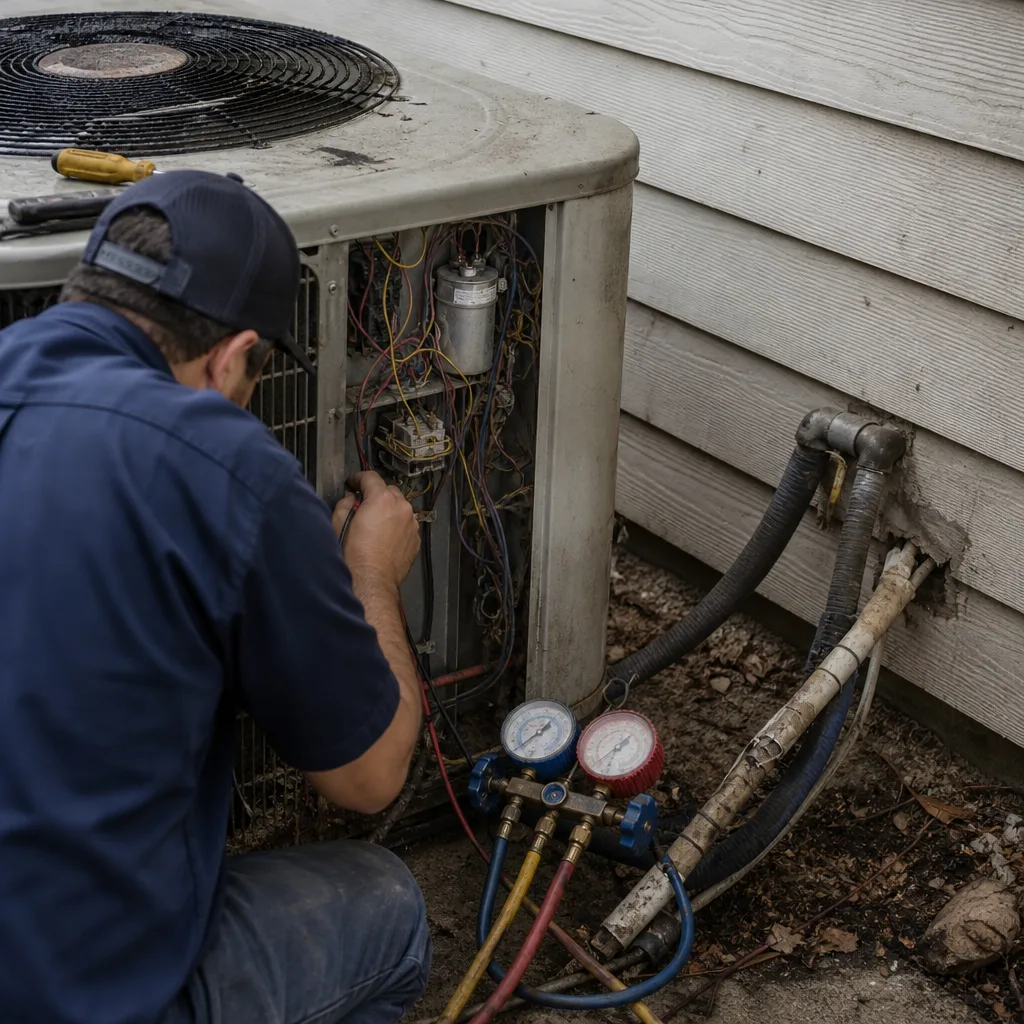
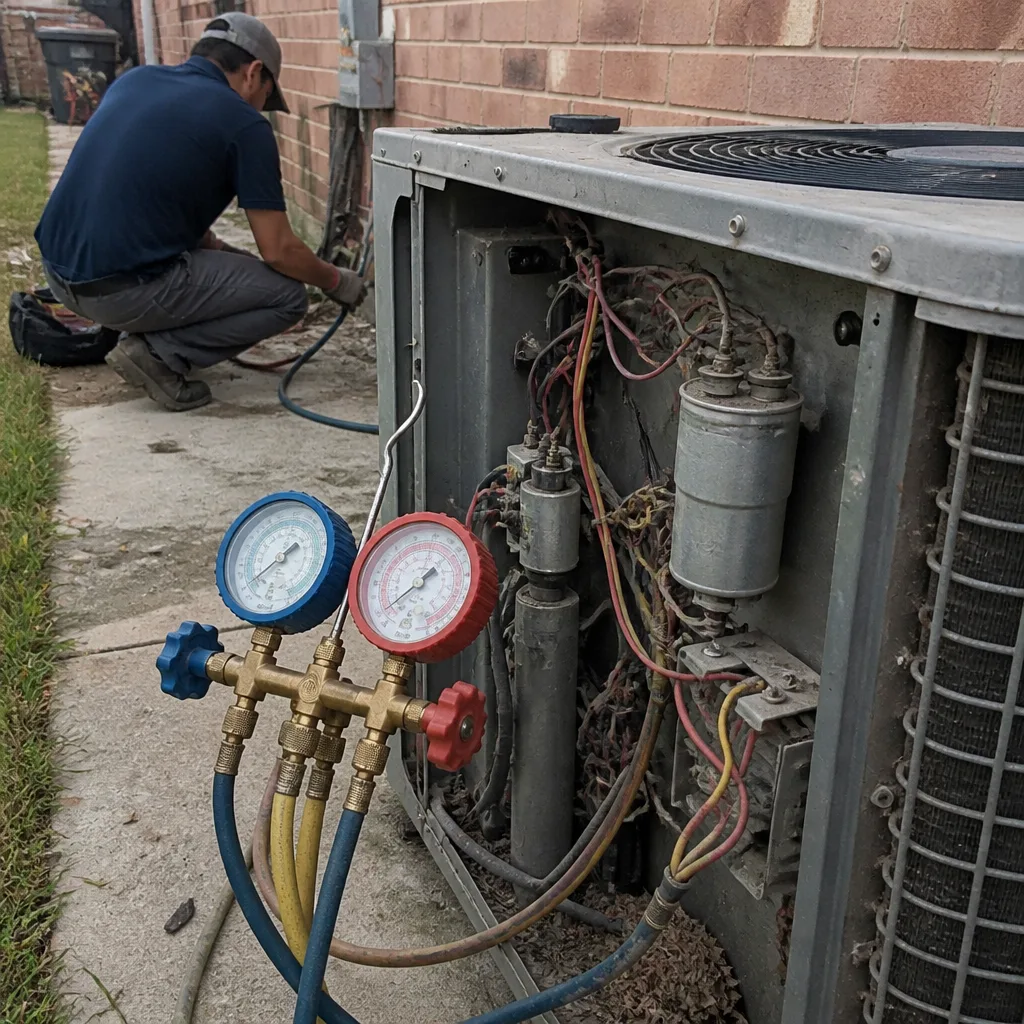
February is the cheapest and easiest month for an inspection. The system is accessible, the outside unit isn’t fighting 100°F ambient temperatures, and any parts that need to be ordered have time to arrive before they become urgent. In our experience, the failures that show up during the first heat wave are usually things a February check would have caught: a weak capacitor, a worn contactor, a refrigerant charge that’s been slowly leaking for two seasons, or a condensate drain line half-clogged with algae.
Here’s what a proper February pre-season check covers:
- Electrical components: capacitors and contactors tested under load. These are the two most common no-cooling failure points on any brand, whether it’s a Trane, a Lennox, a Goodman, or a Rheem.
- Refrigerant charge: static pressure readings compared to the manufacturer specification. Low charge in February becomes a compressor problem by August.
- Drain line: cleared and treated. A plugged condensate line in July will trip the float switch or, worse, overflow into the attic.
- Air filter: replaced. More on this in the April section, because it matters enough to appear twice.
- Thermostat calibration: confirmed against a real thermometer. A thermostat reading 3°F off means the system runs longer than it needs to all summer.
None of this is complicated. It’s the ordinary mechanical work that keeps a system on track. But it has to happen while the calendar allows it. We work on whatever system is already installed, so a February inspection doesn’t come with a sales pitch for a new unit. The goal is a fair assessment of what’s actually there.
April: Pre-Peak Checklist Before the Cooling Season Locks In
April is the last month in Sugar Land where the system gets meaningful breaks between cycles. By late May, it’s running most of the day. That makes April the tune-up window that actually earns the term “spring maintenance.”
Here’s the checklist, in order:
- Change the air filter. This is the single simplest thing a homeowner can do. A clogged filter restricts airflow, which drives up compressor head pressure and forces the system to work harder than it should. In a dusty spring, change it on the shorter end of the recommended interval.
- Clean the outdoor condenser coil. Sugar Land spring brings pollen and cottonwood debris. Both pack into the coil fins and reduce the unit’s ability to reject heat. A garden hose rinse from the inside out does the visible work; a technician handles the deeper cleaning.
- Clear the condenser surround. Two feet of clearance on all sides, minimum. Details in the landscaping section below.
- Check the condensate drain and float switch. The float switch should trip the system if the drain backs up. Test it, don’t assume it works.
- Verify thermostat batteries and schedule. If the thermostat uses a battery backup, replace it before the season. A dead backup in July resets the schedule and the system runs on defaults.
- Book the professional cooling-side inspection. Coil clean, refrigerant charge verified, electrical components under load, blower wheel checked for debris. This is where an April call pays off – the system gets looked at before the phone line gets busy.
If a system is at or near end of life, April is also the honest time to start planning AC installation. Deciding in April beats deciding in July, when you’re choosing between a rushed replacement and a portable unit in the bedroom. Our technicians have up to 15 years of experience across systems of every age and make, so the conversation about repair versus replacement starts from what’s actually in your home.
Managing Indoor Humidity in the Shoulder Seasons
Here’s a Sugar Land problem that northern maintenance guides don’t address at all. In March and April, and again in October and November, outdoor temperatures often sit in the mid-70s. That’s not hot enough to make a standard AC run enough to dehumidify, but the humidity outdoors still climbs into the uncomfortable range. The result is a house that feels sticky and cool at the same time, and a thermostat setpoint that never quite satisfies.
The fix isn’t to drop the thermostat lower. That overcools the space and makes the humidity problem worse on the next cycle. The real options are these:
- Run the fan on “auto,” not “on.” A fan running continuously in a humid house re-evaporates water off the coil and puts moisture back into the air. Auto mode gives the system the off-time it needs to drain.
- Accept longer cooling cycles. A system on a variable-speed blower can run longer at lower output and pull moisture without overcooling. If you have one, that’s what it’s for.
- Consider a standalone dehumidifier for the shoulder seasons. For homeowners with chronic humidity issues in specific rooms or in a converted garage space, a portable dehumidifier handles what the AC can’t in a mild month.
- Close the house during the transition. Opening windows on a muggy March afternoon trades mild indoor air for mild, humid outdoor air. On a low-humidity day, it’s a good move; on a high-humidity day, it’s not.
- Check the evaporator coil and drain pan. A coil that’s dirty or a pan that drains slowly will make the shoulder-season humidity worse.
If the humidity problem persists into the cooling season, it’s a sign the system is oversized or the ductwork is leaking. Both are worth diagnosing rather than guessing. Sugar Land homes built in different decades have different duct layouts, and a professional look is more useful than a guess at the thermostat.
October: Heat Season Prep and the Best Time for Duct Work
October and November are the best months of the year in Sugar Land. Outdoor temperatures drop into a comfortable range, the cooling season winds down, and most homeowners turn their attention to anything except the HVAC system. That’s exactly why it’s the right time for two tasks: heat season prep and duct inspection.
Heat season prep is the mirror image of the spring tune-up. The furnace or heat pump gets its check before the first cold snap:
- Ignition system tested (for gas furnaces)
- Burner flame verified for proper color and shape
- Heat exchanger inspected for cracks or corrosion
- Blower and filter checked – the same blower runs all year, so a dirty one hurts heat performance too
- For heat pumps: reversing valve function verified, defrost cycle tested (more in the December section), and auxiliary heat operation confirmed
A gas furnace is not a piece of equipment a homeowner should open up. A cracked heat exchanger can introduce combustion byproducts into the supply air, and diagnosing one requires equipment and training. Call a professional. That’s the responsible answer, and if a system is failing beyond what repair justifies, furnace repair is the first call; replacement is the second conversation, and it should be a careful one.
Duct inspection belongs in October because the attic becomes physically workable. In a Sugar Land attic, summer temperatures routinely stay well above the outdoor temperature, and any duct work becomes a punishing environment. By mid-October, the attic is cool enough for a careful inspection. Leaks are also easiest to find when the system is running in heat mode with static pressure on the supply side. Sealing those leaks pays off twice: better cooling in the summer and better heat distribution in the winter.
December: Freeze Prep for Sugar Land’s Intermittent Hard Freezes
Sugar Land doesn’t get a long winter. It gets brief hard freezes, usually in December and January, and occasionally an overnight dip into the lower 20s that lasts long enough to cause real damage. This pattern is the one that catches heat pumps and attic air handlers unprepared, because the equipment runs in heating mode so rarely that problems hide for most of the year.
Here are the freeze-prep tasks that matter, in order of importance:
- Test the heat pump defrost cycle. Heat pumps run in reverse in winter and periodically switch into defrost mode to melt frost buildup on the outdoor coil. If the defrost cycle is failing, the outdoor coil ices over and the system loses efficiency or stops heating entirely. This test takes a few minutes with the right tools and should be done before the first freeze, not during it.
- Verify emergency heat operation. Every heat pump has a backup heat source, usually electric resistance strips, labeled “emergency heat” or “aux heat” on the thermostat. If the compressor fails during a freeze, the backup is the only thing keeping the house above freezing. Confirm it actually comes on. Don’t wait to find out during a cold night.
- Insulate pipes and the air handler in the attic. In many Sugar Land homes, the air handler sits in the attic. In a hard freeze, the condensate drain line and any nearby plumbing are vulnerable. Pipe insulation on the drain line and a check on the air handler’s cabinet insulation is inexpensive insurance. Attic air handlers also lose efficiency year-round if their cabinet insulation has degraded.
- Cover outdoor hose bibs and check exterior water lines. Not HVAC strictly, but it’s the same freeze-prep conversation, and it’s a two-minute task.
- Change the filter before the first cold snap. Same reason as in April – restricted airflow strains the blower and reduces heat output.
If any of these tests turn up a problem, that’s a job for a technician. Opening a heat pump cabinet or probing electrical components is dangerous work, and the components involved carry live voltage. We handle the heat pump and furnace side of the system with the same attention we give the AC, which means one call covers both seasons.
How Your Lawn and Landscaping Affect the Outdoor Condenser
The outdoor condenser is the part of your system that quietly suffers from landscaping decisions. It rejects heat into the outdoor air, and anything that slows that rejection makes the system work harder. In Sugar Land, where the outdoor unit runs most of the year, small issues compound fast.
Here’s what actually matters:
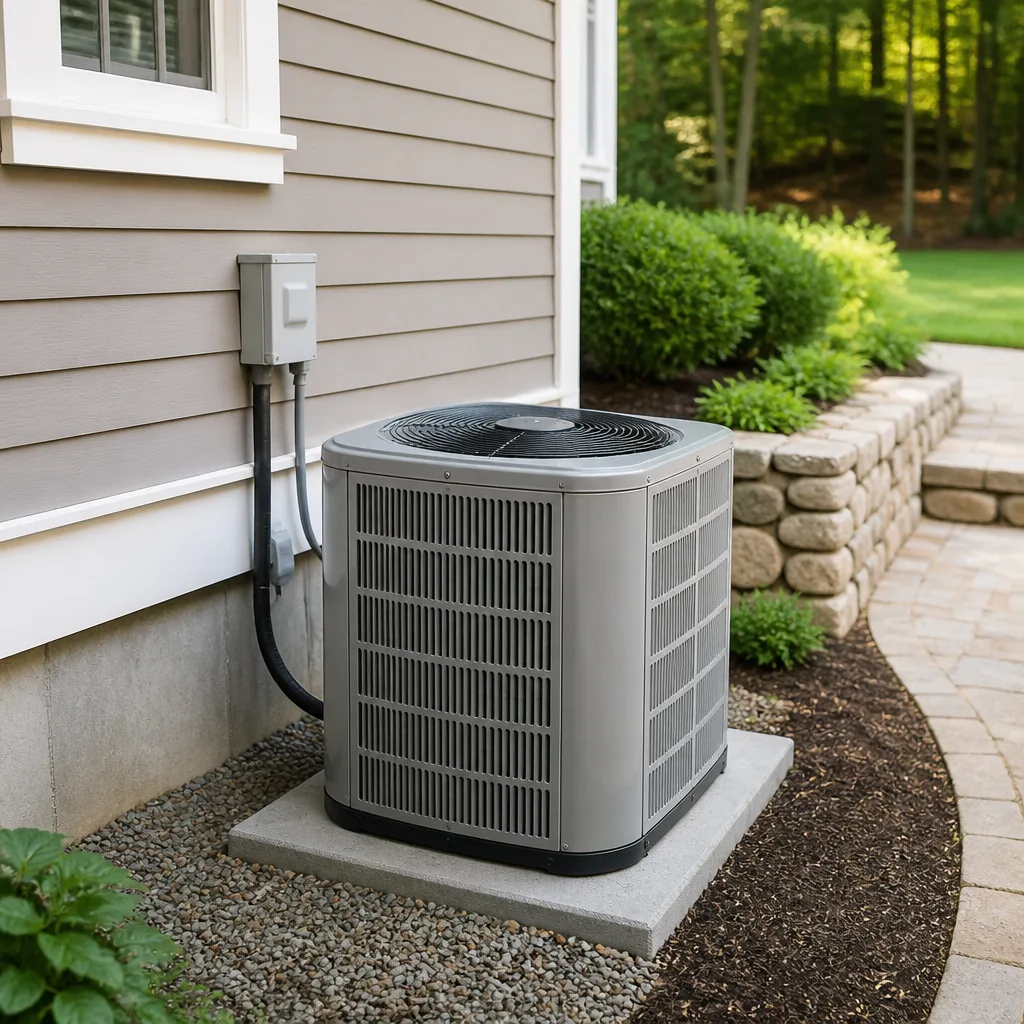
- Clearance on all sides. Two feet minimum, more on the side that discharges air. Shrubs planted tight against the unit restrict airflow and force the compressor to work harder. Trim them back at least twice a year, in early spring and again in fall.
- Shade tradeoffs. A unit in full afternoon sun is less efficient than one in partial shade, but shading it with dense shrubs creates its own airflow problem. The right answer is filtered shade from a tree, not a hedge crowding the unit.
- Cottonwood and pollen debris. Sugar Land’s spring and early summer send heavy debris onto and into the condenser coil. Rinse the coil from the inside out every few weeks during pollen season, and have it professionally cleaned at least once a year.
- Irrigation overspray. Sprinkler heads pointed at the condenser spray the coil and the electrical panel. Hard water deposits and mineral buildup on the coil fins reduce heat transfer, and water on the electrical panel is a shock and short-circuit risk. Reposition sprinkler heads so they don’t hit the unit.
- Lawn mowing and grass clippings. Mulching mowers and side-discharge mowers throw grass clippings into the coil. Rinse the coil after mowing if you see debris on the fins, and bag clippings near the unit.
- Gutter placement. Gutters that dump water near the outdoor unit keep the ground wet, which accelerates rust on the base pan and cabinet. Extend downspouts away from the unit.
None of these require special tools. They’re the kind of thing that gets handled in five minutes once a homeowner knows to look. And they’re the difference between a condenser that runs at its rated capacity for a decade and one that struggles every summer.
Common Mistakes to Avoid
- Treating May as the start of “spring maintenance.” By May, the cooling season has already started. The right window in Sugar Land is February through April. A May appointment is a summer maintenance call, and it costs you the pre-season benefits.
- Skipping the filter change because the house is new. New construction, a recent move, or a renovation all generate dust that loads the filter far faster than normal. Check the filter 30 days after any major dust-generating event, not on your usual calendar.
- Letting shrubs grow into the condenser. A tidy-looking landscape can hide a real airflow problem. Two feet of clearance on all sides, year-round, is the rule. Trim before the cooling season, not after the first hot month.
- Ignoring the heat pump in summer. A heat pump runs all year in both directions. Homeowners who think of it as an “AC” and skip the heat-side check get caught by an untested defrost cycle or a failed emergency heat element on the first below-freezing night. Test both modes before the season flips.
- Running the fan continuously during humid weather. In Sugar Land’s shoulder seasons, a fan set to “on” re-evaporates moisture off the coil. Auto mode is the right choice during humid but mild weather.
- Scheduling duct work in summer. Attics in a Sugar Land July are punishing and the work is slower and less thorough for it. Schedule duct inspection and sealing in October or November, when the attic is cool and the system is still under pressure.
- Skipping the December freeze-prep test. Heat pumps and attic air handlers fail on the hardest freeze of the year. The defrost test is cheap in December and expensive in a freezing night. Don’t skip it because “it’s rarely that cold here.”
When to Call a Professional
Some seasonal tasks are homeowner work: filter changes, condenser clearance, irrigation head positions. Others should not be. Anything involving electrical components, refrigerant handling, gas furnace combustion, or the heat pump’s defrost and reversing valve is a job for a trained technician. Those parts carry live voltage, require proper tools and recovery equipment, and in the case of a cracked heat exchanger involve real safety risk. A trained professional handles them, and a homeowner shouldn’t try to.
Call a professional if your system is short-cycling, if you’ve noticed a refrigerant smell or ice on the coil, if the heat pump doesn’t produce warm air in heat mode, if the furnace won’t ignite, if you’re hearing new noises, or if your energy bill jumped without a change in habits. Those are the signals that a seasonal check would have caught earlier. Our team handles repairs and diagnostics across Delmar AC Repair‘s full scope, including AC, furnace, and heat pump equipment from Trane, Lennox, Goodman, and Rheem, among others. If the finding is that repair makes more sense than replacement, we say so. If it’s the reverse, we walk through the numbers. Delmar AC Repair offers free estimates in Sugar Land – call (833) 968-5064. We answer 24/7. Fast dispatch, 7am-7pm, Sunday through Friday.
Frequently Asked Questions
Schedule your AC tune-up in February, March, or April. By late May, Sugar Land daytime highs have often been above 85°F for weeks, meaning the system has already logged hundreds of hours under load. A tune-up in that window catches problems after they’ve already cost you efficiency. February or March gives you the calmest schedule and the most useful inspection. Call (833) 968-5064 for a free estimate.
Yes. A heat pump runs in both directions, so it needs an AC-side check before the cooling season and a heat-side check – including defrost cycle and emergency heat verification – before the brief winter. Both are equally important in Sugar Land because the cooling season is long and the winter, though short, brings the hard freezes that are hardest on heat pumps. Call (833) 968-5064 to schedule both.
It’s the best window of the year for duct inspection and sealing because attic temperatures are low enough to work safely and thoroughly, and the system is still under load from the trailing edge of the cooling season. Duct leaks are easier to find when the blower is running. Summertime attic work in Sugar Land is slow and often incomplete. Call (833) 968-5064 to schedule a duct inspection before the heat returns.
Test the heat pump defrost cycle, verify emergency heat operation, and insulate the condensate drain line and air handler in the attic. These three tasks cover the specific vulnerabilities of a Sugar Land home in a brief hard freeze. Any of those tests that turn up a problem should go to a technician; the components carry live voltage and shouldn’t be handled without training. Call (833) 968-5064 for freeze prep.
You’re in Sugar Land’s shoulder season, where outdoor temperatures are mild but humidity is high. A standard AC won’t run long enough to pull moisture out of the air. The fix is to run the fan on “auto,” not “on,” and to consider the system’s dehumidification capability. If the problem persists into summer, it’s worth a professional look at coil condition and duct leaks. Call (833) 968-5064 to schedule a diagnostic.
It depends on the system’s age, the cost of the repair, and the condition of the major components. Our honest position is that a system with a healthy compressor, a clean heat exchanger, and a good coil can often be kept for years with careful repair, while a system that’s failed twice in three summers usually costs more to keep than to replace. Our technicians have up to 15 years of experience across nine major manufacturers – Carrier, Trane, Lennox, Goodman, Rheem, York, Daikin, Bryant, and American Standard – so the recommendation is based on your home, not on a brand relationship. Call (833) 968-5064 for a free estimate that lays out both paths.
The Bottom Line
Seasonal HVAC care in Sugar Land is not a four-season rotation – it’s a front-loaded schedule with a brief winter punch at the end. The tasks that earn the word “maintenance” happen in February (pre-season check), March and April (coil cleaning, filter, pre-peak inspection), October (heat season prep and the best window for duct work), and December (heat pump defrost testing, emergency heat verification, attic insulation). The between-seasons work is real too: fan on “auto” during the shoulder months, irrigation off the condenser, and two feet of clearance around the outdoor unit. Skip the spring window and the system starts the long cooling season already behind. Book it before May.
If you want a system checked before the next season turns, call us. Call (833) 968-5064. We answer 24/7. Fast dispatch from 7am to 7pm, Sunday through Friday. Free estimates, upfront pricing, and no surprises on the invoice.
Written by the team at Delmar AC Repair.
See the difference
 Before
 After
 Before
 After
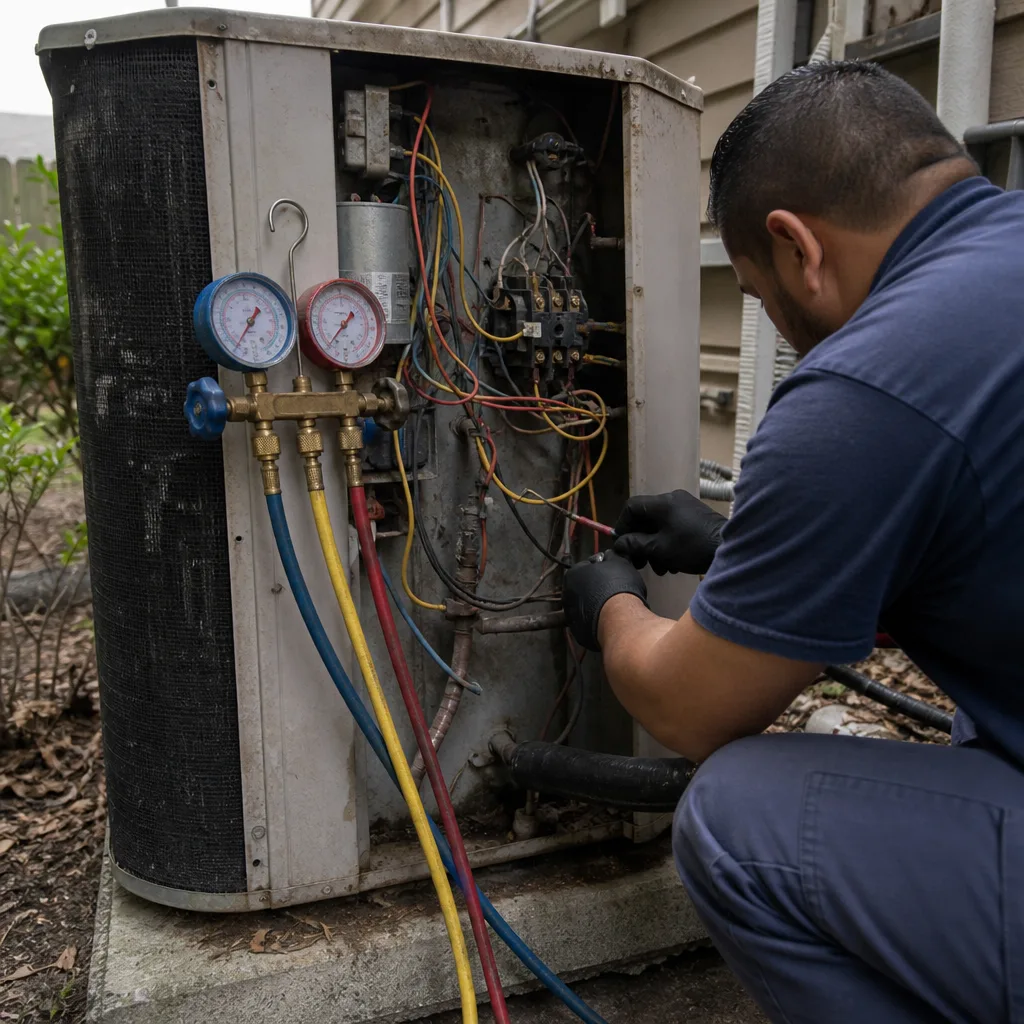 Before
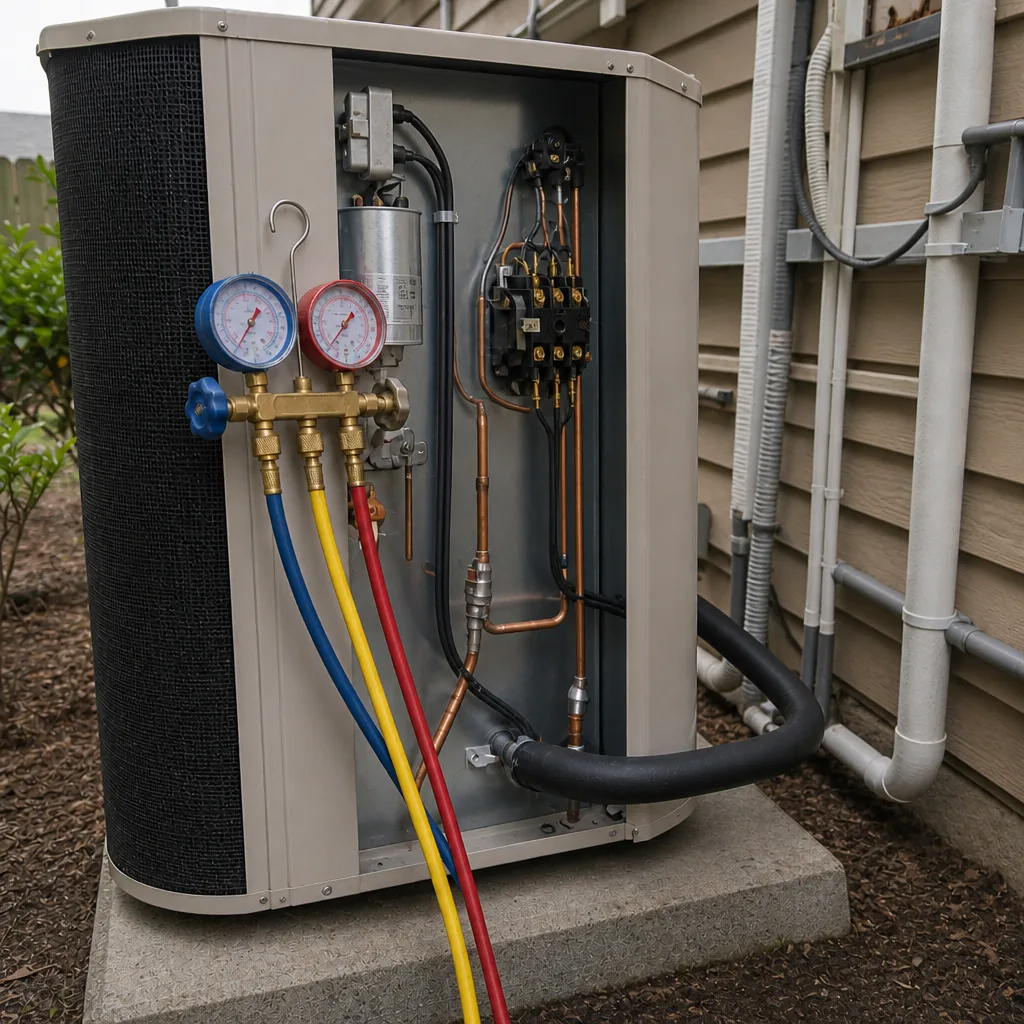 After